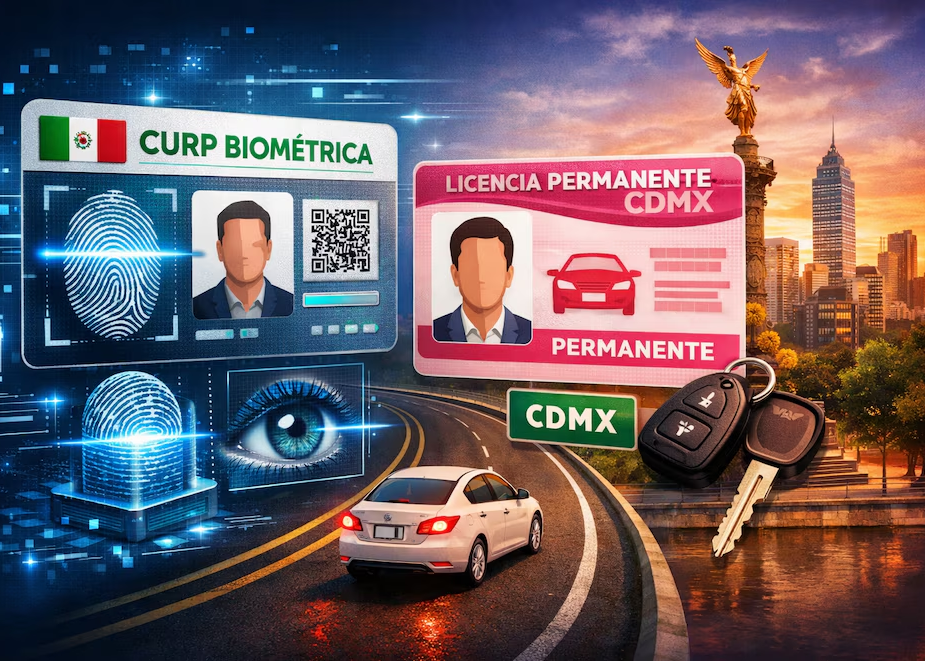

The rollout of the biometric CURP in Mexico has generated intense debate about its mandatory nature and the procedures in which it will be required.
This new version of the Unique Population Registry Code incorporates biometric data—fingerprints, facial photograph, digital signature, and iris scan—and since the end of 2024, the National Population Registry (RENAPO) has been leading the transition process nationwide.
As of February 2026, the biometric CURP is recognized as an official document for identification and validation of public and private services.
The objective, according to federal authorities, is to strengthen identity verification and combat the theft of personal data.
Following the reform to the General Population Law, all government agencies are obligated to accept this new format, although the traditional CURP remains legally valid until RENAPO declares the end of the transition period.
This situation has generated doubts among the population: what procedures already require the biometric CURP (Unique Population Registry Code)? Is it necessary to obtain a permanent driver’s license in Mexico City?
Official responses point to a gradual adoption and the temporary coexistence of both CURP formats in 2026.
Transition to Biometric Identity: What Changes and What Remains
This new version of the Unique Population Registry Code incorporates biometric data: fingerprints, facial photograph, digital signature, and iris scan.
The biometric CURP update involves the in-person capture of all ten fingerprints, facial photograph, iris scan, and digital signature at modules enabled by RENAPO (National Population Registry) or the Civil Registry.
The process is free, and the resulting document is accepted in public and private institutions for a variety of procedures: health, social programs, banking, education, and administrative services.
Although the legal reform establishes the mandatory acceptance of the biometric CURP, the transition is gradual.
Currently, access to basic services such as healthcare or education cannot be denied based on presenting the traditional CURP (Unique Population Registry Code).
The economic sanctions stipulated by law apply primarily to the misuse of personal data or the unjustified refusal of validation, but not to the mere coexistence of both formats during 2026.
The process seeks, above all, to guarantee data protection and universal access to identity.
Permanent Driver’s License in Mexico City: Does it require a biometric CURP?
In Mexico City, the reopening of the permanent driver’s license program in late 2024 generated a massive response: more than 1.3 million applications were processed in the last year, reflecting the success of the measure.
The process can be completed online, through the CDMX App, or at offices of the Ministry of Mobility (SEMOVI).
Presenting a biometric CURP is not a mandatory requirement to obtain a permanent license. SEMOVI accepts both traditional and biometric versions of the license, and identity verification is primarily carried out through the Llave CDMX platform.
This platform integrates its own biometric validations or those linked to other systems, such as the INE (National Electoral Institute), allowing for secure identity verification.
While biometric registration facilitates the digital process, it is not required to obtain a driver’s license.
For those applying for a Type A driver’s license for the first time, the written exam is mandatory and will be required starting in 2026, constituting the main requirement for obtaining the document.
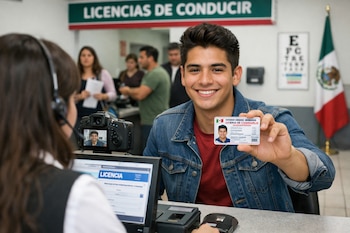
Requirements for Obtaining a Permanent Driver’s License in Mexico City in 2026
Obtaining a permanent driver’s license in Mexico City requires following these steps and submitting the corresponding documentation in original and copy:
Valid official identification document.
Proof of address in Mexico City or the State of Mexico.
Paid payment slip for the established amount.
Appointment scheduled in advance on the official platform.
For first-time applicants, proof of passing the written exam.
Those who already have their biometric data registered can apply for the license digitally through the CDMX App, which simplifies and expedites the process.
For biometric registration, an appointment must be scheduled at the designated offices, and the payment slip and an official identification document must be presented on the assigned day.
The cost of the license remains at 1,500 pesos, and there are no additional fees beyond the registration fee.
The current policy guarantees that, throughout 2026, both citizens with the traditional CURP (Unique Population Registry Code) and those who already have the biometric version will be able to obtain their permanent driver’s license in Mexico City without any issues.
Thus, the transition to digital identity is progressing without excluding any applicant, ensuring universal access to this key procedure while the new national identification system is being consolidated.

Source: infobae