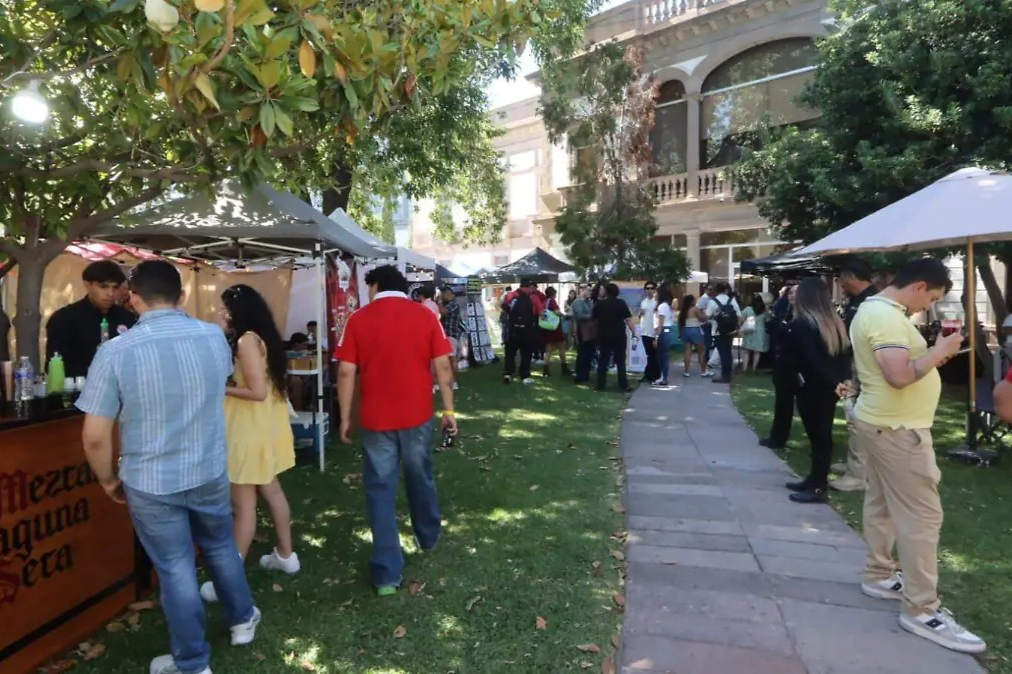

The Mezcal Festival brought together producers, local brands, and visitors this Saturday at the Francisco Cossío Museum. Throughout the afternoon, a steady stream of people, braving the blazing sun, strolled through the various booths to sample, learn about the production processes, and purchase products related to this traditional beverage.
The event, held from 2:00 p.m. to 10:00 p.m., allowed micro and small producers to showcase their work directly to the public. The space served not only as a commercial showcase but also as a platform for promoting mezcal culture in the state.
One of the exhibitors highlighted the historical origins of mezcal from San Luis Potosí, noting that the state boasts one of the oldest mezcal producers in the country, Laguna Seca, documented since 1635, particularly in the Charcas region. It was there that the use of the alembic still was introduced, a technique still employed in modern production. He explained that this traditional process remains key to preserving the characteristics of the spirit, which is available in different strengths and varieties.
In another area, Corral, a producer with several appearances at these types of festivals, explained that innovation has been a way to stay competitive, offering everything from more intense young mezcals to milder options, such as creams or infusions with flavors like coffee, coconut, and hazelnut, designed for consumers seeking different alternatives. The brand representative detailed that, in addition to selling the product, they have developed a gastronomic concept that integrates mezcal into food and consumption experiences, thus expanding their reach.
Another exhibitor highlighted the artisanal nature of their mezcal, noting that they do not use preservatives and that the process begins with the cultivation of the agave, which requires at least eight years to reach maturity. He indicated that this waiting period directly impacts the quality of the final product, and that the management of the agave is carried out under organized systems that include reforestation and harvest control, with the goal of preventing overexploitation of the resource.
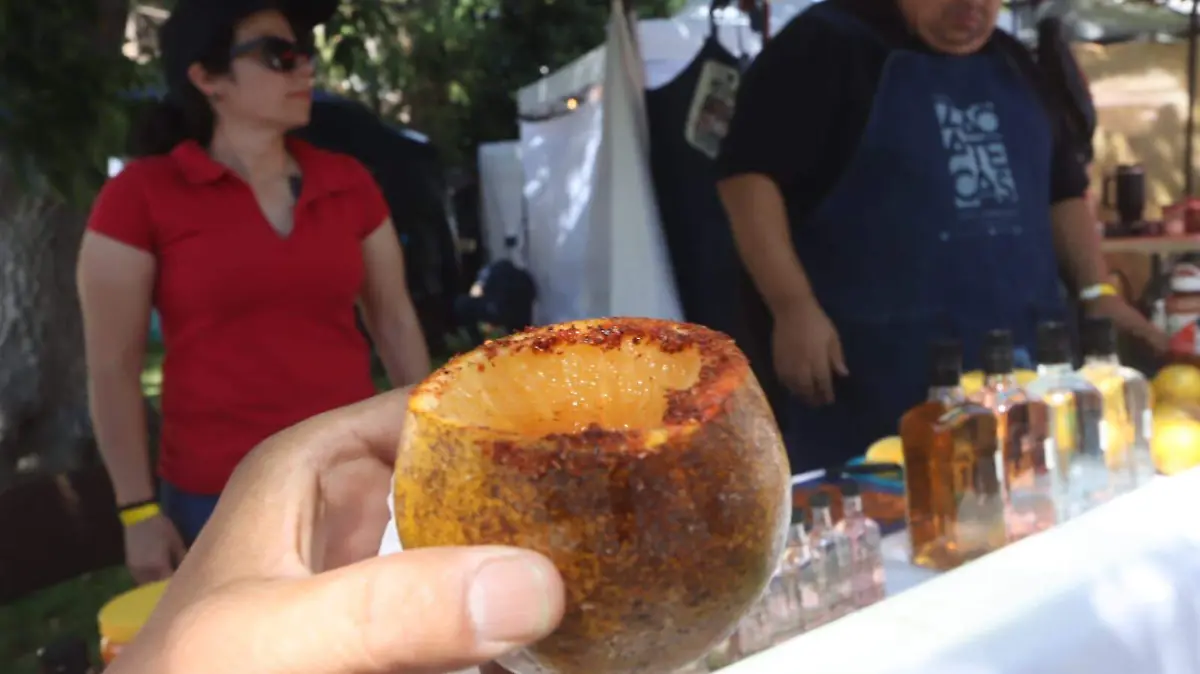
The tour also showcased complementary products that are part of the mezcal experience, such as salts made with agave worms, chicatana ants, and grasshoppers, used to accompany stronger spirits. Additionally, lines of grilling salts were presented, featuring prolonged smoking processes and artisanal preparation, aimed at both home consumption and broader culinary applications.
Finally, the producers agreed that these types of events represent an opportunity to position their brands, introduce new products, and expand their market, even through online sales or social media, reaching an audience increasingly interested in local products and traditional processes.
During the day, dozens of people, families, groups of friends and visitors in general toured the halls of the venue, participated in tastings and talked directly with those who make the products, in an environment that combined identity, tradition and innovation within one of the most deeply rooted artisan industries in the state.
Source: oem