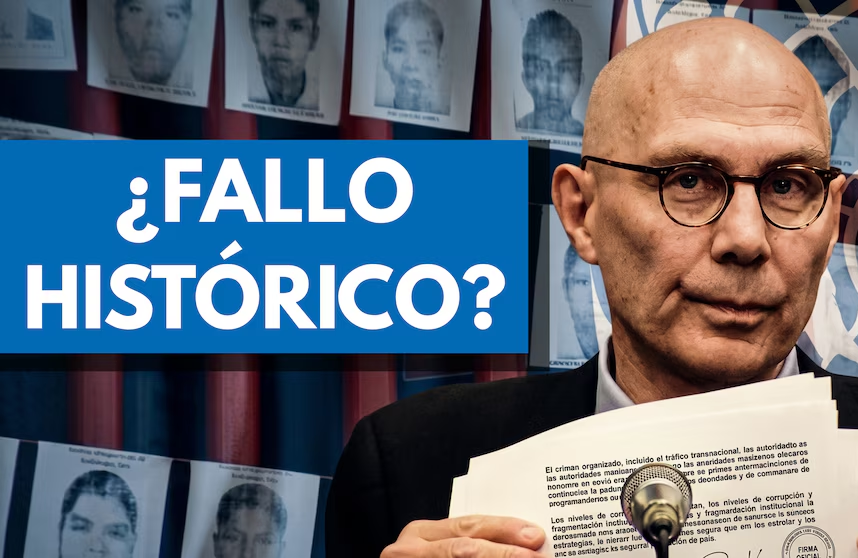

Volker Türk, the United Nations High Commissioner for Human Rights, visited Mexico at a critical moment. Weeks earlier, the UN Committee on Enforced Disappearances (CED Committee) had taken an unprecedented step: to bring the country’s situation before the UN General Assembly, activating for the first time Article 34 of the International Convention for the Protection of All Persons from Enforced Disappearance, considering disappearances in Mexico to be systematic and widespread.
Families searching for their loved ones, collectives, and human rights organizations expected Türk to endorse this assessment. He did not.
This is documented by Santiago Aguirre, a human rights lawyer with over 20 years of experience, in an analysis published by ¿A dónde van los desaparecidos? (Where Do the Disappeared Go?), a leading journalistic project in Mexico that investigates and raises awareness of the disappearance crisis in the country.
A Message That Fell Short
In his closing remarks, Türk avoided addressing the human rights crisis. He also failed to call for the demilitarization of public security—something his predecessors had done—and instead acknowledged current government policies on disappearances as progress.
What stood out most was his support for judicial reform, celebrating that the election of judges has made the judiciary more “inclusive.” This occurred the same week that legislators from the ruling party introduced a bill that implicitly recognizes the dysfunctionality of the elected judges model.
But the most serious issue, according to Aguirre, was something else entirely: Türk did not confirm the CED Committee’s assessment that the Mexican state is overwhelmed by the disappearances crisis, nor the need for extraordinary measures with international assistance.
Türk framed the disappearances crisis within the context of the country’s political polarization. For Aguirre, this is a grave error.
It is one thing for the tragedy to be exploited by political parties. It is quite another to stigmatize, as polarizing rhetoric, the denunciations of victims and organizations that point out the State has been overwhelmed.
With this framework, the High Commissioner suggested that Mexico can confront the crisis with the same old policies, without calling the situation by its name.
What’s next for the families and the collectives?
The analysis in “Where Do the Disappeared Go?” points to two urgent reflections:
The procedure under Article 34 will continue its course in the UN General Assembly, but those analyzing it will be states and bureaucracies with views similar to Türk’s.
Given the weakening of multilateralism, amplifying the voices of victims’ collectives becomes more urgent than ever.
Hope, Aguirre concludes, does not lie in international bureaucracies. It lies in those who continue to stitch names together, walk, document, and resist oblivion.
Source: infobae