
Foreign interventions in Mexico, or actions to achieve them, date back to the arrival of the Spanish in the 16th century, when the fall of Tenochtitlan resulted from an alliance between pre-Hispanic peoples and the invaders.
On August 13, 1521, the Spanish, accompanied by their Totonac, Texcocan, and Tlaxcalan allies, among others, captured Cuauhtémoc, the last Mexica tlatoani (ruler), who heroically led the resistance against Hernán Cortés.
That struggle would never have been won by the invaders—approximately 800 Europeans—had they not been joined by 75,000 indigenous enemies of Tenochtitlan.
Until 1836, Texas was Mexican. Its ephemeral independence, lasting less than 10 years before its annexation by the United States, was primarily driven by local residents who supported the separatist movement. Among them was Lorenzo de Zavala, a Mexican politician who became the first vice president of the Republic of Texas.
After Independence, Yucatán voluntarily joined Mexico under a federal pact that guaranteed its internal autonomy. However, later, in 1841, the peninsula’s political and military elites, led by Miguel Barbachano, Santiago Méndez, and Santiago Imán, opposed the law that prevented states from electing their own governors and sought to secede from Mexico. This occurred amidst the Caste War.
Then-Governor Santiago Méndez requested military aid from the United States in exchange for sovereignty over the peninsula.
“The white race—the civilized class of this State—is now being attacked in an atrocious and barbaric manner by the aboriginal race, which, simultaneously rising up in insurrection with an instinct of ferocity, is waging a savage war of extermination against us,” Méndez wrote to then-U.S. Secretary of State, and later President of the United States, James Buchanan.
“Seeing, as I have already declared quite frankly to Your Excellency, that Yucatán has no hope of salvation other than the determination of a foreign power to favor it with its aid as soon as possible,” the governor of Yucatán pleaded for the intervention of the United States, a country that at that time, through its president James K. Polk, decided to “hide” the request because his nation was too preoccupied with its own war of intervention against Mexico.
During that offensive, between 1846 and 1848, there were factions and regions that collaborated in occupied cities such as Veracruz and Mexico City, where some commercial and political sectors cooperated with the invading forces in an attempt to maintain their privileges.
The clearest example of traitors in Mexico is the infamous “Miramar Commission,” a group of conservatives who, opposed to the liberal laws of Benito Juárez, traveled to Europe to ask Maximilian of Habsburg to accept the position of Emperor of Mexico.
José María Gutiérrez de Estrada, Juan Nepomuceno Almonte—son of Morelos—, Antonio Suárez de Peredo, and Joaquín Velázquez de León, among others, convinced Maximilian to accept the throne by assuring him that the Mexican people desired an empire. The young Maximilian was ultimately deceived and executed.
In 1913, Victoriano Huerta conspired with U.S. Ambassador Henry Lane Wilson to overthrow President Francisco I. Madero, facilitating foreign diplomatic and political intervention. The United States’ intervention during the Ten Tragic Days was decisive in the assassinations of Madero and Pino Suárez.
Wilson convened Generals Victoriano Huerta and Félix Díaz at the U.S. Embassy, where they agreed to overthrow Madero so that Huerta could assume the presidency. The ambassador used the threat of a U.S. invasion to pressure Mexican politicians and military officials into accepting the coup.
The participation of U.S. agents in an operation to dismantle drug labs in Chihuahua just 10 days ago is significant. It was carried out without the knowledge or authorization of the federal government, in clear violation of the Constitution and the National Security Law.
The demand for transparency regarding these events is not a matter of dirty tricks or political maneuvering, but rather a defense of sovereignty.
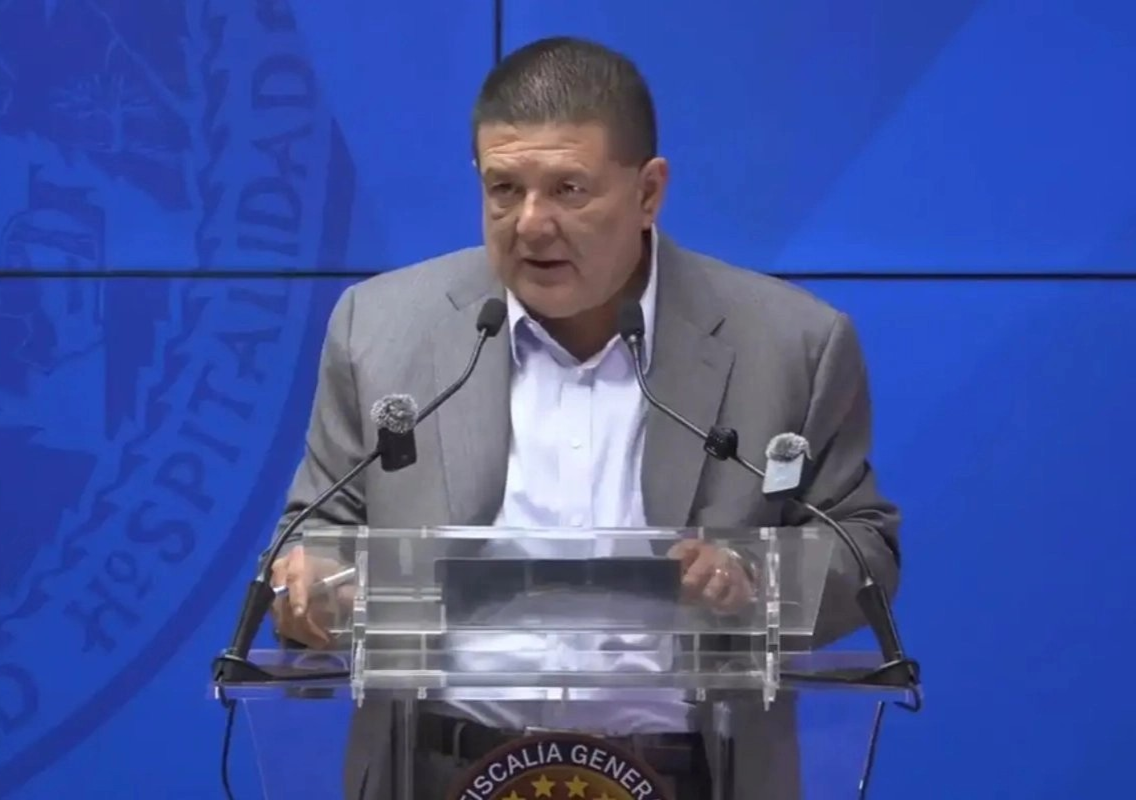
The resignation of Attorney General César Jáuregui is an act of political and moral authority by Mayor Claudia Sheinbaum.
It is a victory for her and, therefore, for her defense of sovereignty, especially in the face of attacks from Donald Trump. But the case does not end there; now the governor of Chihuahua must explain why her state acted outside the bounds of the National Security Law.

Source: jornada