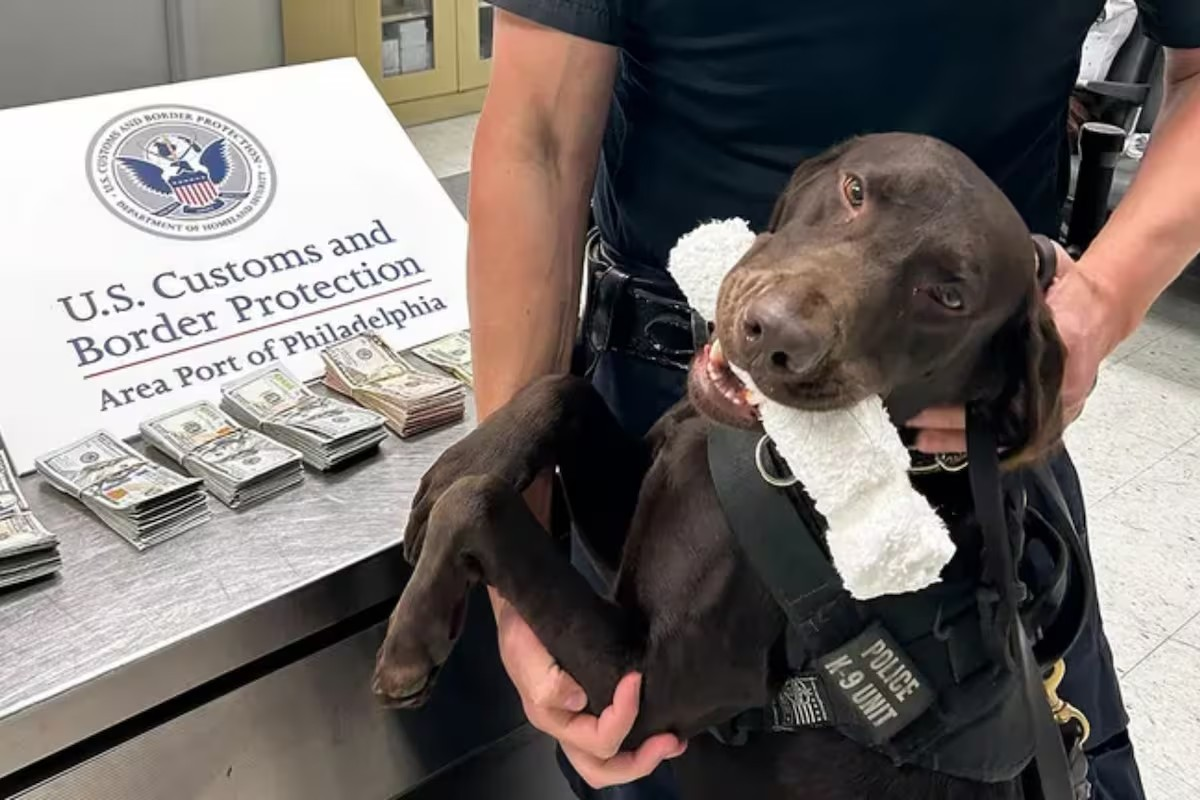

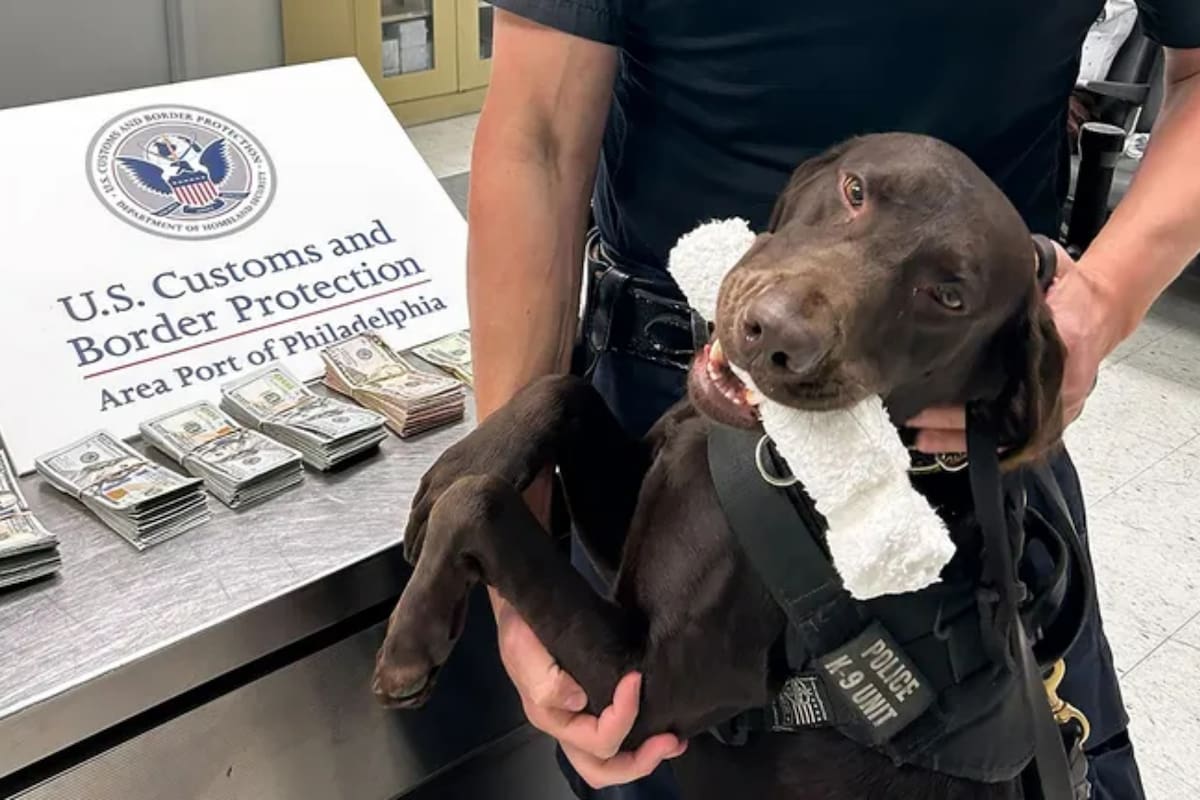
U.S. Customs and Border Protection (CBP) officers announced the seizure of more than $44,000 in cash at Philadelphia International Airport. The discovery, made by a dog trained to detect banknotes, involved a U.S. citizen who was scheduled to travel to Cancún, Mexico.
On April 30, according to a CBP statement, Nitro, a three-year-old Labrador retriever, alerted officers when a 54-year-old man attempted to pass through an exit checkpoint and board a flight to Mexico.
The circular ramp that became an emblem of the Costanera for dancing or reading a book by the river
Because the K9 is trained to detect large amounts of cash, firearms, and ammunition, the officers acted with caution and conducted a thorough inspection.
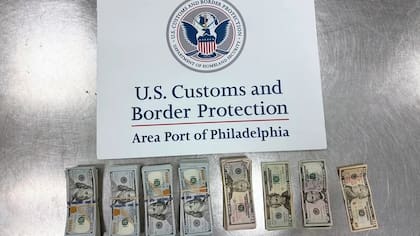
This is how they discovered that the naturalized U.S. citizen, originally from Peru, was carrying a total of US$44,690 in his pockets.
The agents questioned the traveler about his knowledge of the laws regarding currency declaration, and he responded verbally and in writing that he was only carrying US$10,000. Although they ultimately released the man, authorities only returned US$240 to him for humanitarian reasons.
Regarding the case, Elliott Ortiz, acting director of the CBP Port of Philadelphia, said that the traveler concealed cash in various locations to evade federal currency declaration laws. However, he warned that no amount of hiding is sufficient to avoid detection by agents.
How much money can you travel with from the United States?
CBP reminded travelers that they can carry any amount of currency and other monetary instruments they choose, as long as they declare them.
If the amount exceeds US$10,000, a form must be submitted to the U.S. Department of the Treasury providing details regarding the international transport of currency.
Completing the FinCEN 105 form should only take a few minutes. In fact, CBP noted that it has simplified the process so that the information can be completed online before arriving at the gate.
If you have any questions, you can request assistance from agents directly at the port of entry to complete the form.
Thousands of dollars in cash are seized daily by CBP.
CBP warned that failing to declare cash or other monetary instruments exceeding US$10,000 can result not only in the seizure of the funds but also in potential criminal prosecution.
This is one of the most common offenses that agency agents encounter. According to their figures, they seized an average of US$180,000 in cash daily at U.S. borders during fiscal year 2025. Based on this information, more than US$66 million was seized during that period.
In this regard, Director Elliott Ortiz urged travelers to truthfully declare all cash they possess to avoid serious consequences.
Source: lanacion