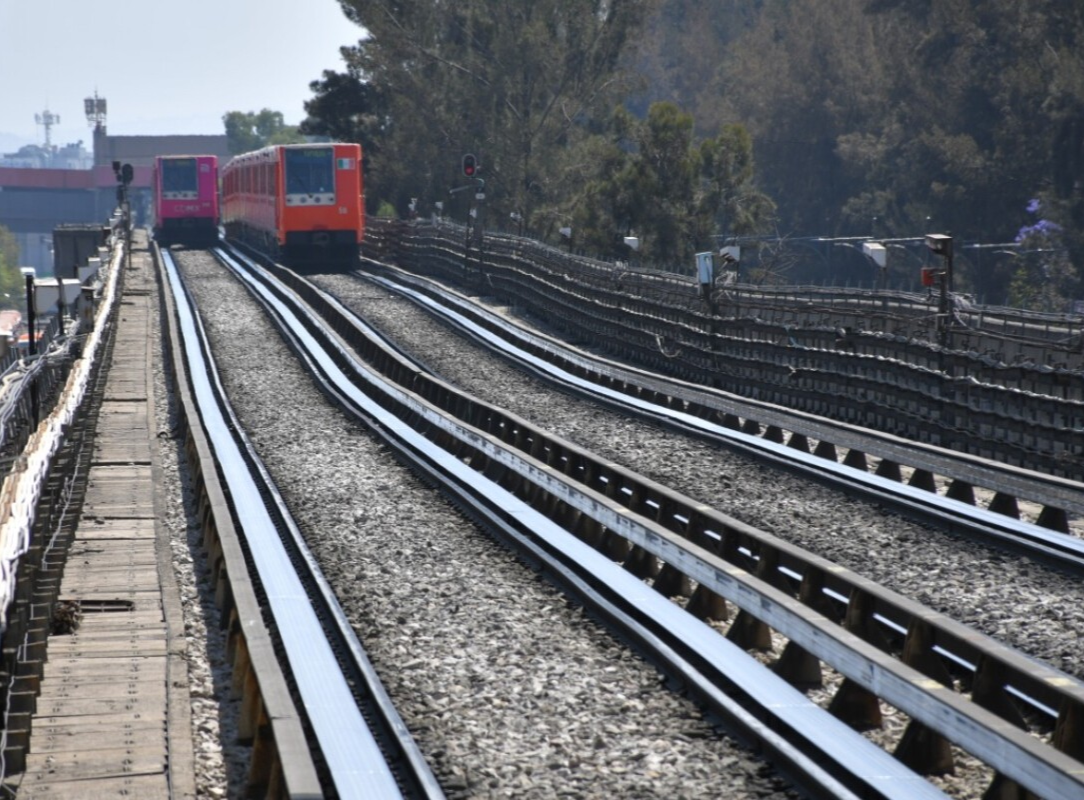

Recently, NASA confirmed that for over a century, various factors, such as groundwater pumping and the weight of human development, have caused the lakebed beneath Mexico City to compact more and more, resulting in some areas sinking by about 35 centimeters per year.
Data provided by the NISAR satellite revealed that this phenomenon is accelerating. Between October 2025 and January 2026, some areas of Mexico City experienced subsidence averaging 2 centimeters per month. This not only creates potholes but also threatens the backbone of the city’s public transportation system: the Metro.
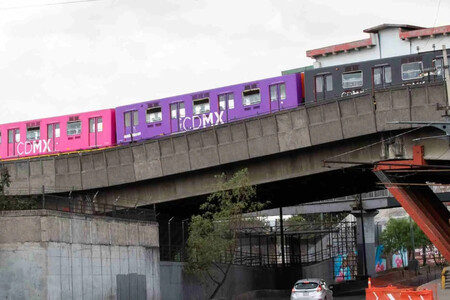
For those of us who travel daily on the Metro, delays in train arrivals at stations or trains stopping between stops for more than 10 minutes are becoming increasingly common. Until a few years ago, this only happened at specific times, especially during peak periods, but now it occurs much more frequently.
A study published in the journal Nature revealed changes in elevation across various areas of Mexico City, measured between 2011 and 2020, indicating that the subsidence is not uniform.
Previously, specialists warned that the subsidence affecting the nation’s capital is “alarming and unstoppable,” according to a study published in Advancing Earth and Space Sciences.
Furthermore, Darío Solano Rojas, a researcher at UNAM (National Autonomous University of Mexico), stated in a 2024 report titled “Geological Risk Assessment of the Mexico City Metro System” that residents of the capital have become accustomed to some buildings being slightly tilted, while riding the Metro “feels strange.”
According to the specialist, “the subsoil is like a sponge: we remove the water and then it deforms because it loses volume,” which is why the subsidence in Mexico City varies: while in some places it reaches 20 inches, in others no irregularities are recorded.
In the capital, the main source of water is not the Cutzamala System, but the subsoil. Specialists point out that approximately 70% of the water for human consumption comes from aquifers, whose overexploitation, along with the city’s geological conditions, is directly related to the subsidence of the land.
This causes instability, since different segments of the Metro move differently; that is, there are “differential subsidences.” The UNAM researcher indicated that this could lead to the Metro requiring extensive maintenance before its normal 50-year lifespan.
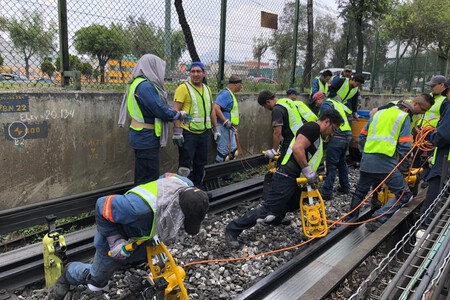
The other scenario is that the city’s subsidence could cause anomalies in the electrical grid, slow train speeds, and even derailments due to abrupt changes in track level.
For example, before the renovation work, the northern section of Insurgentes Avenue, like the rest of Mexico City, suffered from ground settlement, causing surface deformations.
These deformations affected the structural framework of Line 3 from the Indios Verdes terminal to the tunnel transition between the Potrero and La Raza stations, but the most damaging effects are seen in the section between the Deportivo 18 de Marzo and Potrero stations.
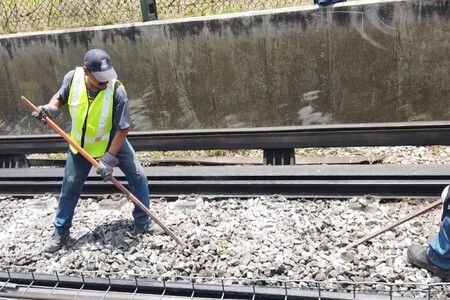
The study by the UNAM researcher concluded that “differential subsidence in Mexico City damages a significant length of the Metro tracks and ultimately manifests as structural collapses, failures, cracks, track deformations, and changes in gradient, resulting in reduced speed and poor train performance, accidents, service disruptions, and loss of life.” Our city continues to sink, so these repairs will continue.
Source: motorpasion