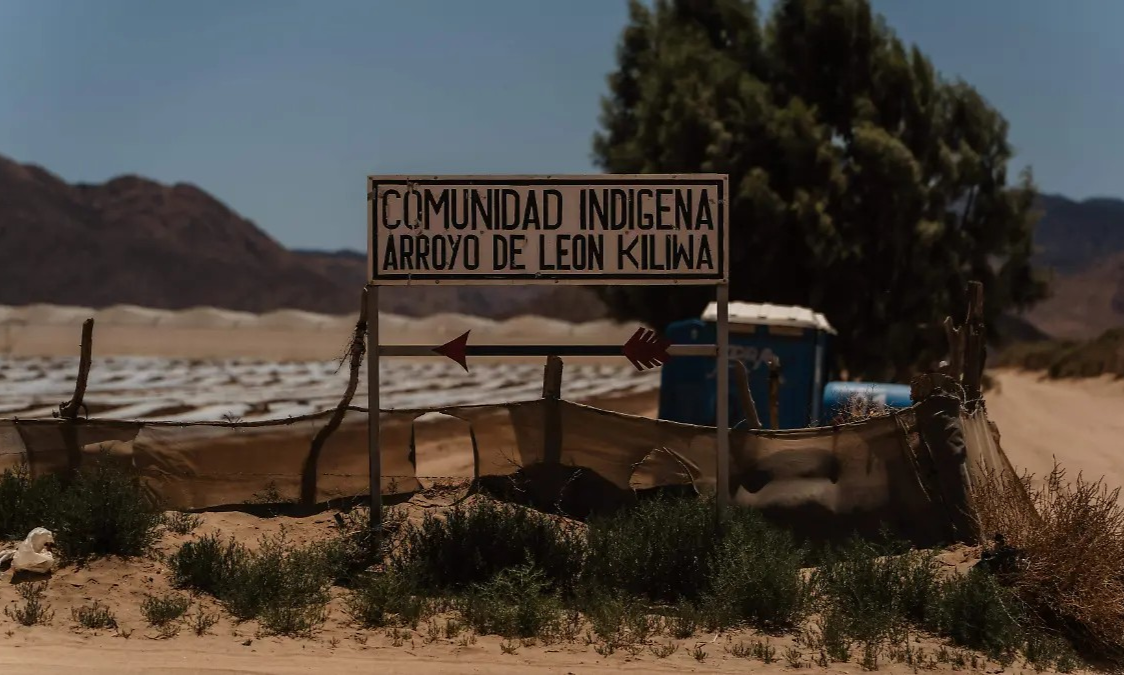

Nearly half of the Kiliwa population of the Arroyo de León ejido in Ensenada, Baja California, has been displaced in the last four years by organized crime groups that have been stealing and illegally exploiting their main source of income and employment: yucca and sage.
Virginia Espinoza Álvarez, a traditional Kiliwa authority in Arroyo de León, also known as the Kiliwas ejido, stated that of a population of approximately 40 inhabitants, half have chosen to seek better opportunities in the Valle de la Trinidad or Ensenada, leaving only 20 people currently in the village.
She indicated that, although they reported the situation and requested assistance from the Ministry of Environment and Natural Resources (Semarnat), the federal authority did not provide them with support in defending their resources, as they were not protected species.
Elias Espinoza Alvarez, representative in Baja California of the National Institute of Indigenous Peoples (INPI) and a member of the Kiliwa community, stated that the community had ceased economic activity for two years and grew weary of reporting the attacks against them to the authorities, who remained inactive.
The Kiliwa traditional leader said she remembered that when she was a child, her father and the rest of the community traded pine nuts, venison, and honey in the Trinidad Valley, generally selling these products to people from Mexicali.
“With that money we bought food; for example, flour, lard, rice, potatoes—that was all we ate—and sardines, that’s what my father bought. But nobody came here to say, ‘I’m going to help you.’ We had houses made only of branches, and my sisters made beds of agave stalks; we had nothing,” she recounted.
Virginia Espinoza, also known as Vicky, mentioned that the community also cultivated beans, squash, and corn.
However, the Kiliwa community’s economic activity shifted between 1980 and 1990 with the arrival of the industry dedicated to processing yucca schidigera, which they call “palmilla.” This plant is used to make insecticides, shampoo, and even Coca-Cola soft drinks.
Vicky indicated that currently, a ton of yucca schidigera can fetch up to 550 US dollars.
In addition to palmilla, Elías Espinoza Álvarez added that the Kiliwa community also traded and used sage, primarily as traditional medicine.
“We use it in ceremonies, and you can also cut it and boil it and make a tea if you have the flu; it’s very good for that too. It’s used as traditional medicine for us, but we also sell it. It’s used to purify your house in the morning and evening. Many people use it in their homes, and they ask us for it,” he explained.
The INPI representative in Baja California pointed out that for the past six years, armed individuals have been entering the town of Arroyo de León to steal palm fronds and sage, and then sell them illegally.
“I remember that back then they were only stealing a little (yucca), but then it got bigger and bigger. Soon it wasn’t just two or three tons anymore, it was a thousand tons being stolen from us. There was no one to bring order to the situation here,” Elías Espinoza recounted.
He asserted that, although they had approached the then-sole federal delegate in Baja California, Jesús Alejandro Ruíz Uribe, and reported the yucca thefts to Semarnat (the Ministry of Environment and Natural Resources), the thefts continued.
“They said it’s an unregulated plant, and therefore a non-timber resource, and that if they didn’t catch you with a certain number of tons, they wouldn’t take action. Then they’d exceed the tonnage limit and arrest people, but they’d let them go. And then everyone would go and steal it,” he explained.
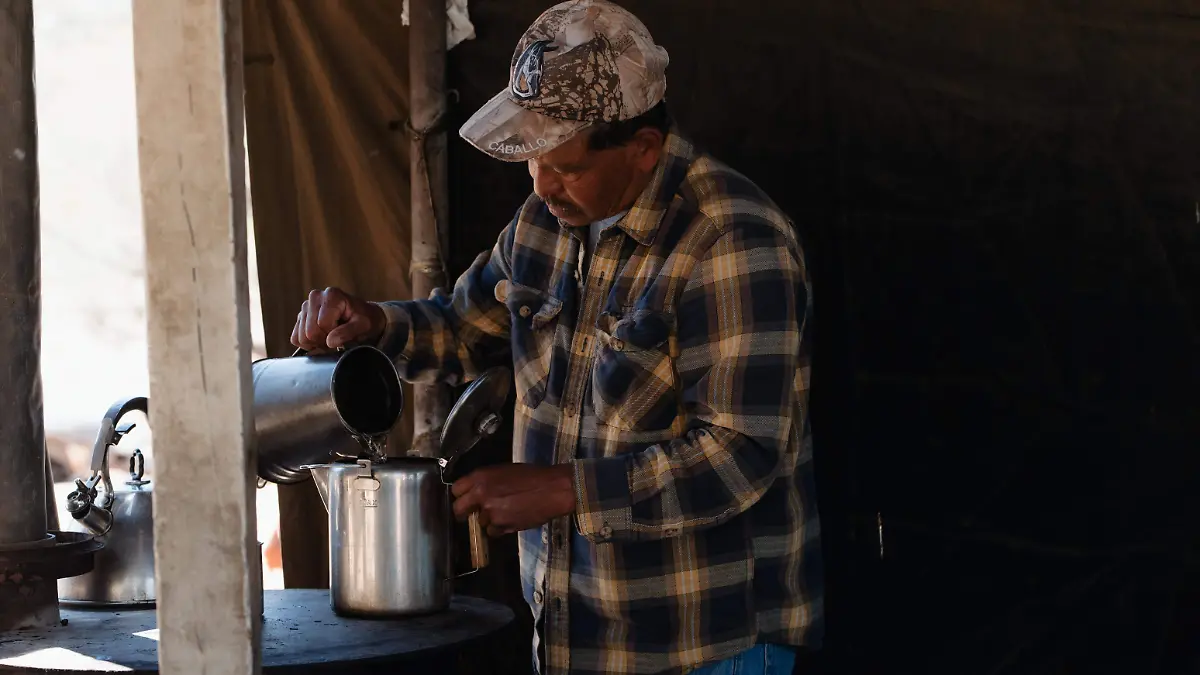
Elias Espinoza commented that the residents put up perimeter fences around their crops and roads to try to prevent thefts. However, this measure didn’t work because the thieves were armed and fired at the community.
For her part, Vicky asserted that she was even attacked by these criminal groups at her home, who fired at her three times when she tried to dissuade them from continuing, although they didn’t manage to hit her.
She indicated that these thefts by criminal groups continued until three years ago, even starting fires in the region after extracting the palm fronds. They eventually wiped out almost the entire palm frond population in the town.
“We couldn’t do anything because they would shoot at us. We couldn’t defend our property, we couldn’t… Neither I nor any of us benefited from the palm fronds; other people benefited. Trucks would leave the palm fronds to sell them, and we just watched,” she declared.
He also commented that the same thing happens with sage, which is extracted from his community and sold directly elsewhere.
“That’s what happens with sage; they come in, load up their trucks, and leave. They don’t ask anyone’s permission, they take it all (…), they take it in pieces and sell it,” he added.
He mentioned that, technically, both plants can be cultivated again; however, climate change and water scarcity in the community prevented them from replanting.
In the case of the palmilla, it requires large amounts of water to grow, and it takes between 15 and 30 years to mature. Therefore, it is a process that requires time and protection to prevent criminal groups from stealing it before it grows sufficiently, as has happened in many cases.
While sage grows naturally in the region with the rains, due to climate change and reduced rainfall, it hasn’t grown as it once did.
“It can be planted, but we don’t have water. All the springs, the streams, everything has dried up. I don’t know why. Before, a torrent of water flowed here, and now it’s all dried up,” he stated.
The traditional authority asserted that the village of Arroyo de León had no potable water service for the past year, until the beginning of May of this year, when they raised enough money to install a water pump in a well located in a dry streambed.
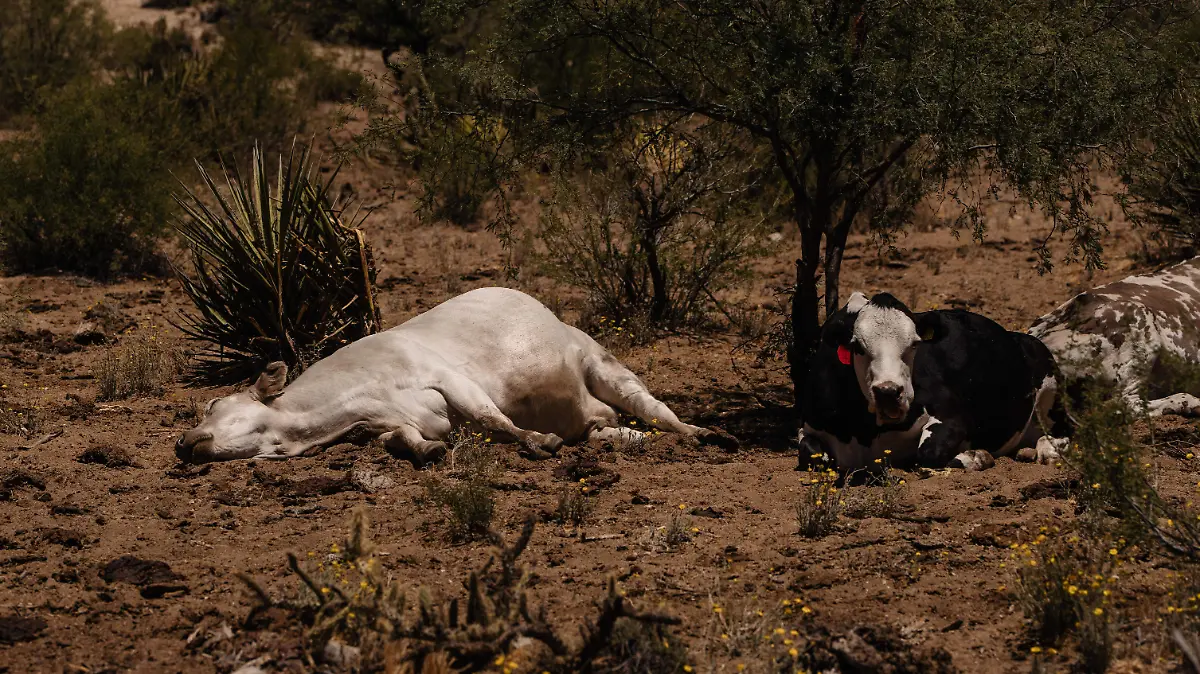
The lack of work, coupled with the reduced potable water service, has meant that more and more members of the community lack access to a decent life.
“There are people who don’t have jobs, and we have to pay for water and electricity. With what they save from water bills, they pay for electricity, but what if they don’t have enough for water? For example, those who don’t work. It’s a struggle, we really struggle, but here we are. There are people who don’t work all month,” Vicky said.
In that regard, she indicated that all of this caused nearly 50% of the Kiliwa community to be displaced from Arroyo de León, leaving only about 20 people as permanent residents.
Similarly, Elías Espinoza acknowledged that this insecurity and lack of opportunities ultimately led to forced displacement, causing some of the population to seek better opportunities in the city of Ensenada or in the Trinidad Valley.
“It has decreased in some ways, but many of us have remained there. Yes, it has had an impact (…), today it’s a bit deserted because some people have already gone down to the Trinidad Valley to work, because there’s no work there,” he explained.
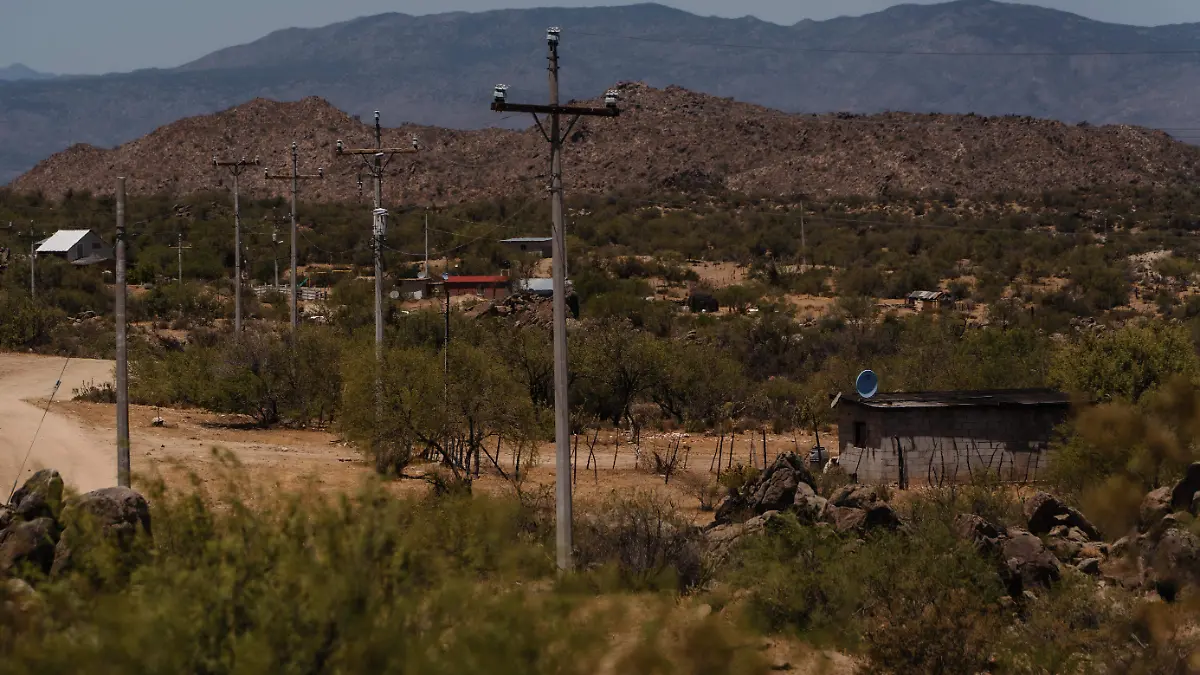
Source: oem