
With a commitment to continue building a greener, more sustainable, and environmentally conscious Mérida, Mayor Cecilia Patrón Laviada continues the process of declaring Trees as Green Heritage, now totaling 174 recognized specimens in various locations throughout the municipality.
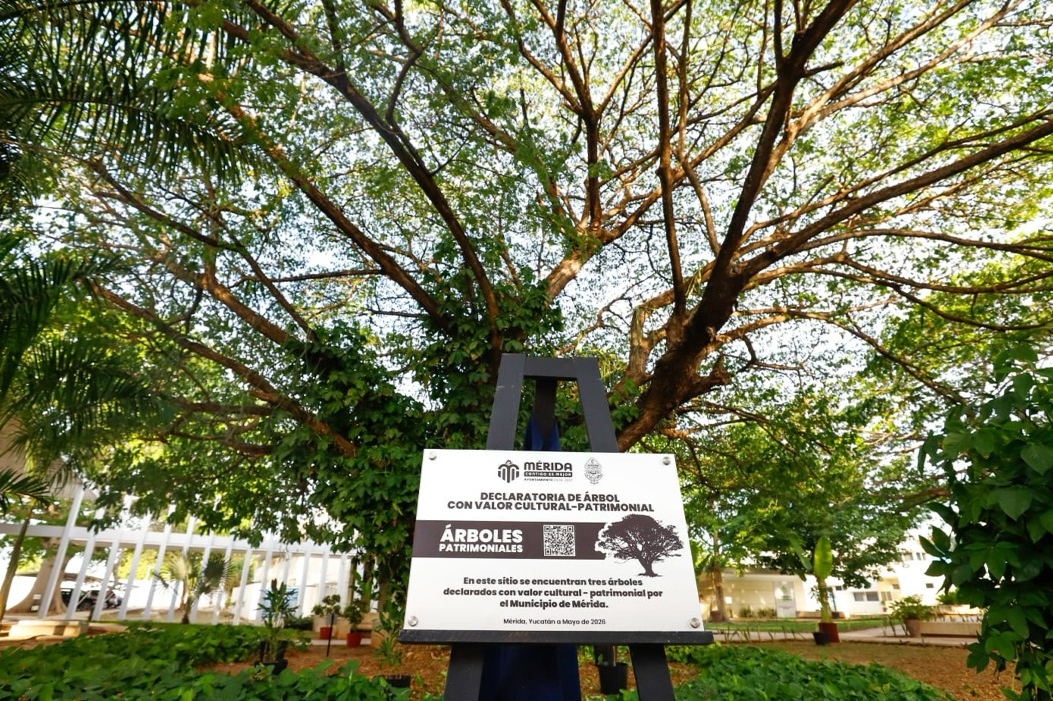
In collaboration with the Autonomous University of Yucatán (UADY), three trees located on the Central Administration Campus in the eastern part of the city were named.
“With this step, we are protecting our environment and giving due value to its history as a living memory that gives us our identity. We are fostering among our university students the importance of connecting with nature and caring for it responsibly,” the mayor stated.
She emphasized that these actions are part of a comprehensive vision to redefine Mérida’s urban development with sustainable criteria and citizen participation, noting that caring for and protecting the existence of those trees that are part of the history and community of our city also translates into caring for the health, quality of life, and heritage of our city that gives us our identity.
The councilwoman emphasized that this initiative represents a way to protect the natural environment and recognize trees as a living part of Mérida’s identity.
The trees declared heritage sites are a ceiba tree and two black carob trees located in strategic areas of the university campus. The ceiba, of the Ceiba pentandra species, reaches a height of 23 meters and stands out for its symbolic value within Mayan culture, in addition to providing refuge for various birds and enriching the landscape of the university environment.
Likewise, the black carob trees, of the Samanea saman species, are notable for their broad canopies, the shade and thermal comfort they provide, as well as for their ecological function in promoting reforestation processes and serving as a refuge for birds and climbing plants.
One of them is approximately 35 years old and is part of the collective memory of generations of university students, and today they will be protected for their conservation for the enjoyment and benefit of future generations.
In that same vein, Cecilia Patrón thanked UADY for actively joining this green public policy, reaffirming its commitment to environmental protection and the education of new generations who are more aware of and responsible for their surroundings.
She emphasized that collaboration between educational institutions and government strengthens environmental conservation efforts and allows for building a more sustainable Mérida, where respect for nature becomes a shared responsibility for the present and future well-being of the community.
The Mérida City Council is promoting various environmental projects that have positioned the city as a national leader in sustainability. Among these, she highlighted the first Ciudad Caucel Green Corridor, nearing completion, as well as the new Brisas Green Corridor, which will benefit more than 60,000 residents.
Also noteworthy is the success of the “One Family, One Tree” program, through which 47,474 trees have already been adopted, along with the more than 5,000 donations made by citizens for the care of the Cuxtal Ecological Reserve, the main water source for the Yucatecan capital.
As part of this environmental strategy, Cecilia Patrón announced the upcoming 2026 Forestry Crusade, which includes the planting of 8,500 trees in 18 days, with the participation of more than 3,500 volunteers committed to a greener Mérida.
Finally, the mayor called on the university community and all citizens to continue joining environmental conservation efforts, recognizing trees as living spaces that provide shade, clean air, biodiversity, and strengthen community life.
Witnessing this commitment to the care of heritage trees were the Rector of the Autonomous University of Yucatán (UADY), Carlos Alberto Estrada Pinto; State Representative Manuela Cocom Bolio; City Councilor Gabriela González Ojeda; and the Director of the Environmental and Animal Welfare Unit, Raúl Escalante Aguilar; as well as students from the university community.

Source: yucatan.quadratin