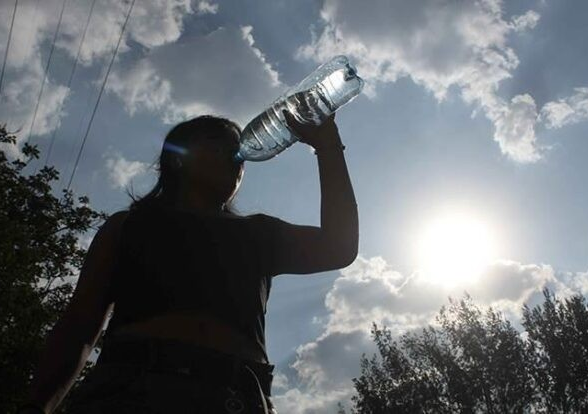

The Ministry of Health (SSA) reported that the 2016 heat season has already claimed lives on the Yucatán Peninsula, with one death recorded in Campeche and another in Quintana Roo, both related to heatstroke.
According to the most recent federal report, as of May 13, Yucatán is also among the states with the highest number of people affected by extreme temperatures, accumulating 27 cases of health problems. Nationally, the agency has recorded 442 heat-related cases, of which 264 are heatstroke, 148 are dehydration, and 30 are burns.
Breakdown by state shows that Tabasco leads the list with 80 affected patients, followed by Oaxaca and Jalisco with 52 cases each; Morelos, 39; Chiapas, with 28 cases, and Yucatán, with 27. Regarding deaths, the Ministry of Health (SSA) specified that the 13 confirmed deaths so far were caused by heatstroke. In addition to Campeche and Quintana Roo, deaths were also reported in Chiapas and Veracruz, with two cases each, as well as in Baja California, Guerrero, Oaxaca, Querétaro, Sonora, Tabasco, and Tamaulipas.
The agency added that, according to data from the National Meteorological Service (SMN) and the National Water Commission (Conagua), the heat wave will continue in various regions of the country.
Furthermore, it was learned that a rare meteorological phenomenon called El Niño Godzilla is forming in the Pacific Ocean. Scientists warn that it is expected to drive global temperatures to record levels from the end of this year until 2027, which could cause extreme weather events affecting people and wildlife.
This climatic phase typically occurs two to three times per decade and causes spikes in global temperatures, as well as affecting rainfall patterns. It has been widely predicted by scientists, including those from the UK Met Office and NASA.
It occurs because sea surface temperatures in the central Pacific have risen faster than usual in recent weeks and have exceeded the thresholds used to identify the onset of El Niño conditions.
In recent weeks, temperatures have begun to rise in Quintana Roo, which directly impacts the health of the population. Without preventative measures, residents could suffer from heatstroke or gastrointestinal illness, warned Jorge Gutiérrez Contreras, the state’s Undersecretary of Health.

Source: reportur