
The business organization warns that nearshoring won’t happen on its own; security, energy, and legal certainty continue to hinder investment.
Although Mexico boasts record figures for foreign direct investment (FDI), economic growth, formal job creation, and business dynamism remain stagnant. For the Mexican Employers’ Confederation (Coparmex), the problem has a name: lack of confidence.
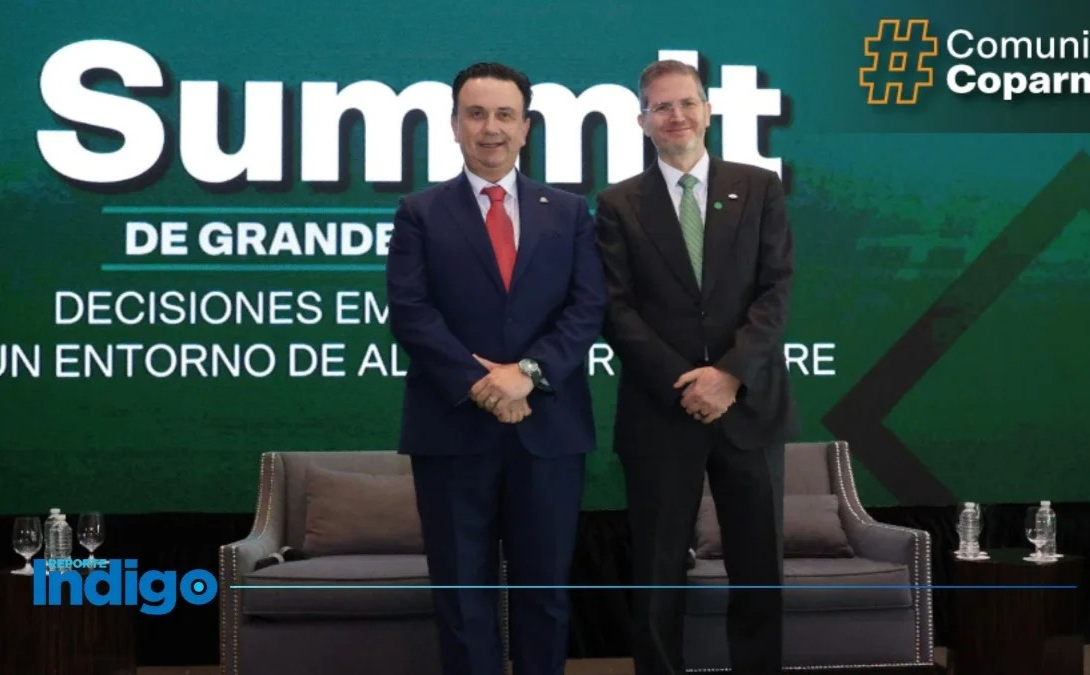
During the Summit of Large Companies: Business Decisions in an Environment of High Uncertainty, the national president of Coparmex, Juan José Sierra Álvarez, asserted that the country has failed to capitalize on a historic opportunity stemming from nearshoring and its privileged position relative to the world’s largest consumer market: the United States.
“Mexico isn’t growing because there’s no confidence,” the business leader declared, questioning why, despite announcements of foreign investment and the expectation of relocating production chains, economic performance continues to show signs of stagnation.
The business leader acknowledged that FDI is positive, but argued that the country needs to take a closer look at the types of capital arriving. He explained that truly transformative investment is that linked to new businesses, as it is the kind that generates formal, higher-paying jobs.
“We’re obsessed with foreign direct investment, but most of it is reinvested profits and transfers between accounts. The kind that generates well-paying jobs is that of new businesses,” he stated.
In that regard, he noted that Mexico had already reached higher levels of new foreign investment in 2018 and 2019, and therefore considered the current performance insufficient given the opportunity presented by the global reorganization of supply chains.
For Coparmex, geography is no longer enough to attract capital. Although Mexico shares a border with the United States and is part of the USMCA, Sierra Álvarez maintained that companies will not arrive solely because of proximity, but rather because of the conditions the country is able to create.
“Nearshoring isn’t going to happen on its own. We have to generate trust, security, legal certainty, and energy and water resources,” he warned.
The leader pointed out that more than 90% of Coparmex’s members are micro, small, and medium-sized enterprises (MSMEs), which today face greater difficulties operating due to insecurity, regulatory uncertainty, and infrastructure limitations.
He even asserted that many small businesses are no longer thinking about next month, but rather about surviving day to day. “They’re thinking about how to open their doors tomorrow,” he said.
Source: reporteindigo