
The story is simple, but dangerous:
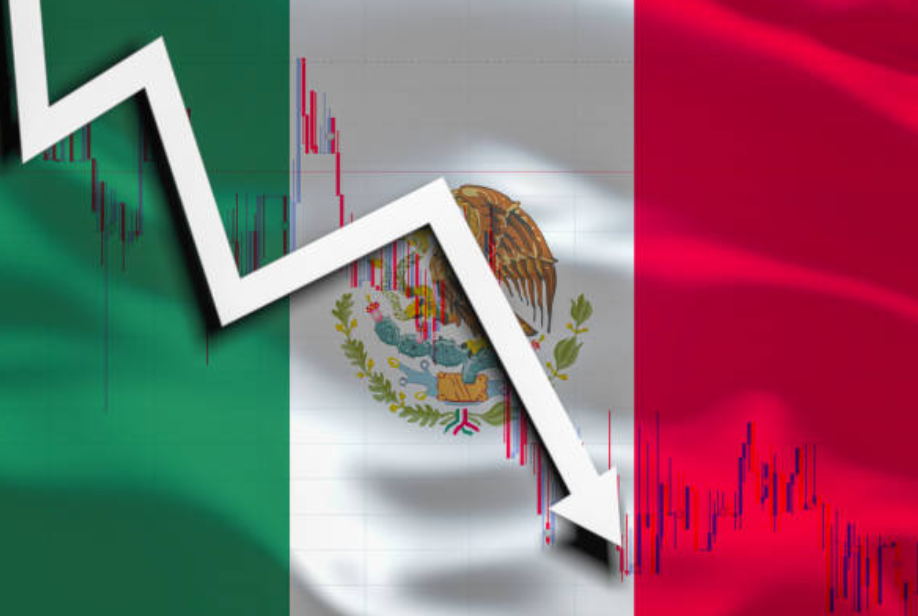
During President Sheinbaum’s first year, the difference between budget revenue and net spending was negative. In other words, there was a public finance deficit equivalent to 4.3 percent of GDP.
COSTLY ELECTIONS.
In 2024, the fiscal deficit reached 5.7 percent of GDP, the highest level recorded since 2008, during the crisis known as the Great Recession, which originated in the United States housing market.
MEXICO’S CREDIT RATING IS DOWNGRADED.
The outlook for 2026 does not look promising in economic or financial matters.
This week, the rating agencies Standard & Poor’s, Moody’s, and Fitch Ratings downgraded Mexico’s credit rating, placing the country at the lowest investment-grade level, just one step away from speculative territory.
Why was the rating downgraded?
Last Tuesday, Pedro Aspe, former Finance Secretary, warned during a forum at MIT in Boston that Mexico’s public debt could exceed 60 percent of GDP in 2026, something not seen in 50 years.
The causes:
Rising current government spending, persistent fiscal deficits, and weak economic growth are weakening the country’s financial position, while reducing resources available for productive investment.
“The government’s fiscal deficit is unsustainable. Other emerging countries lost their investment-grade status after reaching similar debt levels,” Aspe stated.
PEMEX: A BOTTOMLESS BARREL.
The growth of social programs and subsidies to PEMEX increased current spending, displacing resources that could have gone to infrastructure, healthcare, education, and security.
In 2018, Mexico’s historical public debt balance stood at 10.5 trillion pesos. The Finance Ministry now projects that debt will close this year at 20.2 trillion pesos.
This increases pressure on public finances and on the country’s credit ratings.
IN SUMMARY:
The country is economically stagnant. It is not growing, and if it continues generating a fiscal deficit of around 5 percent, public debt will likely continue increasing by another 5 percent annually. If the federal government does not reduce the deficit, Mexico could face another public finance crisis within a few years.
THE TRAGEDY COULD REPEAT ITSELF.
During the administration of José López Portillo, the Mexican government accumulated a significant fiscal deficit in order to maintain social spending and investment in oil infrastructure, worsening the country’s financial situation.
The debt crisis reached its peak in 1982. Those who lived through that catastrophe have never forgotten it.
“THEY LOOTED US! THEY WILL NOT LOOT US AGAIN!”
INEGI reported that by the end of 2025, Mexicans had moved 3.268 trillion pesos — about 183 billion dollars, roughly 9 percent of GDP — out of the country.
The funds reportedly left through transfers involving stocks, bonds, investment fund shares, and bank deposits.
Why are wealthy Mexicans moving their money abroad? Out of distrust?
When the 1982 crisis exploded, in his final State of the Union address, José López Portillo announced:
“Financial institutions will now be administered by the State. They already looted us. They will not loot us again.”
After September 1, 1982, López Portillo later wrote:
“As I gathered data for the report, I began to fully understand the seriousness of the problem:
At least 14 million accounts belonging to Mexicans in the United States; 30 billion invested in properties, of which 9 billion had already been paid in down payments and services; 12 billion dollars in ‘Mexdollars’…”
HE ALSO WROTE:
“It is evident that economic growth is not synonymous with development… but it is important not to make the opposite mistake: believing that social development is possible without economic growth and without job creation…”
WHAT THE GOVERNMENT DOES NOT TELL US.
Mexico’s tax revenues showed weakness during the first quarter of the year. Tax collection from January to March totaled 1.58 trillion pesos, 0.6 percent less than during the same period in 2025.
Source: mexicodailypost