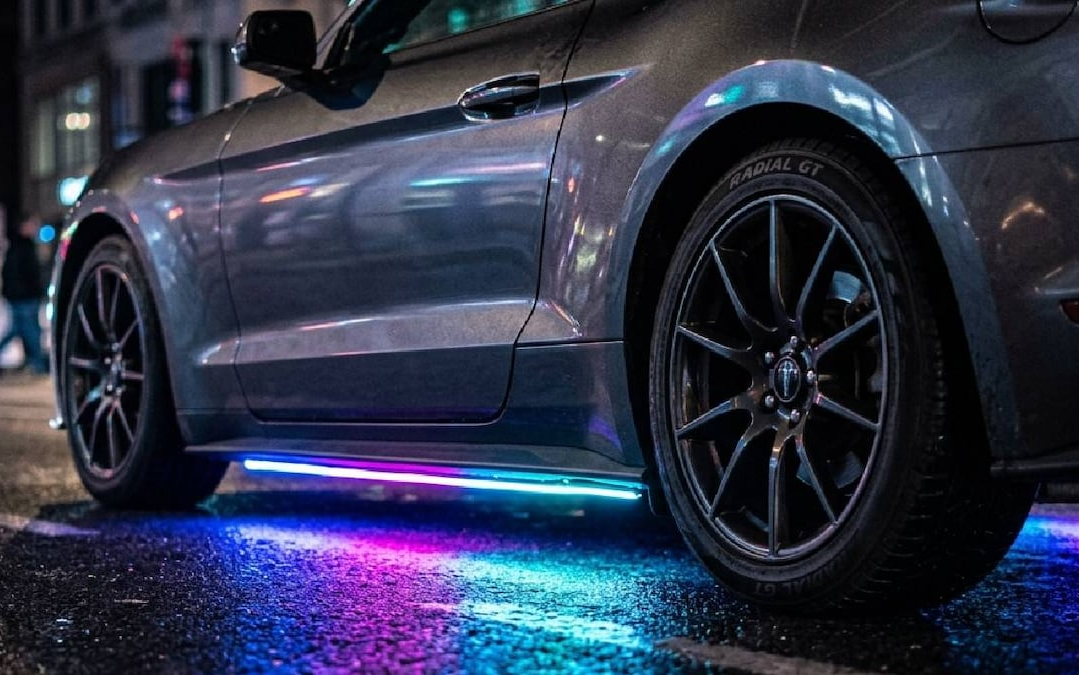

A common accessory among car enthusiasts is under scrutiny by traffic authorities in Jalisco. The state’s Mobility, Road Safety, and Transportation Law mandates fines for any vehicle operating with unauthorized lights—whether steady or flashing—because they are considered to compromise the safety of others on public roads. The measure applies equally to private drivers, registered vehicle owners, and public transportation operators.
What Article 361 Says About Unauthorized Lights
Article 361, section VII of the Jalisco State Law on Mobility, Road Safety, and Transportation establishes that those who use unauthorized lights on their vehicles that obstruct the visibility of others will be penalized, regardless of whether the lights are steady or flashing. The law aims to prevent glare for other drivers and reduce the risks associated with visual distraction on the state’s avenues and highways.
Among the accessories that the law includes in this category are decorative neon lights installed on the underside or inside the vehicle, non-approved LED strips, strobe lights that mimic emergency vehicles, and any additional lighting system that is not factory-installed or authorized for private use.
How much is the fine in 2026?
The penalty for installing these types of accessories is calculated between five and ten times the value of the Measurement and Update Unit (UMA). With the UMA set at $117.31 pesos for 2026, the fine ranges from $586.55 pesos in the least serious case to $1,173.10 pesos in the most severe. The exact amount is at the discretion of the traffic officer issuing the citation, who assesses the degree of impact on the visibility of other road users.
The law does not distinguish between new, used, or public transportation vehicles. Three parties are liable under the law: the driver behind the wheel, the registered owner of the vehicle, and the operator of the authorized service, if applicable. Jalisco is thus closing any loopholes to evade the penalty.
The regulations only permit the lights that the vehicle comes factory-installed in accordance with official Mexican standards: headlights, dipped beams, parking lights, turn signals, brake lights, reverse lights, and license plate lights. Any additional accessories—even if aesthetically pleasing or purchased from established stores—require prior verification by the traffic authority to confirm that they do not violate the regulations.
Strobe lights and sirens are reserved exclusively for duly authorized emergency vehicles—ambulances, police cars, fire trucks, and Civil Protection units. Any private driver who installs them may face additional penalties for impersonating an emergency official, in addition to the fine stipulated in Article 361, depending on the circumstances.
The Law on Mobility, Road Safety, and Transportation aims to strengthen road safety and reduce risky driving behavior. Unauthorized lights are considered a significant visual distraction by traffic police, especially at night or on high-speed roads. Article 361 also includes other related offenses: excessively loud music, repeated use of the horn, driving with open doors, and the lack of a public transport operator’s badge—all carrying the same penalty range of five to ten UMA (Unit of Measurement and Update).
A quick vehicle check before setting off and the voluntary removal of non-approved accessories can save the driver immediate expense and prevent the vehicle from being impounded during inspection operations.

Source: adn40