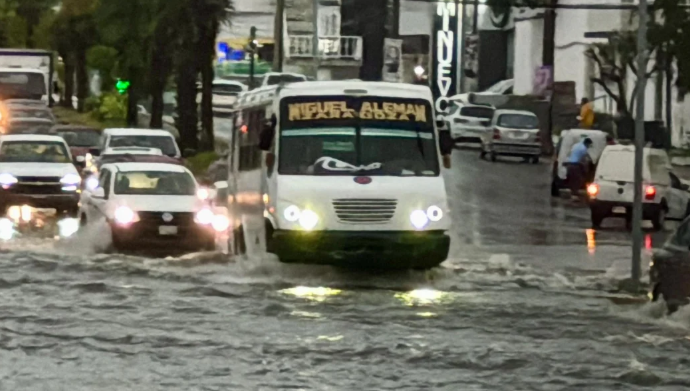

In recent months, the state of Veracruz has been engulfed in a series of tragedies, many of which have been linked to flooding. Contingency protocols have been activated in several Veracruz municipalities, prompting citizens to step forward and demonstrate their most compassionate side.
Following the tragedies in Veracruz municipalities such as Álamo Temapache and Poza Rica, the flooding emergency resulted in many people losing their homes and livelihoods, while others lost their lives.
Consequently, many people are asking why Veracruz is so prone to severe flooding. A recent study has shed light on several key reasons why the state becomes inundated during the rainy season.
What did the study reveal about why Veracruz floods?
Veracruz is considered one of the states with the greatest water availability in Mexico. Its geographical location—situated along the Gulf of Mexico—combined with the presence of numerous river basins and waterways, makes it a strategic region for various economic activities; however, it also renders it one of the regions most vulnerable to recurrent flooding.
The territory of Veracruz encompasses parts of five major hydrological regions: Balsas, Pánuco, Tuxpan-Nautla, Papaloapan, and Coatzacoalcos. Collectively, these regions comprise an extensive network of basins and tributaries that transport a significant portion of the surface water circulating throughout the country.
Some of Mexico’s most important rivers flow through Veracruz, including the Pánuco, Tuxpan, Cazones, Tecolutla, Nautla, Actopan, La Antigua, Jamapa, Cotaxtla, Papaloapan, and Coatzacoalcos. Most of these rivers originate in the mountainous regions of central Mexico and descend toward the coastal plain before emptying into the Gulf of Mexico. A defining characteristic of many Veracruz rivers is their rapid response to meteorological events.
When heavy rains occur in the upper reaches of these river basins, water levels can rise dramatically within just a few hours. This rapid rise is driven by steep terrain slopes and the limited capacity for water infiltration in urbanized areas or regions affected by deforestation.
What causes flooding in Veracruz? The combination of tropical cyclones, troughs, tropical waves, and cold fronts often generates significant rainfall accumulations, leading to overflows and flooding in communities situated near watercourses.
Specialists from the National Water Commission (Conagua), as well as the National Institute of Ecology and Climate Change (INECC), have explained that some dams located in the region operate using natural spillway systems. This means that once they reach their maximum capacity, excess water flows over the structure without the need to open floodgates.
Although this process can contribute to increased flow rates in certain rivers, hydrometeorological authorities have noted that flooding is typically linked primarily to the magnitude of rainfall recorded across broad areas of the river basins.
Another factor that heightens the risk of flooding is the expansion of human settlements into areas naturally designated for water storage or passage. Wetlands, former floodplains, and areas adjacent to rivers have been encroached upon by urban development in various municipalities throughout the state.
Cities such as Veracruz, Tuxpan, Minatitlán, Coatzacoalcos, and Poza Rica have experienced adverse effects resulting from extraordinary rainfall and the overflowing of water bodies, particularly during cyclone seasons.
Historical records indicate that Veracruz has faced severe flooding periodically over the past several decades. The region’s climatic conditions—combined with the substantial volume of water it receives from neighboring states via its river basins—create conditions conducive to the recurrence of these events.
Consequently, specialists deem it essential to strengthen prevention measures, land-use planning, and hydrometeorological monitoring in order to mitigate risks and safeguard the population against future contingencies.
Source: imagendeveracruz