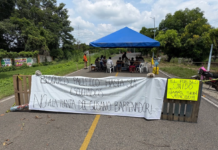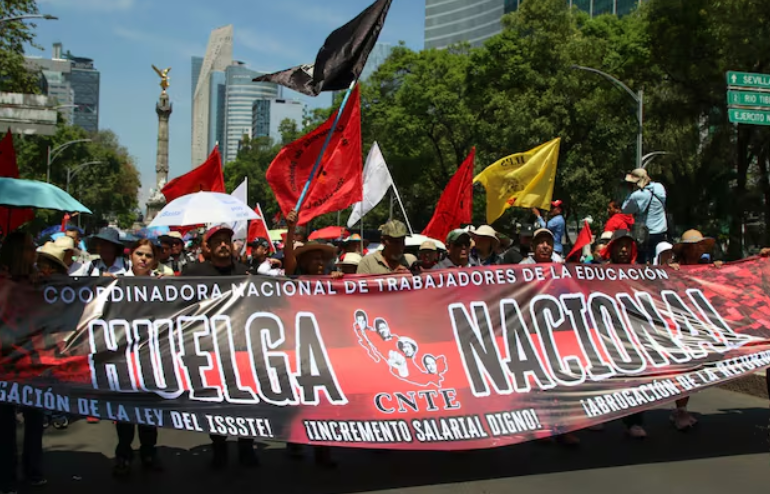

On June 11, members of the National Coordinator of Education Workers (CNTE) blocked access to the Ángel Albino Corzo International Airport in Chiapas.
The protesters used barricades and burned tires to obstruct traffic, causing massive delays and cancellations for numerous travelers.
Teachers from Section 7 of the National Union of Education Workers (SNTE), affiliated with the CNTE, blocked the main access roads to Chiapas’s most important airport.
The protesters arrived at the airport facilities, located in the municipality of Chiapa de Corzo, around 5:00 a.m.
They completely closed the main access roads using cargo trucks and makeshift barricades, preventing vehicles from entering or leaving.
During the day, tires were burned, generating plumes of smoke visible in the surrounding area.
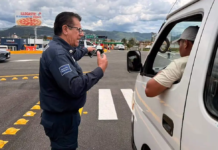
At the start of the takeover, a scuffle broke out between teachers and passengers at the terminal, although the situation later stabilized.
Dozens of tourists and travelers were stranded or faced extreme difficulties catching their flights, reporting delays and cancellations on social media.
While teachers’ union leaders claimed they were not blocking pedestrian access, they indicated that airport security personnel decided to keep the building’s doors closed.
The blockade affected a strategic terminal connecting Chiapas with cities such as Mexico City, Monterrey, Guadalajara, Tijuana, Mérida, and Cancún.
The Angel Albino Corzo International Airport, located between 30 and 40 minutes from Tuxtla Gutiérrez, is the most important airport in the state.
Why did the CNTE block the most important airport in Chiapas?
The CNTE teachers’ blockade of the Ángel Albino Corzo International Airport in Chiapas is part of an indefinite national strike that began 11 days ago.
The teachers’ main demands include:
Repeal of the 2007 ISSSTE Law and the elimination of individual accounts managed by AFOREs (Retirement Fund Administrators).
A return to the solidarity-based pension model, demanding retirement based on years of service (28 years for women and 30 for men) regardless of age.
Elimination of the UMA (Unit of Measurement and Update) as a reference for calculating pensions.
A decisive negotiation table directly with the federal government and Mayor Claudia Sheinbaum to address their demands.
The mobilization in Chiapas took place in parallel with other protests in states such as Oaxaca, Guerrero, Michoacán, Zacatecas, and Mexico City.
Source: sdpnoticias