
The Michoacán legislature finds itself at the center of a major controversy after a narcocorrido—a musical genre glorifying drug trafficking—was performed inside the official legislative chamber itself.
The incident is particularly serious given that the state has a legal framework strictly prohibiting any artistic expression that glorifies crime or exalts figures linked to criminal organizations.
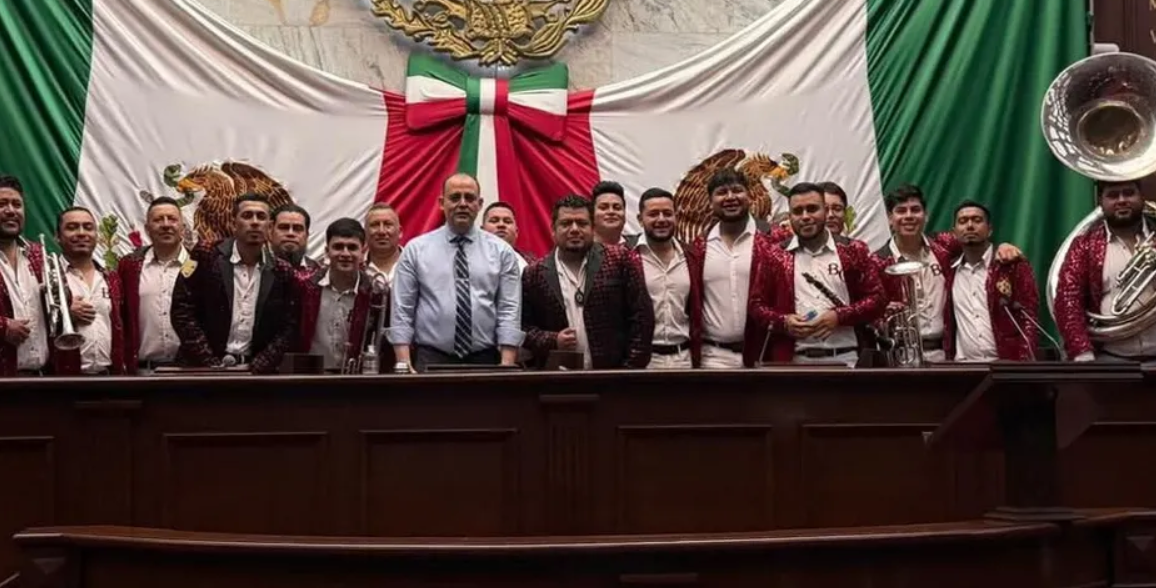
The events took place at the conclusion of a regular legislative session, during a celebration organized for “Michoacán Father’s Day.” The event, coordinated by the leadership of the Board of Directors, initially proceeded with well-wishes and traditional music for the institution’s staff, lawmakers, and members of the press in attendance.
However, the situation took a drastic turn when a local musical group entered the plenary hall and set up on the state’s highest legislative podium.
From that legislative dais, the group began performing a well-known song dedicated to Baltazar Díaz Vega, a figure historically identified as having logistical ties to Ismael Zambada, one of the most notorious drug trafficking leaders.
The institutional contradiction was exposed through recordings made by attendees—which quickly circulated on digital platforms—showing various elected representatives socializing while the controversial tune was being sung.
What does Michoacán law say about the glorification of crime in music?
This action represents a direct violation of local regulations previously approved by the Congress itself. State legislation clearly prohibits the playing or performance of musical genres that promote illicit acts in any public space or area open to the general public.
Furthermore, amendments to the Penal Code specifically sanction the public glorification of criminal conduct—a restriction so strict that it has already led to the cancellation of concerts by nationally renowned groups within Michoacán. Despite the media and social impact of the incident—which highlights how the legislative palace itself violated the rules the state imposes on the rest of the citizenry—neither parliamentary authorities nor the event organizers have issued an official statement to clarify accountability for this controversial event.
Source: telediario