
The Apostolic Nuncio in Mexico, Monsignor Joseph Spiteri, will visit Zacatecas this week as part of an apostolic tour that has opened a space for analysis and interpretation regarding the recent direction of the Catholic Church.
The context of his visit to the state will provide an opportunity to examine the impact of the papal tour of Spain that took place the previous week, which continues to generate interpretations regarding the Vatican’s pastoral and diplomatic strategy in Europe and Latin America.
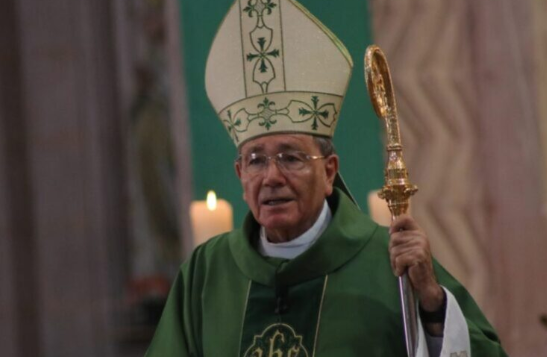
In Zacatecas, the presence of the Pope’s representative in Mexico is also seen as a sign of institutional closeness at a key moment for the diocese led by Bishop Sigifredo Noriega Barceló, who is approaching the canonical retirement age.
This situation has fueled speculation about the future episcopal succession once Pope Leo XIV evaluates the possible acceptance of his resignation in accordance with canon law. Beyond specific names, the visit opens a debate about the role of the Church in addressing global challenges, its public voice, and its capacity for renewal.
The topic is expected to intensify in the coming days as the pastoral agenda in Zacatecas progresses and official details of the meeting become known. Political and ecclesiastical interpretations will continue to grow in both Mexico and Rome.
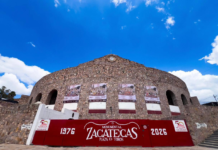
For now, two public events have been confirmed. The first will take place on June 17 at 7:00 p.m. at the Zacatecas Cathedral Basilica, and the second will be a special welcome concert at the same location on Thursday at 6:00 p.m. Discussions regarding episcopal succession in the Diocese of Zacatecas are also beginning.
Teachers’ Union Ends Encampment in Zacatecas, School Strike Continues
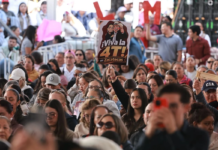
The political situation in Zacatecas reflects growing tension between the federal government and dissident teachers following the cancellation of President Claudia Sheinbaum’s tour. This development has been interpreted as a sign of caution in response to the teachers’ mobilization in Mexico City.
In this context, Section 34 decided to dismantle its encampment in the capital city of Zacatecas and strengthen demonstrations in Mexico City, while confirming that the school strike in Zacatecas will continue.
There are voices such as that of Congressman Ricardo Monreal Ávila, who yesterday emphasized the importance of addressing the conflict with institutional sensitivity and openness to dialogue on the part of President Claudia Sheinbaum. However, criticism remains directed at some leaders, such as Filiberto Frausto and Marcelino Rodarte, regarding their handling of the movement.
The central challenge is to prevent the conflict from escalating and to build lasting agreements that respond to educational demands. For now, the dispute reveals the fragility of political dialogue and the need for responsible solutions that avoid further social polarization.
Ultimately, Section 34’s decision to lift the encampment and strengthen mobilization in Mexico City marks a strategic shift, but it also keeps the protest active in Zacatecas, prolonging educational uncertainty in the state.
The Governor Reprimands the Mayor of Villanueva
Governor David Monreal Ávila directly confirmed that he issued a reprimand to the Mayor of Villanueva, Rogelio González “Chailito,” following his recent public conduct, which generated concern within the state’s political sphere.
The governor’s position emphasizes that public officials must act with responsibility, prudence, and respect for institutional norms, especially when their statements may affect relations between different levels of government or create unnecessary tensions in public life.
In this regard, the reprimand is not presented as a minor action but rather as a clear measure of political and administrative correction.
Monreal Ávila insisted that governance depends on coordination and mutual respect between authorities and citizens, and that exemplary conduct is essential. Therefore, any behavior that departs from these principles should be corrected in a timely manner. He also reiterated that tolerance and dialogue should prevail over any expression that could be interpreted as confrontational.
The Villanueva case also highlighted the importance of municipal governments maintaining permanent channels of communication with the state government in order to avoid misunderstandings and strengthen institutional trust. Public administration requires clarity, moderation, and responsibility in every statement.
In this context, the governor’s reprimand seeks not only to correct a specific situation but also to set a precedent regarding the expected behavior of local authorities. Ultimately, the message reinforces the need to act with political maturity in order to guarantee stability, coordination, and respect in Zacatecas.
Source: imagenzac