
Guadalajara is one of the host cities of the 2026 World Cup in Mexico. Recognized as the cultural and gastronomic heart of western Mexico, the capital of Jalisco combines tradition and modernity. Its hotel infrastructure, connectivity, and wide entertainment offer position it as a key destination for national and international fans.
The Estadio Guadalajara, located in Zapopan, will be the epicenter of the next match of the Mexican National Soccer Team against its counterpart South Korea in the duel for the leadership of Group A, since both countries have three points after their victories over South Africa (2–0) and Czech Republic (2–1).
Guadalajara will make history because it will be the first time in a World Cup that it hosts a match of the national team, and for that the city will offer a variety of traditional dishes as well as activities and attractions: from its Historic Center, museums and plazas, to neighborhoods such as Tlaquepaque and Chapultepec, known for their festive atmosphere and food options.
Typical dishes from Guadalajara
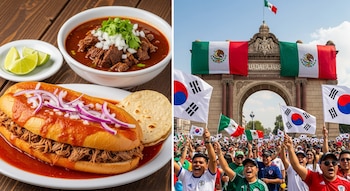
First close-up of torta ahogada and birria; behind it, a fan fest in Guadalajara with crowds, Mexican and South Korean flags, and a monumental arch.
During the 2026 World Cup, the city of Guadalajara promises a complete experience for those seeking celebration, culture, and local flavor. Before, during, and after the match between Mexico and South Korea, the public will be able to enjoy the following iconic dishes from the capital of Jalisco:
Torta ahogada: The most representative dish of the city. It is prepared with birote salado (traditional local bread), filled with pork carnitas and covered in tomato sauce. A spicy chili de árbol sauce is added to taste. It is ideal for breakfast or for recovering after a football celebration.
Birria: Goat or beef meat slow-cooked in a chili and spice marinade, served in its broth with freshly made tortillas. Traditionally consumed at family gatherings and celebrations, but during match days it is commonly found early in birria restaurants.
Carne en su jugo: Pieces of beef cooked in their own juice, mixed with bacon, beans, onion, and cilantro. It is served with tortillas and avocado. It is an energetic dish, ideal before or after the match.
Lonches: A bolillo bread filled with pork leg, ham, or cheese, covered in tomato sauce. It is a popular street food, easy to carry and eat on the way to the stadium or a fan zone.
Jalisco-style pozole: Thick corn soup with pork or chicken, served with lettuce, onion, radish, and oregano. It differs from other regional pozoles because it is usually denser and has a distinctive flavor.
Jericalla: Traditional dessert from Guadalajara, similar to crème brûlée. It is made with milk, egg, sugar, vanilla, and cinnamon, baked until the surface is golden.
Tejuino: Refreshing drink made from fermented corn, served with ice and lemon sorbet. It is popular during June heat and perfect to accompany football snacks.
Fan Fest and other places to enjoy the Mexico vs South Korea match
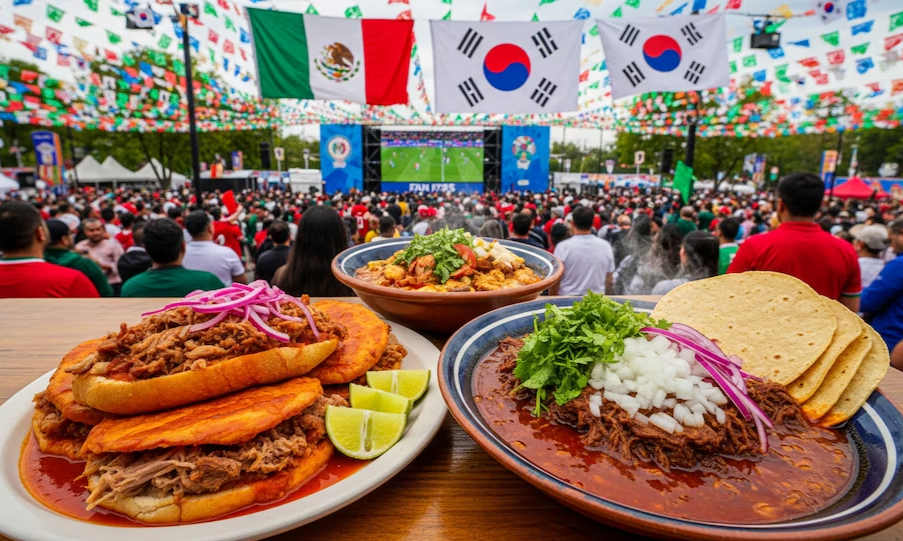
Panoramic view of a Fan Fest in Guadalajara with a large crowd in front of a stage with screens and colored security barriers in the foreground.
In Guadalajara, fans can enjoy the 2026 World Cup in various spaces offering a festive atmosphere and good visibility of the matches, especially the Fan Festival installed in Plaza Liberación, in the Historic Center, between the Metropolitan Cathedral and the Degollado Theater, which will broadcast Mexico vs South Korea on a giant screen.
Bar areas in neighborhoods such as Americana, Chapultepec, and Providencia are popular among those seeking large screens, snacks, and social gatherings with other fans.
Shopping centers usually set up common areas with large screens and food zones to experience the World Cup in groups. In traditional neighborhoods such as Tlaquepaque and Zapopan, plazas and terraces fill with fans looking to celebrate in a family-friendly or social environment.
In addition to bars, restaurants, and fan zones usually installed in key points of Guadalajara, there are other alternatives to follow the Mexico vs South Korea match:
Home gatherings
Many people choose to organize family or friends’ gatherings to watch the match at home, taking advantage of comfort and the opportunity to prepare snacks, grill food, or order local dishes.
Community and cultural centers
Some cultural centers, community houses, and sports clubs usually broadcast matches in shared spaces, creating a safe and family-friendly environment for neighbors.
Public squares and municipal esplanades
During major events, local authorities often install giant screens in esplanades or squares, allowing free access to the broadcast and generating a festive atmosphere in open spaces.
Hotels and event halls
During the 2026 World Cup, several hotels and convention centers will adapt rooms with screens and food service for guests and the general public. This option is common for those seeking a controlled environment and full service.
Universities and campuses
Educational institutions also join the World Cup celebration with collective screenings in auditoriums, courtyards, or halls, mainly for students and the academic community.
When will the Mexico vs South Korea match be played?
Flags of Mexico and South Korea wave in a football stadium with green grass. A blurred audience is visible in the stands, and the text “VS 2026” is centered.
The Mexico–South Korea match, corresponding to matchday two of the 2026 World Cup in Group A, will take place on Thursday, June 18 at the Estadio Guadalajara, a venue with a maximum capacity of 45,664 fans in the Perla Tapatía.
The match is scheduled to begin at 19:00 hours (Central Mexico Time). The national team is tied on points with South Korea but leads due to goal difference, and its objective against the Asian team is to win and secure qualification to the next round of the World Cup.
Source: infobae