
The war between the Mayos and Chapos has forced David Segura to close two businesses. Before September 2024, he owned four restaurant-bars in different parts of Mazatlán. Today, only two remain.
He had around 100 employees on the payroll. Today, the staff is down to 15. They used to work two shifts; now, only one. There was an administrator, an operations manager, a branch manager, a supervisor, and a purchasing officer at each restaurant. Cashiers, hosts, and bartenders worked there. Today, none of those positions exist. Only the branch manager, who also handles the cash register, remains.
The third restaurant stays open thanks to a daily battle against bills, rent, and a clientele that no longer comes as frequently. Every two weeks is a new battle. David is caught in the middle of two wars: the one outside and the one against his own finances.
David sums up nearly two years of business decline in one sentence:
“We had four locations, and now we only have two left. We’re giving it our all, fighting against everything.”
He doesn’t need to think long when asked when the decline began. The date is clearly etched in his memory. What he doesn’t know is when it will end.
“Since the violence started. It’s been almost two years now, I think. For many months, instead of the business being profitable, we’ve had to put money in to pay the rent, the expenses, social security.”
The violence first came like a shadow over the port’s nightlife. Restaurants, bars, nightclubs, and social venues were the first to feel its effects.
Then, David explains, the problem spread through streets, neighborhoods, grocery stores, shops, and entire sectors of Mazatlán’s economy.
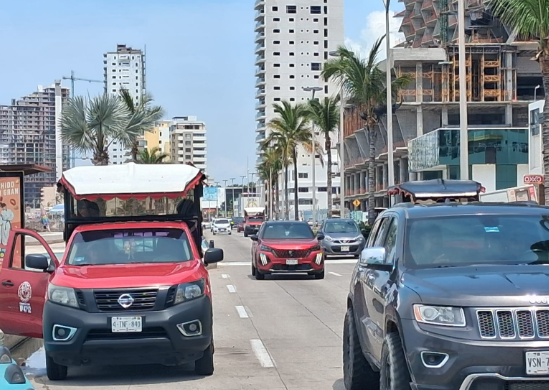
From the pulmoneros (open-air taxis) who travel along the boardwalk to real estate developers. From hotel owners to the waiters who depend on tips to make ends meet.
The figures and the testimonies paint the same picture.
HARDSHIPS
Verónica Estrada Osuna, president of Coparmex Mazatlán, said a few days ago that the port survives practically on three days of tourism.
Francisca Cázares Oliveros, president of Canaco, has said that the “hardships” have returned to the local economy.
Hotels have good occupancy from Friday to Sunday, and much weaker activity the rest of the week.
Coparmex Sinaloa has reported the loss of 54,000 formal jobs during the period of violence the state is experiencing.
For David, those numbers have concrete faces. They are employees he had to lay off.
They are also well-known businesses that have disappeared from the port’s commercial map. He mentions establishments like Mona Pizza, at its branches in La Marina and Centro; Wings Army, in Zona Dorada and Laguna; and Cotorritos, in Olas Altas.
“You can’t believe they’re closed. The establishments were profitable and now we’re struggling to break even.”
Source: revistaespejo