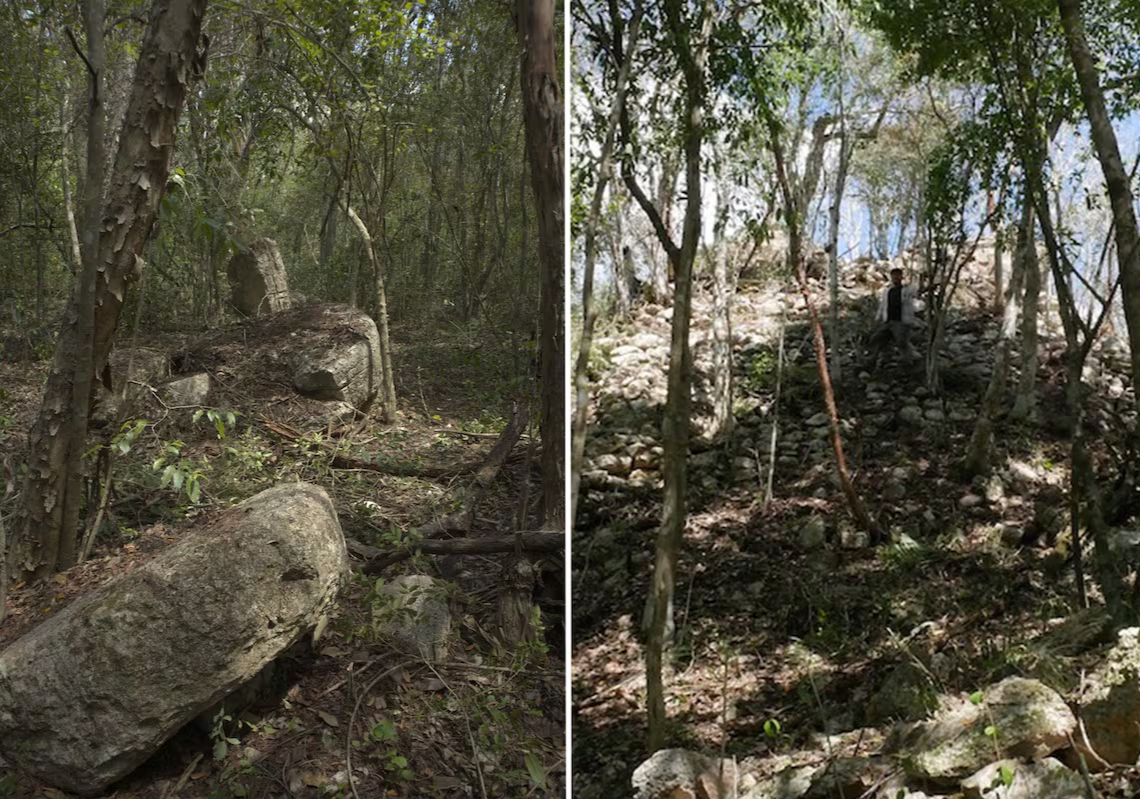

The National Institute of Anthropology and History (INAH) has confirmed the discovery of Minanbé, a Mayan city preserved almost perfectly thanks to the dense jungle of the Calakmul Biosphere Reserve in the state of Campeche, in southeastern Mexico.
Archaeologists have named it Minanbé—derived from the Yucatec Maya words mina’an (there is no) and be (path)—because of the difficulty involved in accessing the ruins. “Compared to other sites where we conducted surface surveys, access here proved much more difficult. However, in the last three years, this is the first site we’ve found intact; there are no signs of looting. It was a discovery, a great surprise for us. We follow the Mayan archaeological tradition of naming some sites according to a characteristic of the place or in reference to the circumstances of the discovery,” said Ivan Šprajc, who led the team of Mexican and Slovenian specialists who carried out the research, comprised of Atasta Flores Esquivel, Israel Chato López, Quintín Hernández Gómez, and Vitan Vujanović.
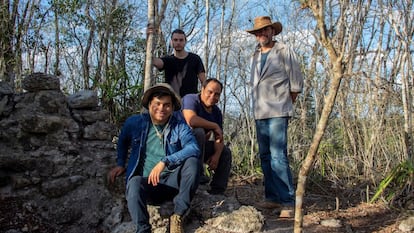
Team led by archaeologist Ivan Šprajc (wearing a hat, on the right), Daniel Santaella (INAH)
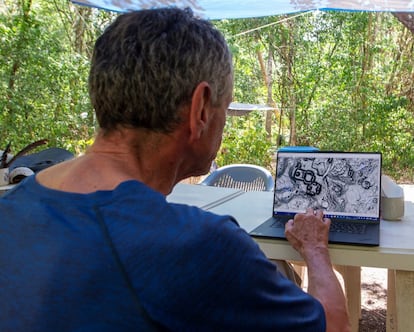
The first images of the area located north of Calakmul were obtained 13 years ago using airborne laser scanning (LiDAR), but it wasn’t until this field season that the specialists were able to explore the site in person. To reach the ruins, the explorers had to hack their way through up to five kilometers of jungle with machetes before traveling on ATVs, and then continue on foot for another six kilometers.
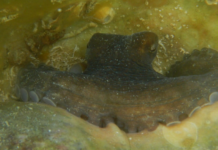
In the 15-hectare settlement, a pyramidal temple over 13 meters tall was discovered, built in the characteristic architectural style of Río Bec, along with 14 altars and stelae. Stela 1 is particularly noteworthy, featuring a decapitation scene in which, despite erosion, a ruler holding a knife is still discernible. “The inscriptions, the dates on the inscriptions, the pottery, and the architecture suggest that the site reached its peak during the Late Classic period, roughly between 600 and 900 AD,” explained Šprajc. This date coincides with the golden age of Calakmul, one of the largest cities in the Maya world. Some monuments found in Minanbé were fragmented, so experts believe they may have been intentionally altered by later inhabitants who no longer shared the same beliefs.
Source: elpais