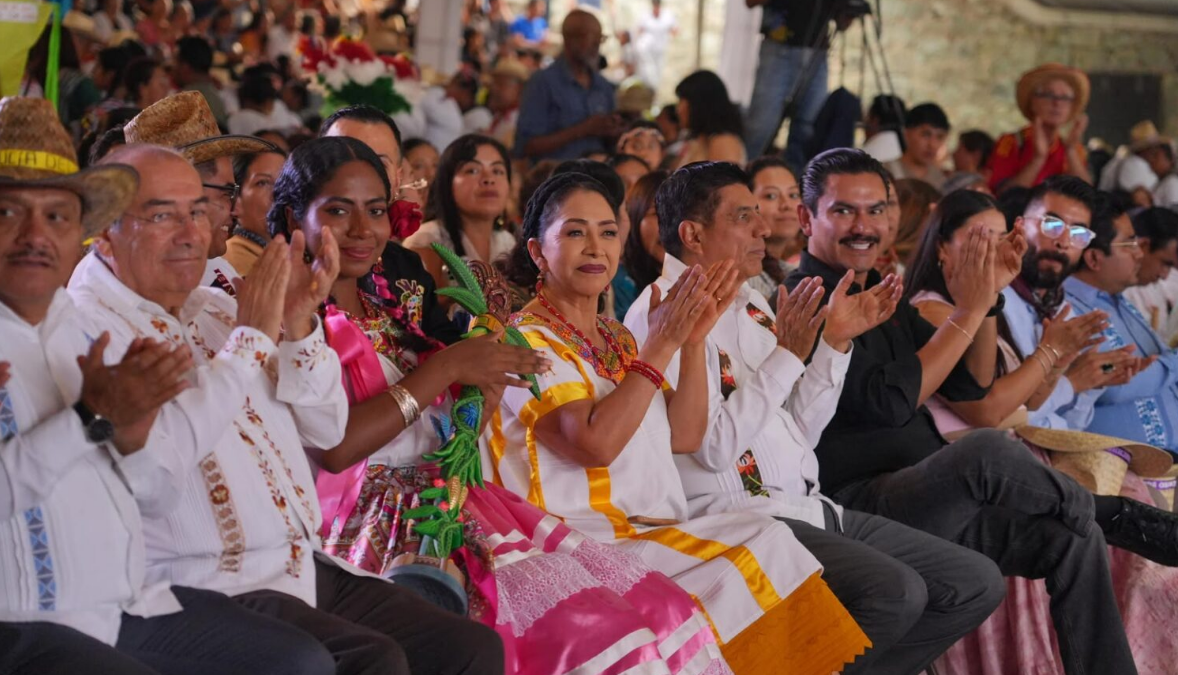

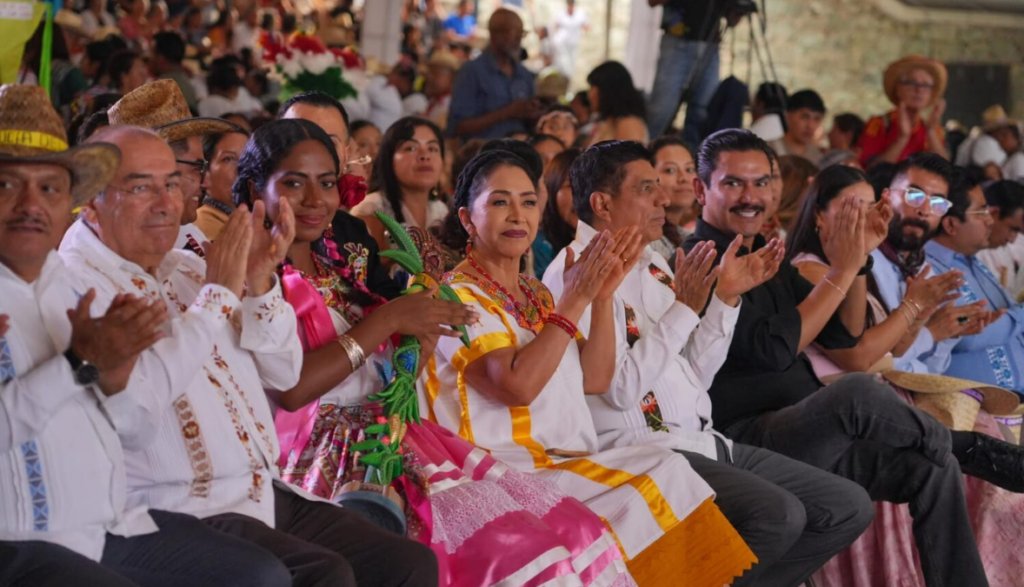
In an atmosphere of joy, identity, and tradition, the “Guelaguetza for Seniors Toz Nakchho 2026” was celebrated for the third consecutive year, organized by the Oaxaca State System for Integral Family Development (DIF). The event brought together 1,500 attendees at the Plaza de la Danza in the state capital.
Twelve delegations, comprised of seniors from day clubs across the state’s eight regions, proudly shared the cultural expressions of their communities.
The celebration began with the traditional calenda procession, which departed from the atrium of the Santo Domingo de Guzmán Church, accompanied by marching bands, giant puppets, lanterns, and cold fireworks. The delegations paraded through the Historic Center of Oaxaca de Juárez until arriving at the Plaza de la Danza.
In the presence of Governor Salomón Jara Cruz, the Honorary President of the state agency, Irma Bolaños Quijano, announced that the senior citizens participating in this year’s event came from various communities, an achievement made possible through collaborative efforts.
“Through the Directorate of Family Development, we work with great pleasure and affection for them; this is the result of our work. It is very important for us to care for senior citizens, as they are often left alone,” she added, speaking to Enid Azucena Torres Agustiniano, representative of the Goddess Centéotl.
Amidst colorful traditional clothing and applause from the audience, the delegation from Santa Lucía del Camino kicked off the cultural presentations with the traditional Jarabe Ejuteco.
San Melchor Betaza brought the sones and jarabes of the Sierra Juárez to the stage; San Mateo Yoloxochitlán shared the richness of Mazatec culture, while San Lorenzo Cacaotepec performed the traditional chilenas of Santiago Pinotepa Nacional.
The festivities continued with the traditional music and dances of Santa María Tonameca, the Jarabe Mixteco of Santiago Chazumba, and the emblematic Dance of the Devils presented by Santiago Juxtlahuaca, an expression that recalls the resilience and cultural richness of the Mixteca region.

The audience also enjoyed the Sandunga of Santo Domingo Tehuantepec, the Fandanguito of San Pedro Totolápam, the traditional music and dances of Guadalupe Etla, the traditional Flor de Piña of San Bartolo Tuxtepec, and the Chinas Oaxaqueñas performed by the delegation from Santa Cruz Xoxocotlán.
In this way, this grand celebration concluded, recognizing the elders as key players in preserving the traditions, identity, and cultural wealth that distinguish Oaxaca.
Source: oaxaca.gob