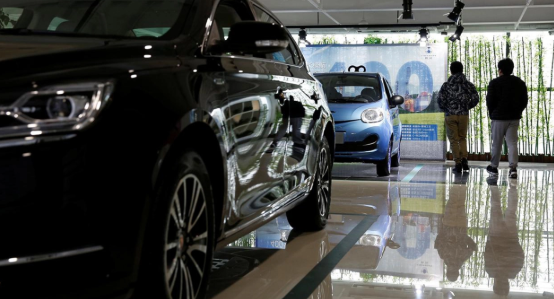

After an aggressive entry and a surge in sales that flooded the Mexican market, Chinese brands have reached a turning point by the end of the first half of 2026, which will lead to the closure of Chinese car dealerships in the coming months to ensure their long-term survival, projected Eric Ramírez, CEO of Urban Science Latam.
In their eagerness to compete head-to-head with established giants like Chevrolet and Nissan, Chinese brands opened dealerships at a frenetic pace. By mid-2026, of the nearly 3,000 dealerships in Mexico, approximately 400 belong to Chinese brands.
The Chinese automakers’ commitment to the Mexican market is strong, aimed at establishing roots and consolidating their presence. So much so, in fact, that they are already planning to assemble cars in Mexico, said Eric Ramírez during a journalistic workshop held by AMDA (Mexican Association of Automotive Distributors).
He specified that the average sales rate for the entire industry is 40 cars per month per dealership, which contrasts sharply with the sales of Chinese brands, which average 22 cars per month per dealership.
According to the automotive specialist, selling practically half the industry standard makes showrooms unsustainable in the long term. Local investors don’t operate as a hobby; they need to pay rent, payroll, and benefits.
According to the Mexican Association of Automotive Distributors (AMDA), local dealer groups have invested more than 30 billion pesos to open 500 dealerships, and now more than 60% of these brands operate through direct subsidiaries.
The brands have opted for aggressive expansion strategies to gain ground, although the scenario presents challenges due to strong competition and North American trade policies.
MG Motor, JAC, Geely, Changan, and Great Wall Motor are the preferred brands, collectively accounting for 91% of Chinese car sales in Mexico last year, with a total of 130,684 units, according to AMDA.
MG also boasts the largest number of dealerships with 99, followed by BYD with 80 (though not reporting figures); JAC with 60; and Great Wall Motors with 58. Chirey, Omoda, and Jaecoo each have 50 dealerships, and Geely has more than 40.
While Chinese automakers continue to gain market share, despite the imposition of 50% tariffs in Mexico, competition has not been sufficient to maintain their monthly sales percentage.
An executive from the consulting firm Urban Science confirmed that there is an imbalance between the number of dealerships and the sales volume, which anticipates a process of streamlining and consolidation in the short term.
The automotive industry “is not a 100-meter dash; it’s a marathon.” The euphoria of initial sales is giving way to market maturity, where long-term survival demands more: it requires infrastructure, transparency, and, above all, profitability.
The consulting firm Urban Science Latam confirms that there is an imbalance between the number of dealerships and the sales volume at Chinese car brands, which anticipates a process of streamlining and consolidation in the short term.
Source: eleconomista