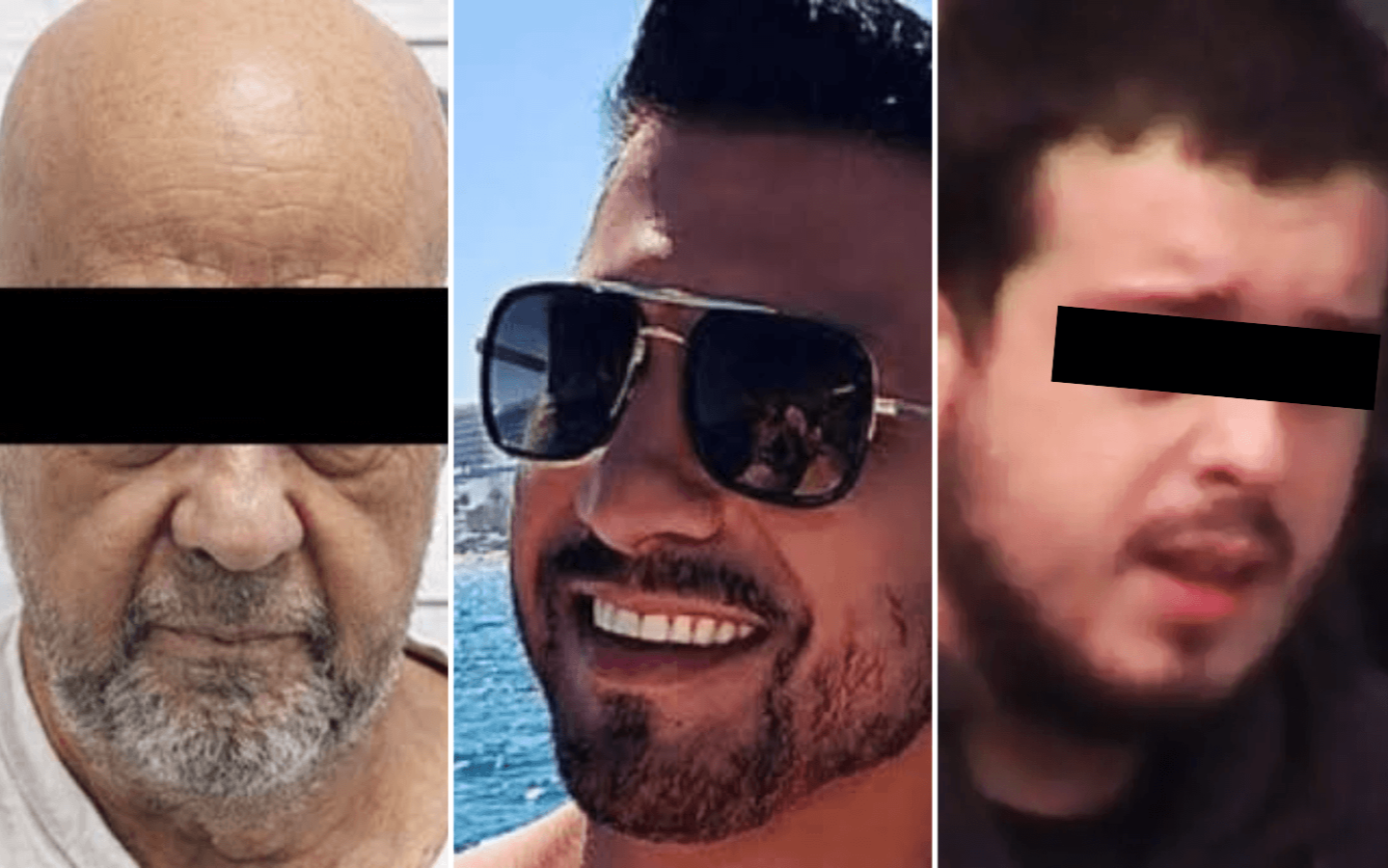

The strategic location of the region makes the Yucatán Peninsula an attractive place for criminal leaders from various organized crime groups, both as a hideout and as a location to store goods and even conduct operations, according to authorities and journalistic records.
Víctor Manuel Sánchez Valdés, a researcher at the Autonomous University of Coahuila (UAdeC), has documented that several foreign criminal organizations also operate in Campeche, Quintana Roo, and Yucatán.
Criminal Leaders Captured in the Yucatán Peninsula During the First Half of 2026
Below is a list of the principal regional criminal leaders arrested in the Yucatán Peninsula during the first half of 2026, who they are, and what they were doing.
Local Criminal Leaders Arrested in Yucatán
“La Patrona”
Following the triple execution on January 5, 2026, in Dzilam González, specifically in the Santa Cruz neighborhood—known as Taiwan—authorities announced throughout January the arrest of eight individuals: four women and four men.
Later, in connection with these murders, authorities announced the arrest in Mérida of Gabriela Alejandra A., known as “La Patrona,” the wife of Valerio N., alias “Monkey,” a leader of the Caborca Cartel in Quintana Roo.
The 29-year-old woman was formally charged and placed in pretrial detention. She was accused of dangerous attacks against a public official, bribery, illegal possession of weapons and prohibited instruments, drug-related offenses involving street-level drug dealing, and damage to public property.

Authorities allege that “Monkey” used his wife to transport the weapons used by the hitmen during the triple homicide in Dzilam González, in which the son of “Don Nato” was executed.
“El Pecas”
Víctor Alfonso R. F., known as “El Pecas,” originally from Chetumal, operated as a drug distributor in Mérida. He was arrested on May 22 at a residence located on 43rd Street by 118th Street in Ciudad Caucel after fleeing Quintana Roo following an attack against him.
He had previously been arrested by the Yucatán Public Security Secretariat (SSP) in August 2025 along with his wife and two other individuals, at a time when he was already considered a fugitive from justice in Quintana Roo.
However, he was released three days after his arrest. It remains unknown why authorities in Yucatán did not hand him over to the Quintana Roo Prosecutor’s Office.
“El Guamúchil”
On June 1, authorities announced the arrest of Arturo Misael, known as “El Guamúchil,” in a northern neighborhood of Mérida. His alias matches the name of the fifth-largest city in Sinaloa, where he is originally from.
According to Quintana Roo Attorney General Raciel López Salazar, he was considered the principal generator of violence in Benito Juárez, Isla Mujeres, Playa del Carmen, Puerto Morelos, and Lázaro Cárdenas.
Investigations indicate that from Mérida he ordered executions, coordinated extortion targeting taxi drivers, and managed narcotics distribution in those municipalities.

Authorities identify “El Guamúchil” as part of the criminal group led by Héctor Elías Flores Aceves, known as “El 15,” within the criminal structure of Los Chapitos, a faction of the Sinaloa Cartel.
Female Extortionists: Erika and Evelyn
Oscar Tonatiuh Vázquez Landeros, head of the Tabasco State Attorney General’s Office, stated that Erika “N” and Evelyn “N” were arrested in Yucatán, although the exact location was not specified. Both women were members of a telephone extortion network whose operations extended into the Chontalpa region.
The Tabasco Prosecutor’s Office stated that their arrest in March was connected to the January arrest, also in Yucatán, of Julio “N,” a 28-year-old man.
Originally from Veracruz, Julio allegedly led a group of approximately 100 people dedicated to extorting business owners in Tabasco, demanding payments ranging from 5,000 to 15,000 pesos every two weeks from their victims.
Criminal Leaders Captured in Quintana Roo
“Menace,” Wanted by Interpol
Denis Ivziku, known as “Menace,” was identified as a leader and logistics operator of the transnational criminal organization Hell Angels Motorcycle Club (HAMC) and was wanted by Interpol for drug trafficking and extortion.

The Security Cabinet announced his arrest in May on charges related to drug trafficking, firearms offenses, extortion, and other crimes.
Canadian media have linked him to the trafficking of methamphetamine, cocaine, and fentanyl. He was also wanted by Canadian authorities but had been operating while hiding in Cancún, in the Yucatán Peninsula.
“Dániel Takács”
The Security Cabinet reported in April the arrest of Hungarian drug trafficker János Balla, alias “Dániel Takács,” 48 years old, who had been living in hiding in Cancún and allegedly used music festivals to distribute drugs.
The foreign criminal was the subject of an arrest warrant in Hungary for drug trafficking and was considered one of Europe’s ten most wanted fugitives.
According to Le Figaro, the Hungarian national led a criminal organization in his home country specializing in cocaine and ecstasy trafficking and was wanted by authorities in Budapest.

“El Milo”
On the morning of April 6, federal authorities confirmed the arrest of Remigio N., known as “El Milo,” identified as a high-ranking member of the criminal organization known as the Cuban-American Mafia in Quintana Roo.
Through intelligence operations, multiple law enforcement agencies located Milo, who was subject to an extradition request from the United States on charges of human trafficking, drug trafficking, and organized crime.
The name of this organization partially matches that of a criminal structure that, according to the United States government, has operated in Cuba, Mexico, Spain, and southern Florida since 2009.
Criminal Leaders Arrested in Campeche
“Campeche”
Juan Carlos González Pérez, known as “Campeche,” was arrested on May 27 in Campeche by Interpol-Mexico for extradition purposes.
He was part of a criminal organization that, since 2020, trafficked large quantities of methamphetamine from Campeche and distributed them in Iowa and Nebraska through sales conducted via Facebook, according to Reforma on Monday, July 6, 2026.

What This Series of Arrests Reveals About the Yucatán Peninsula
The arrests of these alleged criminal leaders indicate that the Yucatán Peninsula continues to be a region of interest for various national and international criminal organizations.
While some used the region as a refuge to evade law enforcement, others coordinated activities from there, including drug trafficking, extortion, protection rackets, human trafficking, and drug distribution.
Although these arrests represent significant blows against these criminal structures, security specialists such as Víctor Sánchez of the Autonomous University of Coahuila warn that the presence of these groups is driven by factors including the region’s strategic location and its tourism and transportation infrastructure, which facilitate the movement of illicit goods throughout Campeche, Quintana Roo, and Yucatán
Source: yucatan