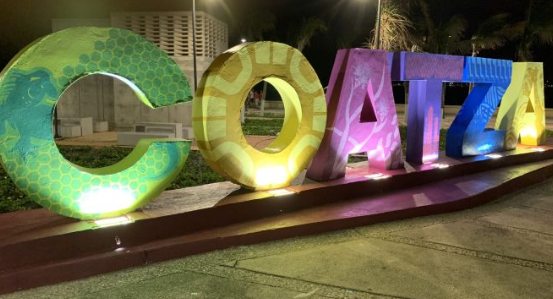

Violence in the Isthmus of Oaxaca corridor and southern Veracruz shows two connected regional trajectories. In southern Veracruz, the most severe crisis came earlier and was massive and highly visible, especially between 2017 and 2019 in Coatzacoalcos, Minatitlán, and Acayucan. In the Isthmus of Oaxaca, however, violence intensified more clearly beginning in 2019 and became more complex between 2023 and 2025 due to the increase in extortion, protection rackets, fuel theft, disputes over local economies, and territorial control.
The region must be understood as a territory shaped by different strategic infrastructures: highways, railroads, ports, rail yards, communal land, industrial development poles, and illicit economies. Southern Veracruz provides a criminal and energy base associated with the port of Coatzacoalcos, the petrochemical industry, the Minatitlán refinery, highway routes, and fuel theft networks. The Isthmus of Oaxaca, meanwhile, is shaped by the Interoceanic Corridor around Salina Cruz, Matías Romero, Juchitán, and Santo Domingo Tehuantepec. Violence is fueled both by the criminal opportunities generated by the convergence of these spaces and economic activities and by the weakness of the State, which has not demonstrated the capacity to effectively control criminal groups.
TWO REGIONAL TRAJECTORIES OF VIOLENCE
In the Isthmus of Oaxaca, the combined area of Juchitán, Matías Romero, Salina Cruz, and Santo Domingo Tehuantepec increased, according to INEGI, from 87 homicides and a rate of 29.10 per 100,000 inhabitants in 2015 to 133 homicides and a rate of 43.26 in 2019. Although there was a partial reduction in 2021, with 105 homicides and a rate of 33.94, by 2024 the group again recorded 111 homicides and a rate of 35.53. However, the adjusted SESNSP series shows a greater intensification: from 61 homicides and a rate of 20.40 in 2015, it rose to 170 homicides and a rate of 55.30 in 2019, reaching 231 homicides and a rate of 73.95 in 2024. By 2025, it still recorded 181 homicides and a rate of 57.74. This discrepancy between INEGI and SESNSP is not a minor technical detail, but rather an indication either of the difficulty in fully capturing violence in a territorially fragmented environment or of intentional State intervention to conceal the reality.
In southern Veracruz, the most intense crisis occurred earlier. Coatzacoalcos reached its municipal peak in 2017 with 188 homicides and a rate of 58.67; in 2018 it maintained very high levels with 161 homicides and a rate of 50.55; and in 2019 it recorded 133 homicides and a rate of 42.01. Minatitlán also experienced a critical point in 2019 associated with massacres, criminal disputes, and illegal economies linked to the oil corridor. After those years, violence did not disappear despite the significant decline in homicides, but instead shifted toward extortion and other forms of violence that generate fear among the population and territorial control, such as protection rackets, kidnapping, fuel theft, and the control of local businesses.
THE INTEROCEANIC CORRIDOR
The Interoceanic Corridor made access to the port of Salina Cruz, the connection with Coatzacoalcos, rail yards, land near development poles, and the entire logistics chain strategically important. Line Z and the industrial poles increased the territorial centrality of both ends of the corridor. In this context, violence cannot simply be explained as a dispute between cartels, but rather as territorial control.
This interpretation is not necessarily related to an increase in drug trafficking activity, but to the premise that greater strategic infrastructure increases disputes over territory. Logistics expansion turns highways, railways, communal land, ports, and distribution centers into attractive assets, making threats, land dispossession, extortion, and protection rackets increasingly common.
THREE STAGES OF REGIONAL VIOLENCE, 2015–2026
Violence between 2015 and 2026 can be divided into three stages.
The first stage, between 2015 and 2016, reflects the legacy in southern Veracruz of open conflict between criminal groups, failed security operations, disappearances, and institutional infiltration. The “Blindaje Coatzacoalcos” case stands as an emblematic example of the relationship between public security, organized crime, and institutional fragility.
The second stage, between 2017 and 2019, concentrated the highest levels of mass homicide in Coatzacoalcos, Minatitlán, and Acayucan. This period was marked by open disputes between the CJNG, Los Zetas, the Gulf Cartel, and other regional actors. Violence was urban, visible, and highly lethal, involving massacres, armed attacks, and the control of economic spaces.
The third stage, between 2019 and 2026, gradually shifted the center of gravity toward the Isthmus of Oaxaca and toward coercion and pressure on the population. Extortion, protection rackets, fuel theft, local drug dealing, human trafficking, robbery, pressure on transport operators, and control of neighborhoods and urban districts became increasingly common. This shift coincided with the initial effects of the “revival” of the Interoceanic Corridor promoted by the administration of President Andrés Manuel López Obrador.
ISTHMUS OF OAXACA
Juchitán has emerged as one of the main centers of recent violence in the Isthmus. Qualitative evidence points to a combination of local drug trafficking, extortion of merchants, pressure on transport operators, school robberies, and neighborhood control. In January 2026, teachers from the Isthmus, including sectors from Juchitán, Tehuantepec, Salina Cruz, and Matías Romero, marched in protest against school robberies and attempted extortion through anonymous threats. In February, the Oaxaca government met with productive sectors in Juchitán to announce a joint strategy against extortion and protection rackets. In June, authorities reported 116 arrests in Juchitán under the “Peace Plan” and “Operation Saber,” including organized crime targets and the seizure of methamphetamine, cocaine, marijuana, weapons, vehicles, and cash.
The case of Juchitán shows that violence can no longer be understood solely as direct homicide between rivals. Instead, it appears to function as control over the population and the local economy.
MATÍAS ROMERO
Matías Romero functions as a highly important highway and railway logistics hub. Although it receives less national attention than Juchitán or Salina Cruz, it is key to controlling transportation routes, illicit fuel distribution, and regional economies. In May 2025, the Oaxaca Prosecutor’s Office reported that “Operation Saber” captured three priority targets linked to a cell led by “El Tláloc,” associated with fuel theft, extortion, robbery, and homicide, mainly in Matías Romero and surrounding areas.
Between December 2025 and January 2026, authorities also documented the arrest and prosecution of an alleged local criminal leader in Matías Romero connected to a cell dedicated to fuel theft, extortion, and homicide. Media reports linked him to the CJNG. In this type of territory, a fuel theft and extortion cell may produce violence that is less spectacular than a massacre but more constant, profitable, and territorially functional.
SALINA CRUZ
Salina Cruz concentrates the strategic value of the port, energy connections, and access to the logistics corridor. In July 2024, the Oaxaca government reported the capture of Elías Chincoya Urbano, known as “El Chincoya,” identified as the criminal leader of the Port of Salina Cruz and linked to fuel theft and other illegal activities.
This case explains both the persistence of high violence rates and the existence of criminal leadership directly associated with the port and fuel trafficking. In addition, journalistic investigations into the expansion of the Interoceanic Corridor reported increased threats, land dispossession, extortion, and communal land conflicts around development poles and transportation routes in the Tehuantepec–Salina Cruz area.
SANTO DOMINGO TEHUANTEPEC
Santo Domingo Tehuantepec forms part of the same territorial system connecting the port, highways, railways, communal land, and industrial development poles. Its importance extends beyond recorded homicides to its strategic location within the corridor. Together with Juchitán, Matías Romero, and Salina Cruz, it forms part of the territory where the increasing value of the Interoceanic Corridor translates into disputes over land rents, territorial control, pressure on communities, and extortion of local economic actors.
SOUTHERN VERACRUZ
Coatzacoalcos became the media epicenter of violence in southern Veracruz during the most severe phase between 2017 and 2019. The massacre at the El Caballo Blanco bar in August 2019 left at least 28 people dead. News reports indicated that state authorities linked the attack to a dispute over drug sales and identified one of the alleged perpetrators as Ricardo “N,” alias “La Loca,” described by local media as the CJNG leader in the municipality.
That event exposed the depth of criminal infiltration into local institutions and urban businesses. However, in the years that followed, Coatzacoalcos stopped making headlines for homicide violence and normalized local control through everyday extortion practices. In 2024, the media documented an extortion case targeting an elementary school, including an explicit threat of “accidents” if a payment of 20,000 pesos was not made.
MINATITLÁN
Minatitlán shares with Coatzacoalcos a central role in the petrochemical, energy, and logistics sectors. It reached a critical point in April 2019 when an armed group entered a party and murdered 14 people. Media reports indicated that the region was disputed by Los Zetas, the CJNG, and the Gulf Cartel, while also emphasizing that the oil corridor was heavily affected by kidnapping, fuel theft, human trafficking, and extortion.
In recent years, local media have documented business closures caused by extortion. In 2025, reports indicated that at least a dozen businesses had left the city within a single month due to demands for monthly payments and threats of armed attacks. Like other territories, Minatitlán illustrates the transition from high-impact violence driven by disputes between criminal groups to a more persistent economic violence that may result from agreements between criminal organizations and authorities or from the dominance of one criminal group over its rivals.
ACAYUCAN
Acayucan deserves special attention because it is often overshadowed by Coatzacoalcos and Minatitlán despite being a key component of the highway corridor in southern Veracruz. Its importance lies in serving as a connection between the Veracruz logistics corridor, the route toward the Isthmus, and the circulation of transportation, commerce, and regional illicit economies. Although there is no highly visible evidence of direct criminal involvement, the municipality’s cattle industry is particularly significant, especially considering that it lies along the natural route used to illegally introduce cattle from Guatemala into Mexico through Benemérito de las Américas, Chiapas, and Candelaria, Campeche by organized crime groups.
Unlike Coatzacoalcos, whose violence became associated with a highly visible massacre, recent evidence in Acayucan points toward extortion, kidnapping, and route control. In February 2026, the local Chamber of Commerce stated that businesses continued to face extortion. In April 2026, local media reported the prosecution of four individuals accused of operating protection rackets in different parts of the municipality.
One of the most relevant figures in terms of criminal organization is Abraham Morales Trinidad, known as “El Doble Cero.” In June 2025, the Veracruz Prosecutor’s Office offered a reward for information leading to his capture as the alleged CJNG regional leader in southern Veracruz. Shortly afterward, the media reported his capture in Chiapas and subsequent prosecution for the murder of a traffic officer in the region.
This case clearly illustrates both the regional connections and the mobility of criminal actors throughout southeastern Mexico and across the country. It is common for criminals operating in the southeast to be arrested or killed in different regions of Mexico, as demonstrated not only by this case but also by others in Tabasco and Quintana Roo.
CRIMINAL ACTORS AND THE DEGREE OF AVAILABLE EVIDENCE
Publicly available evidence shows the presence and territorial disputes involving the CJNG at various points along the corridor, as well as references to Los Zetas, the Gulf Cartel, and the Sinaloa Cartel in certain locations and periods. In 2023, Oaxaca’s Secretary of Public Security publicly stated that the CJNG had a presence in the Isthmus and maintained a conflict with the Sinaloa Cartel. He also stated that the CJNG entered “from the Coatzacoalcos side” because of its interest in controlling the economic flow of the corridor. Another reflection of this presence was the series of vehicle burnings and violent incidents reported in the region following the reported killing of “El Mencho” in February 2026.
Between 2024 and 2026, official arrests and operations suggested the proliferation of violent local cells. Some were linked to the CJNG, while others were identified by authorities as regional criminal structures, including “El Chincoya” in Salina Cruz, “El Tláloc” in Matías Romero, fuel theft and extortion cells, “Comandante Cromo,” and “Los Cromos” as threats to the corridor and Juchitán.
The sources reviewed also contain public evidence of the presence or territorial disputes involving the Sinaloa Cartel in the Isthmus, although with fewer identified individuals, arrests, and documented investigations than those involving the CJNG and local Isthmus-based criminal cells.
Violence in the Isthmus of Oaxaca and southern Veracruz cannot be explained solely by the presence of drug trafficking organizations. What the available data and sources reveal is territorial control and the diversification of criminal activities. In southern Veracruz, the 2017–2019 period was characterized by highly lethal open disputes between criminal organizations, with Coatzacoalcos and Minatitlán serving as the principal centers of conflict. In the Isthmus of Oaxaca, the 2019–2026 period reflects violence linked to the economic value of the Interoceanic Corridor, expressed through extortion, protection rackets, fuel theft, local drug trafficking, robbery, and pressure on landowners, transport operators, and local businesses.
The principal conclusion is that the region is experiencing a long-term criminal reconfiguration. Coatzacoalcos and Minatitlán reduced their homicide rates compared to their deadliest years, but they did not leave the cycle of violence. Instead, they transitioned toward economies based on extortion and illicit fuel trafficking. Juchitán, Matías Romero, Salina Cruz, and Tehuantepec entered more forcefully into a cycle in which the corridor, logistics, and land have increased the value of coercion. Acayucan, meanwhile, functions as a strategic link—less visible than Coatzacoalcos, but with a growing importance in extortion networks and territorial control.
Source: misionpolitica