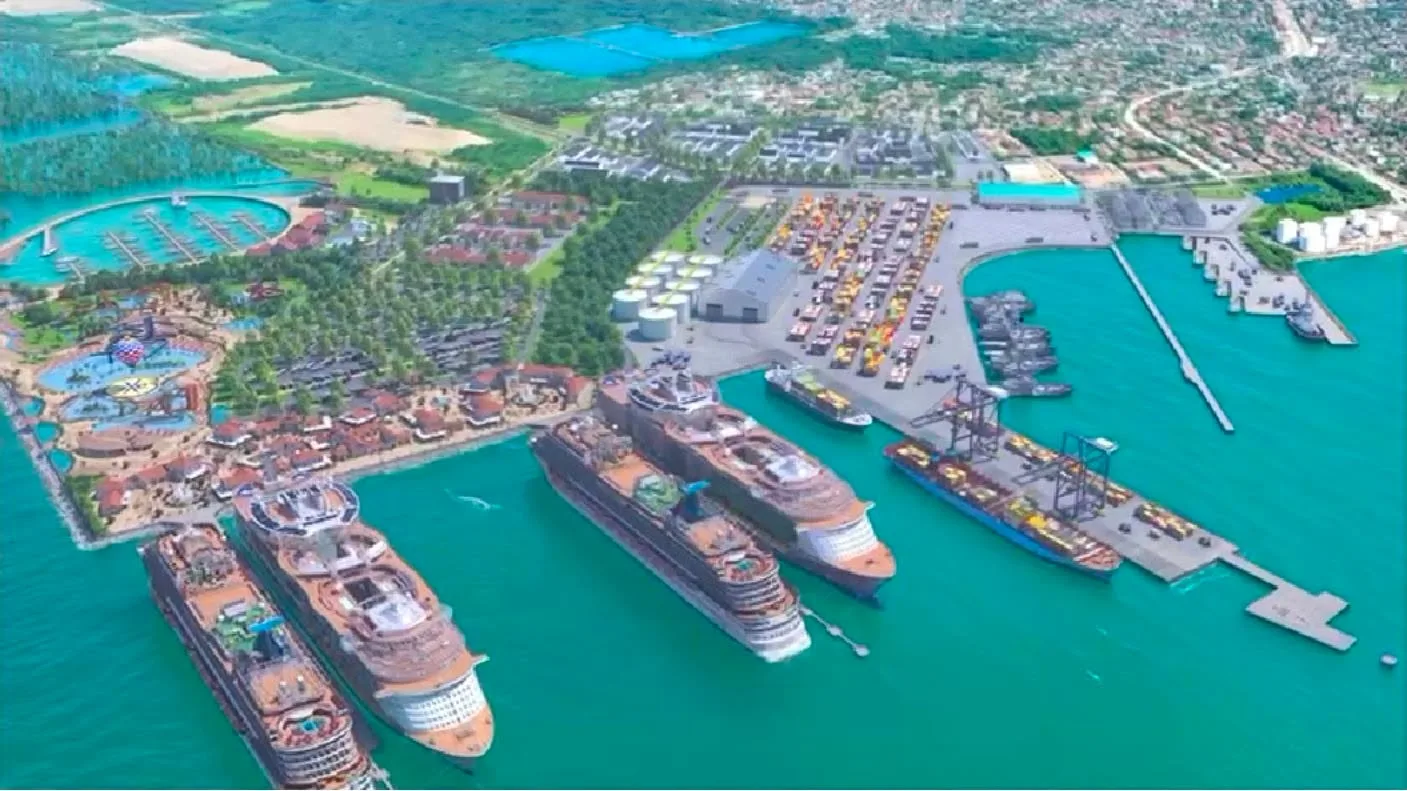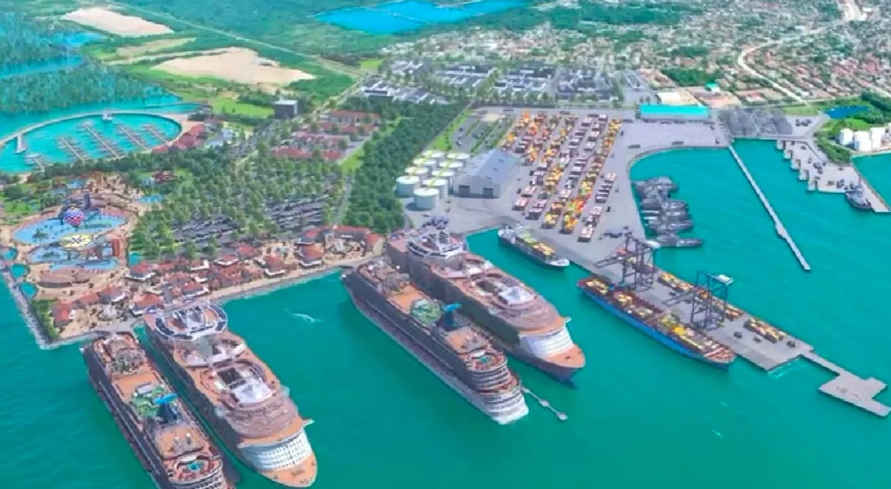

Located 115 kilometers as the crow flies from Mahahual, Belize has authorized one of the largest infrastructure projects in its history: the expansion of the Belize City port into a commercial cargo and cruise tourism hub capable of simultaneously accommodating up to four state-of-the-art mega-cruise ships—the largest in the world.
Environmental approval was granted by Belize’s Department of the Environment on June 22, 2026—according to official documents—without any significant public announcement; this silence is already raising questions within Belize regarding the transparency of the process.
The Port of Belize Limited project entails dredging approximately 8.6 million cubic meters of marine material, constructing deep-water berths, expanding cargo facilities, and creating a 448-acre (approximately 181-hectare) artificial mangrove island using the dredged material.
The authorization includes environmental conditions such as continuous water quality monitoring, manatee protection measures, waste management requirements, and compliance bonds worth hundreds of thousands of dollars.
The leap the Belizean port is set to make is significant. Currently, lacking deep-water berths, cruise ships must anchor in open water and ferry passengers ashore via tenders; this limits operations to between 1.5 and 2 million passengers annually, involving medium-sized ships and an average of 150 to 200 arrivals per year.
With the new infrastructure, Belize will be able to simultaneously dock up to four Icon of the Seas-class vessels—ships measuring 365 meters in length (taller than the Eiffel Tower) and boasting a capacity of nearly 10,000 people (passengers and crew) each. Through this, the neighboring country aims to attract between 4 and 5 million cruise passengers annually—more than double its current volume. That flow would largely originate from the same market currently contested by Mahahual, Mexico’s second most important cruise port.
Belize’s authorization comes at a time when the situation on the Mexican side is the exact opposite. Expansion plans and operational certainty for Costa Maya remain stalled due to environmental restrictions and regulatory ambiguity from federal authorities—as evidenced by the controversy surrounding Royal Caribbean’s project in the area.
Compounding this is the situation with the Zaragoza Canal and Chetumal Bay: a strategic project intended to connect the Caribbean Sea with the state capital and spur the southern economy remains suspended and unfinished, hampered by budget cuts, technical complications, and environmental hurdles that the federal government itself has failed to resolve.
The result is a regional double standard: while Mexico keeps infrastructure along its southern border held back by environmental constraints, Belize is forging ahead with a massive dredging operation—which will even create an artificial island—and is positioning itself to capture the high-impact tourism market of the Western Caribbean.
Source: palcoquintanarroense