
When we think of La Paz, Baja California Sur, the first thing that comes to mind is the immensity of what we know as the “aquarium of the world.” It is a destination of contrasts that invites you to leave your routine behind, feel the desert climate, and connect with a privileged natural environment. However, beyond its spectacular beaches and its adventurous spirit, the state capital has evolved to establish itself as a true center of haute cuisine, driven by world-class seafood products. Together with Culinaria Mexicana and the GoLaPaz initiative, we traveled through the region to document all of these aspects.
Exploration and hospitality as a foundation
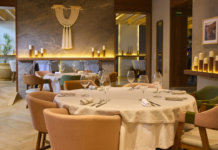
Every great experience at the destination requires a good starting point. During this trip, Hotel Indigo served as our operational base: a comfortable and strategically located refuge facing the bay, within the Puerta Cortés complex. Beyond helping coordinate our activities, this 115-room property reflects the cultural identity of Baja California Sur through its design, its focus on wellness with Espíritu Spa, and access to the Puerto Beach Club. As a complement to this hospitality, the hotel houses Restaurante Barco, where chef Manuel Guzmán introduces haute cuisine from the very beginning with his absolute mastery of sashimis and ceviches.

From the city, aboard Baco Adventures boats, we set sail. The journey took us through turquoise waters, allowing us to observe sea lions in their natural habitat.
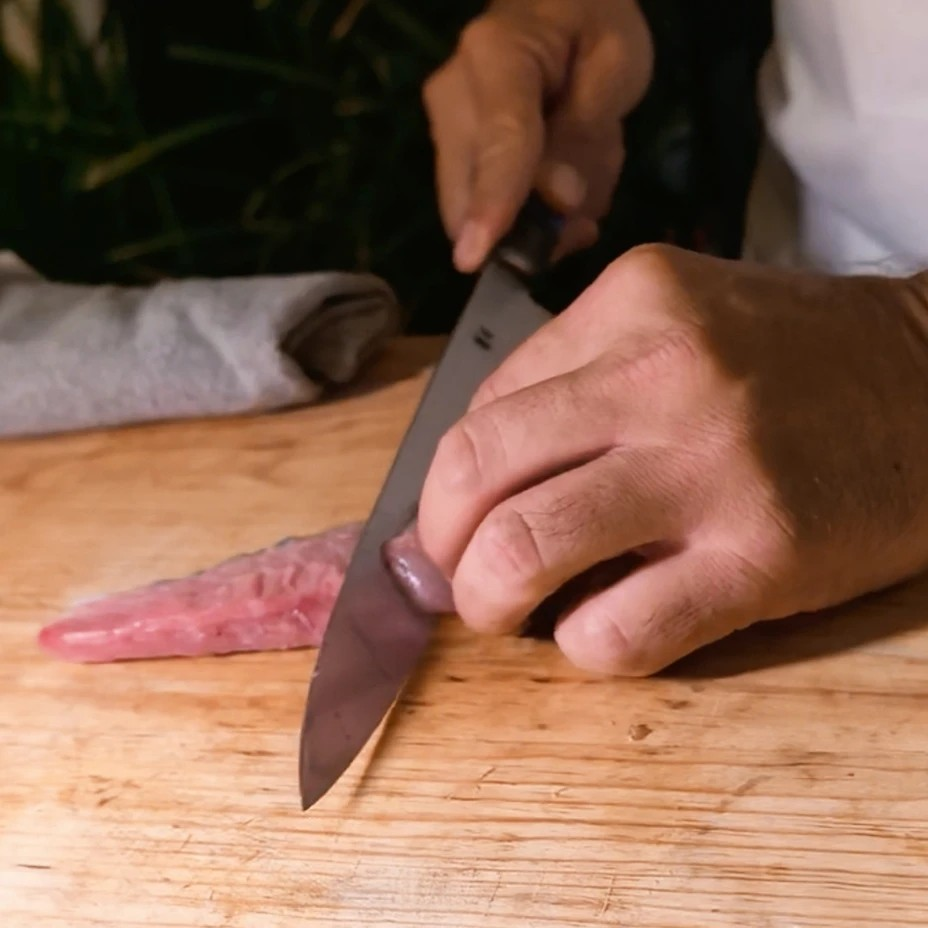
A key point of the trip was visiting the facilities of Omega Azul, a sustainable aquaculture company dedicated to the cultivation of kampachi (Seriola rivoliana). Unlike wild capture, this operation applies a meticulous closed-cycle mariculture model: the fish is born on land under strict technical supervision and completes its development in marine pens off the coast of La Paz.
From the boat, these circles appear to be just nets and buoys, but beneath the surface they support a large-scale operation that aims to reach 900 tons by 2026. Far from being an imported product, kampachi, which has been part of Japanese cuisine for a long time, is not a foreign species to our seas, and in the Gulf of California it has become a symbol of the productive identity of Baja California Sur.
The project stands out not only because of this innovation in biological management, but also because of its privileged location near the iconic Balandra Beach, where responsible use coexists with a protected environment. All the scientific and logistical rigor of the cold chain has a clear objective: to deliver a first-class product in Mexico and the United States.
To taste it in sashimis, ceviches, and grilled dishes, the journey ended with a landing on the sand, where an exceptional meal was prepared by the shore, directly connecting the ecosystem and local resources with the palate.
High-level products: Totoaba and Pacific Red Snapper
That natural abundance perceived while sailing is the same one that supports local cuisine. In addition to Omega Azul’s Kampachi, we learned in depth about the operations of Santomar, a project that is transforming the aquaculture industry.

Is it legal to eat totoaba? How La Paz took it from extinction to haute cuisine
June 23, 2026 04:00 p.m. • 4 minutes read
With the support of Cuna del Mar, Santomar specializes in raising totoaba and Pacific red snapper using submerged offshore pens. Through advanced laboratories that control temperature and photoperiod, they achieve constant production of the highest quality. They guarantee the legality of each fish through a QR code that certifies its genetic traceability — directly fighting the black market — and contribute to the repopulation of the Gulf of California through the release of juveniles via the “Totoabas a la Mar” program.
The promoters of the culinary ecosystem
All of this exceptional quality requires professionals who understand it and bring it to the table. During our days in the city, we witnessed the talent of a community united by respect for the ingredient:
Casamarte and Héctor Palacios: Host chef Héctor Palacios is a central figure dedicated full-time to promoting the region’s products, demonstrating impeccable mastery in his menus.
Paceño flavors: In addition to the proposal at Restaurante Barco inside the hotel, the route included strategic stops such as Quemadero by chef Alex Villagomez.
Meetings and pairings: We enjoyed the proposals of chef Jaime Ruiz at the Jardín Escondido of Hotel La Concha, as well as the dishes from chefs Luis Cota (La Parrilla del Chef) and Aldo Arteaga (Anzuelo). The experience was accompanied by mixology from Flor Alteña tequila and Casa Tierra Cobriza.

Visiting La Paz is a complete experience that ranges from relaxation in first-class hotels to adventure at sea, culminating at the table to taste the result of the work of an entire community of producers, fishermen, and chefs dedicated to highlighting the Sea of Cortez.

Source: revistacentral