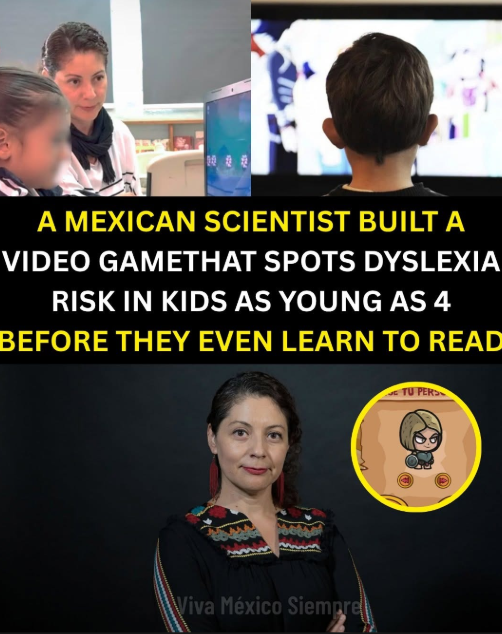

Her name is Dr. Katya Álvarez Molina, a researcher at Mexico’s CICESE research center in Ensenada, Baja California — and her creation, “Rhythm Heroes,” could change the lives of thousands of Mexican children. 🇲🇽
Here’s the genius of it: dyslexia is usually detected AFTER a child has already fallen behind in school — after years of frustration, after being unfairly labeled “lazy” or “distracted.” By then, the damage to their confidence is already done.
🔄 Rhythm Heroes Flips the Script
Science shows dyslexia also affects rhythm and timing — the same skills the brain uses for reading. So the game challenges kids as young as 4 with rhythm-based adventures across four levels, measuring synchronization, pattern reproduction, and rhythmic memory.
No reading required. Which means the risk can be flagged BEFORE reading problems ever appear. 🌟
🎓 Dr. Katya’s Journey
Electronic Engineering ➡️ Master’s in Music Technology at UNAM ➡️ Research in the Netherlands ➡️ PhD in Digital Media in Bremen, Germany — and then she brought all that knowledge HOME to build something for Mexican children. 🏡
🤝 A Multidisciplinary Project
The project brings together a full multidisciplinary team — neuropsychologists, speech therapists, music therapists, and game designers — with collaboration from UABC, and it’s supported by peer-reviewed published research.
📌 Important
This is NOT a diagnosis tool. Dr. Katya herself is clear — it screens for risk indicators so specialists know which children need a full professional evaluation. The game is currently in scientific validation, with the goal of bringing it to schools, clinics, and psychology centers across Mexico and beyond.
💬 In Her Own Words
“If we can find indicators of dyslexia risk early, we can intervene — and that completely changes a person’s educational path.”
🇲🇽 Mexican Science. Mexican Music. Mexican Heart.
Working together so no child gets left behind.
Source: CICESE
Source: mexicodailypost