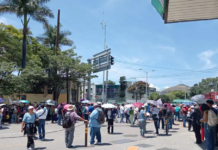

Luis Alberto López Pazos, Press and Propaganda Secretary for Section 22 of the National Union of Education Workers (SNTE), noted that this celebration originated 20 years ago out of the historic 2006 teachers’ and popular uprising, amidst the brutal repression unleashed by the then-governor of Oaxaca, Ulises Ruiz Ortiz.
“The Teachers’ and Popular Guelaguetza emerged as a dignified response to authoritarianism and as a way to reclaim one of the peoples’ deepest cultural expressions,” he said.
He explained that, as a result, the teaching workforce from the eight regions and organized communities built an alternative from within their own territories to defend life, culture, and hope “in the face of a regime responsible for persecution, torture, enforced disappearances, murders, and grave human rights violations.”
In this way, he described the Guelaguetza as one of the profoundest expressions of comunalidad (communal living and shared identity), as it embodies the mutual support, solidarity, and collective labor that have enabled these peoples for centuries to resist dispossession, colonialism, and neoliberal policies.
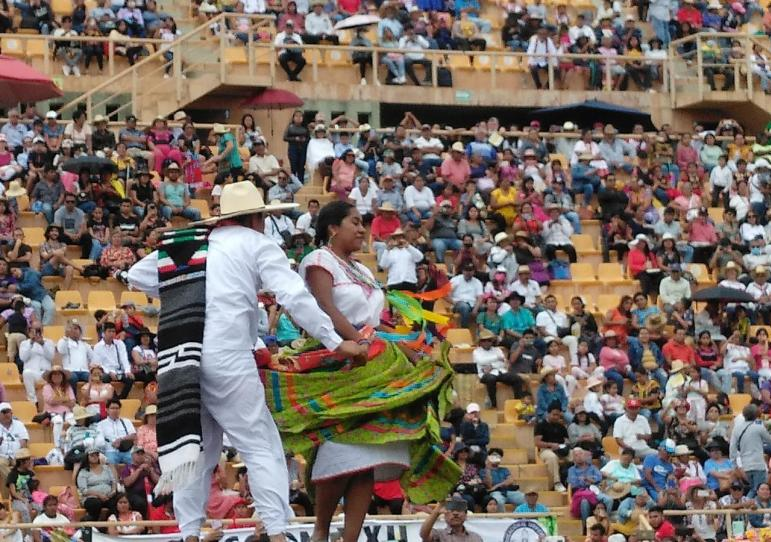
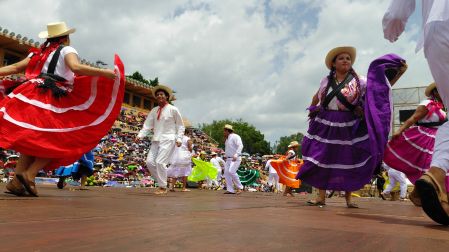
He highlighted that, during the festival, delegations from the eight regions will share Oaxaca’s cultural richness through their dances, sones, jarabes, chilenas, music, and traditional attire, as well as the ceremonial offering of the Guelaguetza itself—affirming that culture belongs to the people and cannot be turned into a commodity, as happens with the “official Guelaguetza.”
Source: excelsior