
Methamphetamine Becomes the World’s Largest Synthetic Drug Market; Harm Reduction Groups Expand Support in Mexico
Methamphetamine now represents the largest synthetic drug market in the world, according to the World Drug Report 2026, published in early July by the United Nations (UN). The report states that this type of drug is displacing the consumption of naturally derived psychoactive substances.
“This stimulant continues to expand into new markets beyond the traditional ones (North America, East and Southeast Asia, Australia, and New Zealand), so its presence is now virtually worldwide,” the UN report states.
According to the report’s estimates, approximately 32 million people used amphetamines and methamphetamines in 2024. “The highest prevalence rates were recorded in North America,” it adds.
Mexico has not been immune to this global trend. The 2025 National Survey on Drug, Alcohol and Tobacco Consumption (ENCODAT) shows that the use of amphetamine-type drugs, such as crystal meth, nearly doubled over the past nine years, increasing from 743,437 people in 2016 who had tried drugs such as ecstasy or crystal meth at least once in their lives to 1,375,344 people.
In just one decade, methamphetamine surpassed alcohol as the country’s primary drug of impact, meaning the substance for which the largest number of people seek treatment through health services.
While only 9.5 percent of people seeking treatment for substance-related problems reported methamphetamine use in 2013, that figure rose to 49.1 percent by 2023, according to the Ministry of Health document “Demand for Treatment for Psychoactive Substance Use in Mexico, 2025.”
However, statistics are not the only indicator of increasing drug use in Mexico. Users also struggle against social stigma and criminalization while creating spaces for information, peer support, and mutual assistance.
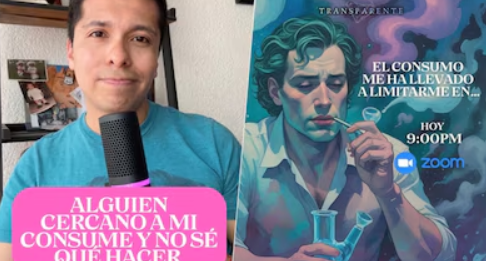
This was the motivation behind the creation of Transparente A.C., a civil association based in Mexico City that supports crystal meth users and people living with HIV, as HIV transmission may be more prevalent among some populations of drug users.
“We were born out of necessity. At the time, I was going through problematic substance use, and when I realized there wasn’t enough information about what I was experiencing, I wanted to write. The idea was to do something for the community,” explained Alfredo Cabrera, communications specialist and co-founder of the organization, in an interview with El Financiero.
What Are Methamphetamines?
Methamphetamines are synthetic stimulants of the central nervous system, chemically derived from amphetamines, historically used to suppress appetite or reduce the need for sleep. However, their chemical precursors are highly toxic, and their use causes damage to the nervous system and mental health.
Data show that the increase in consumption has been driven primarily by men, whose lifetime prevalence rose from 1.4 percent to 2.5 percent between 2016 and 2025, while among women the increase was smaller, from 0.4 percent to 0.6 percent.
Within some sectors of the gay community, methamphetamine or crystal meth is used to prolong and intensify sexual encounters, a practice known as chemsex, while other groups use it to endure long work shifts, lose weight, or tolerate cold temperatures.
This substance can be manufactured in clandestine laboratories and may be used in several ways:
- Injected.
- Swallowed.
- Snorted.
- Smoked.
The average age of first use in Mexico has increased from 18 years old in 2016 to 22 years old in 2025, suggesting that growth in consumption is occurring mainly among adults rather than adolescents.
“There is a stigma toward people who use crystal meth. That makes you think, ‘I’d better not say anything.’ Obviously, the problem gets bigger. Sometimes this happens during very successful moments in people’s lives. We try to help them understand that others have gone through the same thing and that it doesn’t make us bad people,” said the activist.
What Does the Harm Reduction Approach Mean?
Rather than promoting anti-drug campaigns, activists such as Cabrera, along with current and former users, advocate for a less alarmist and less fatalistic approach to problematic drug use.
Harm reduction is based on the understanding that prohibition alone will not prevent substance use, and that providing scientific, unbiased information helps users make informed decisions to reduce adverse effects and better manage their consumption.
According to the Government of Mexico City, this approach involves public health policies and practices that prioritize protecting the health and rights of people who use substances.
In Mexico City, Colectiva La Crika focuses on providing information to women who use methamphetamines and distributes kits explaining the effects of different doses and how to measure them to reduce unpleasant effects or overdoses.
“Checa tu sustancia” is a free, confidential, and anonymous colorimetric drug testing service operated by Instituto RIA in Mexico City that provides tools for informed substance use.
The Instagram account Menos daño publishes infographics about the risks and precautions associated with stimulant use.
The growth of these initiatives coincides with ENCODAT findings showing that only 10.5 percent of men (247,301) and 8.4 percent of women (82,518) who used drugs during the previous year have ever received treatment for substance use.
How Does Transparente Provide Support?
Alfredo Cabrera explains that one of the greatest challenges they face is overcoming social stigma.
Although healthcare institutions and psychiatric services exist, they often lack the lived experience that peers can provide. Transparente seeks to bridge that gap by combining therapeutic knowledge with the understanding of people who have experienced similar situations.
“We don’t treat a substance itself. We treat mental health. That’s what really matters for each individual. When you’re doing well and have the right tools, it’s easier to manage substance use,” he explains.
The organization’s support model moves away from making complete abstinence the only goal. While abstinence is an option for those who want it, Transparente also supports people who wish to manage, reduce, better understand, or completely stop their substance use.
“We’ve been taught to live with guilt. When something like this happens, guilt becomes even stronger. That makes it much harder to ask for help and say, ‘I’m going through this,'” says Alfredo Cabrera.
Support is provided through:
- Weekly Zoom sessions held every Wednesday at 9:00 p.m.
- Monthly in-person meetings at Voces en Tinta Bookstore in Cuauhtémoc Borough.
- WhatsApp support groups that serve as a constant peer network during crises and provide mental health and harm reduction information. The network currently includes more than 100 members.
- A peer-based, horizontal support model that recognizes everyone is on their own journey and that substance use does not define a person’s identity.
“Recovery is a process with ups and downs. However, we’ve seen social and emotional reintegration. We see significant recovery among participants,” Alfredo Cabrera said.
The organization has arranged access to cognitive behavioral therapy at a reduced cost of 200 to 300 pesos per session, as well as psychiatric care with a 600-peso recovery fee.
“We always say that substance use does not define us… We may be people who use substances, but we are much more than that.”
Source: elfinanciero