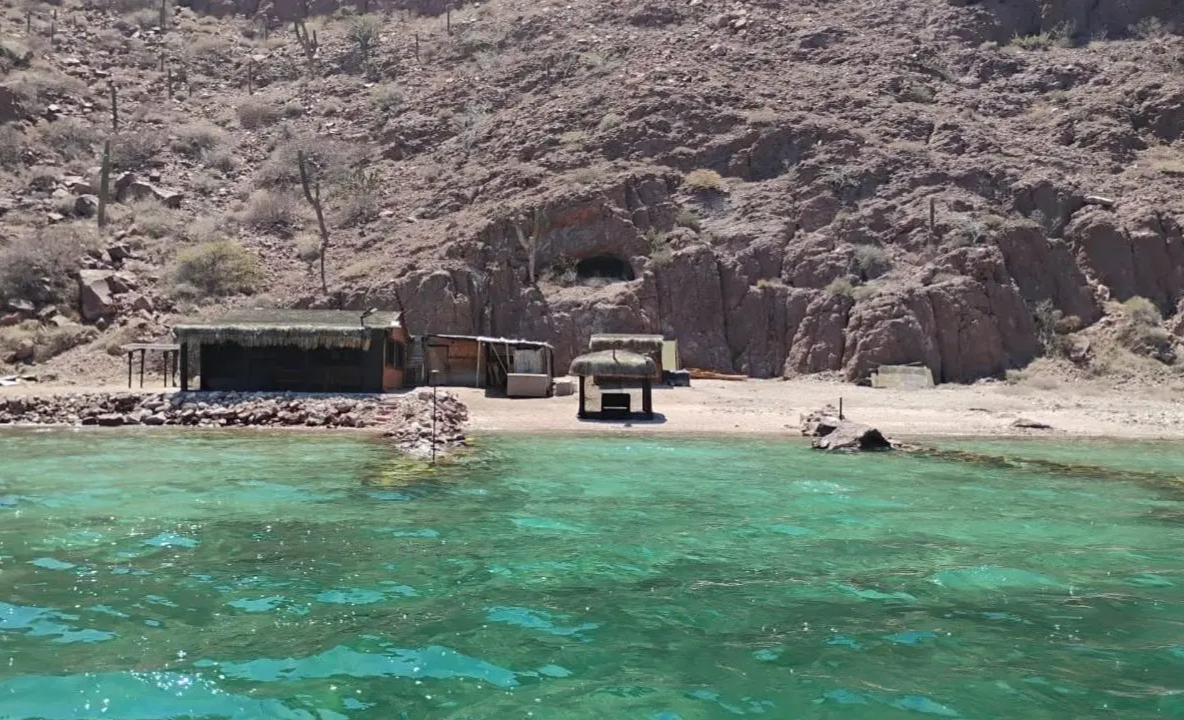

he construction of a cabin within the Espíritu Santo Island Complex, at an archaeological site on Isla Partida, La Paz, has led to a new legal process after federal authorities confirmed they had intervened in the case.
The National Institute of Anthropology and History (INAH) Baja California Sur Center filed a criminal complaint over the alleged damage to archaeological remains located in this area, which has been designated a UNESCO World Heritage Site.
Why Did the INAH Baja California Sur Center File a Complaint?
The INAH Baja California Sur Center announced that it filed a formal complaint with the Federal Attorney General’s Office (FGR) over the alleged damage and destruction of an archaeological site within the protected area.
According to the institution, the complaint was submitted on July 22, 2026, regarding the archaeological site J-177 Ensenada de la Partida 5, located on Espíritu Santo Island.
INAH stated that the action was taken under the authority granted by the Federal Law on Archaeological, Artistic, and Historic Monuments and Zones.
The agency explained that the legal action seeks to strengthen the protection of the state’s cultural heritage and preserve the values that earned the island complex its UNESCO World Heritage designation.
The statement was issued days after reports surfaced regarding the construction of a cabin on Isla Partida, within a Protected Natural Area.
Journalist Daniela Reyes reported that construction allegedly began during the Easter holiday period and, according to the complaints filed, may have involved environmental irregularities while affecting an archaeological site.
According to the published information, the structure is located in a fishing area known as La Cueva de los Leones. The complaints allege that:
- The structure was built without the required environmental impact authorization.
- It is located within a Protected Natural Area, where construction is subject to restrictions.
- Authorization from INAH was also required because of the presence of archaeological remains.
According to the reports, the cabin measures approximately 11 by 6 meters and includes a porch, bathroom, shower, storage room, and other facilities.
To regulate access and support conservation efforts in protected natural areas, the National Commission of Natural Protected Areas (Conanp) uses tools such as the Conservation Passport and Conservation Wristband to manage visitor entry.

What Did INAH Find During Its Inspection?
In addition to the criminal complaint filed with the FGR, other proceedings related to the case are also underway.
The news outlet Bitácora BCS reported that a complaint filed with the Federal Attorney for Environmental Protection (Profepa) alleges the structure was built on an archaeological site without an Environmental Impact Assessment (MIA), a requirement for certain projects within protected natural areas.
The same outlet reported that INAH personnel conducted an inspection on June 12, 2026, during which they allegedly identified alterations to the archaeological context of the site, including:
- Removal of infrastructure before inspections.
- Cleaning of the area.
- Modifications made prior to visits by INAH personnel.
The complaints also mention officials from Conanp, who are alleged to have allowed, justified, or failed to act regarding the construction. Those identified in the reports are:
- Dilia Rebeca Meza Castro, Director of the Espíritu Santo Archipelago Marine National Park.
- Iram Raúl Villanueva López, Director of the Islands of the Gulf of California Flora and Fauna Protection Area in Baja California Sur.
- Benito Bermúdez Almada, Regional Director.
As of now, the individuals mentioned have not issued any public statements regarding these allegations.
What Complaints Have Been Filed Over the Construction?
Before INAH filed its complaint with the FGR, other legal actions had already been initiated.
According to information published by journalist Daniela Reyes, the following complaints are currently active:
- One complaint filed with the INAH Baja California Sur Center for possible damage to archaeological heritage.
- Two complaints filed with Profepa over alleged unauthorized construction within the Protected Natural Area.
The journalist also called on authorities to clarify whether additional inspections, preventive closures, or sanctions will be imposed if the alleged irregularities are confirmed.
The case has attracted significant attention because the Espíritu Santo Island Complex is recognized as a UNESCO World Heritage Site and is considered one of the most important natural and cultural areas in Baja California Sur.
With the complaint filed on July 22, INAH confirmed that the case has been referred to the Federal Attorney General’s Office to investigate the alleged damage to the archaeological site.
As of now, the FGR has not announced any progress in the investigation or identified potential suspects.
The Espíritu Santo Island Complex is also renowned for its rich marine biodiversity, with waters inhabited by species such as dolphins and sea lions, whose presence is closely linked to the area’s ocean currents, water temperatures, and diverse marine ecosystem.

Source: posta