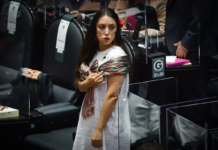

SHEINBAUM HAS ALREADY PASSED JUDGMENT: “What matters is that this is an investigation backed by legal grounds and evidence that the Prosecutor’s Office has… And the company importing it is Ingemar, so it’s not… it’s direct… And they have… there is a great deal of evidence, a great deal of evidence, it’s not a minor matter.”
“ERNESTO RUFFO”
Mexico, like the other Latin American republics, never adopted the jury system for the administration of justice in criminal or civil matters.
With the exception of the former British and French colonies, some provinces in Argentina, and Brazil for certain crimes, the entire region follows the Iberian legal tradition rather than the Anglo-Saxon one.
Anglo-Saxon countries, as well as most European nations, adopted some form of the jury system, albeit with important differences.
The advantages and shortcomings of such a system can be debated endlessly—justice in the hands of the people, though people sometimes say and believe complete nonsense; turning trials into popularity contests, though popularity is achieved by persuading people, and so on.
One of the essential requirements of the jury system, however, is safeguarding the jury’s impartiality, even to the point of sequestering jurors to prevent improper influence or interference.
This is particularly significant in the era of mass media and heads of government who enjoy broad public approval.
In countries with jury trials, public intervention by a head of state or government in an ongoing case, whether in favor of or against the accused, is often sufficient to invalidate the proceedings and preserve the defendant’s innocence. The cost of acting otherwise is simply too high, and few leaders are willing to take that risk—not even the most cynical or self-assured ones (Nixon, De Gaulle, Adenauer, and others).
In the Ibero-American world, interference by the executive branch in judicial proceedings is likewise prohibited, primarily because of the principle of separation of powers.
Even in countries with an independent judiciary, such as Brazil, Chile, or Uruguay—and unlike Mexico—it is understood that judges responsible for deciding a defendant’s fate should not be subjected to pressure from popular or overreaching presidents.
All of this is relevant, along with the presumption of innocence, which depends largely on the independence and free judgment of jurors or judges, in the case of Ernesto Ruffo.
There is no need to repeat the criticisms and accusations already made: political prisoner, selective justice, closed-door hearings, excessively harsh treatment of someone of his age and public record, a distraction tactic, mandatory pretrial detention, and so forth.
But given the existence of what has been described as a “cheat-sheet judge,” the President’s public statements are particularly harmful and serious.
They constitute executive interference in judicial proceedings, violating both the principle of judicial independence and the presumption of innocence.
Here are excerpts from the President’s morning press conferences last Friday and this Monday:
“The company that imports that fuel—the majority partner in that company is the former governor. It’s that direct.
“From there, a series of investigations were conducted… If the former governor has—obviously, within the framework of the law—all the documentation to prove that he is innocent, then the justice system will act…
“So this is the particular case of the former governor of Baja California… I repeat, if he proves that he was not involved, then the judges will act, and they must do so impartially…
“What matters is that this is an investigation backed by legal grounds and evidence that the Prosecutor’s Office has… And the company importing it is Ingemar, so it’s not… it’s direct… And they have… there is a great deal of evidence, a great deal of evidence, it’s not a minor matter.”
As can be seen, Claudia Sheinbaum expresses opinions about the company, Ruffo, the evidence, and the company’s majority shareholder.
Even more troubling, she states that Ruffo must prove his innocence, even though Article 20, Section B, Clause I of the Mexican Constitution (as amended in 2008) establishes that every accused person has the right “to be presumed innocent until responsibility is declared by a judgment issued by the trial judge.”
It is the State, through the Prosecutor’s Office, that must prove the defendant’s guilt. The defendant is not required to prove anything.
The fact that this principle is often ignored in Mexico does not change the fact that it is the law—and part of the Constitution to which Sheinbaum constantly and, according to the author, tediously pays homage.
Against Ruffo, the legal instruments of the police state are being used, as described in the article with that title by Pedro Salazar and Sergio López Ayllón, scheduled for publication in the August issue of Nexos.
Elected and compliant judges, mandatory pretrial detention for crimes defined so broadly that almost anything can fit within them, executive interference in every branch of government, and control over the media by preventing their attendance at hearings.
Is it really not that serious, or not something that could eventually affect everyone?
I would not bet on it.
Source: mexicodailypost