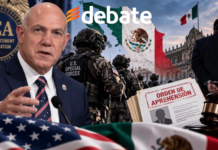

CAN PROTECTING AUDIENCES BECOME CONTROLLING INFORMATION? WHAT VENEZUELA AND CUBA HAVE ALREADY EXPERIENCED
─────────────────────────
🔍 THE DEBATE MEXICO NEEDS TO HAVE TODAY
─────────────────────────
Yesterday, we published the concerns raised by telecommunications experts regarding the new guidelines issued by the Telecommunications Regulatory Commission (CRT). Today, we go one step further: what happens when a law with good intentions ends up in the hands of a regulator that lacks independence? 📋
Recent Latin American history already offers some answers.
─────────────────────────
🇻🇪 VENEZUELA: THE PATH FEW SAW COMING
─────────────────────────
In 2004, the Venezuelan government approved the Law on Social Responsibility in Radio and Television, commonly known as the Resorte Law. The official justification was remarkably similar to arguments heard today in Mexico: protecting audiences, combating misinformation, and ensuring responsible content. 📌
Its implementation told a different story. The regulatory agency, CONATEL, operated under the direct authority of the Executive Branch and lacked genuine technical independence.
The result: Radio Caracas Televisión (RCTV) was taken off the air in 2007 after its broadcast license was not renewed. Globovisión faced multimillion-dollar fines before eventually being sold to groups aligned with the government. Mandatory government broadcasts regularly interrupted programming. Beginning in 2010, CONATEL also ordered the blocking of independent news websites and imposed restrictions on social media during periods of political tension. 🔴
─────────────────────────
🇨🇺 CUBA: WHEN “SOVEREIGNTY” LEADS TO PENALIZING CITIZENS
─────────────────────────
Cuba followed a different route but arrived at a similar destination. In 2019 and 2021, it enacted Decree-Law 370 and Decree-Law 35, both justified as necessary to protect “national security” and combat “fake news financed from abroad.” 📋
In practice, sharing information considered contrary to the “social interest,” “morality,” or “public order” became an administrative offense and, in some cases, a criminal offense. Rather than shutting down media outlets, authorities confiscated mobile phones, restricted internet access, and prosecuted social media users. 😳
─────────────────────────
⚠️ THE LESSON THAT APPLIES TO MEXICO TODAY
─────────────────────────
In both countries, it was not regulation itself that opened the door to greater control. Two specific factors played a central role. 🔴
First, ambiguous legal definitions. Terms such as “false information,” “misleading information,” or “contrary to public order” lacked precise legal definitions. When enforcement is left to a government authority, critics argue that sanctions may be applied unevenly, potentially affecting government critics more than official narratives.
Second, the loss of regulatory independence. When the regulator is institutionally dependent on the Executive Branch, concerns arise about its ability to act impartially. Even without direct prior censorship, the possibility of fines or coordinated complaints may encourage self-censorship among media organizations.
─────────────────────────
🤔 THE CONTRADICTION BEING DEBATED
─────────────────────────
Experts cited previously argued that, if the CRT guidelines were enforced impartially, they should also apply to the president’s daily morning press conferences when broadcast on public media. 👀
However, one of those experts also acknowledged that such enforcement was “unlikely.”
Critics argue that ensuring the accuracy of public information requires an oversight body that is institutionally independent. When the State assumes that role through agencies without full autonomy, they contend that the distinction between protecting citizens and influencing public discourse can become increasingly difficult to maintain.
─────────────────────────
⚖️ THE TWO POSITIONS
─────────────────────────
The administration of President Claudia Sheinbaum maintains that the measure does not constitute censorship and is intended to ensure that Mexican citizens receive reliable and high-quality information. 🔵
Telecommunications experts, press freedom organizations, and analyses of regulatory developments in countries such as Venezuela and Cuba argue that institutional design and regulatory independence are as important as the stated objectives of any regulation. 🔴
─────────────────────────
📊 CONTEXT
─────────────────────────
Mexico ranked 124th out of 180 countries in the 2025 World Press Freedom Index published by Reporters Without Borders (RSF). The Telecommunications Regulatory Commission (CRT) was created in 2024, replacing the Federal Telecommunications Institute (IFT), which had constitutional autonomy. The CRT is administratively part of the Federal Executive Branch. 📌
─────────────────────────
💬 CONTRASTE POLÍTICO MX ASKS YOU
─────────────────────────
Do you believe Mexico faces a risk of following the path of Venezuela and Cuba regarding media regulation? Your opinion matters to us—we’d love to read your thoughts in the comments. 👇
Source: mexicodailypost