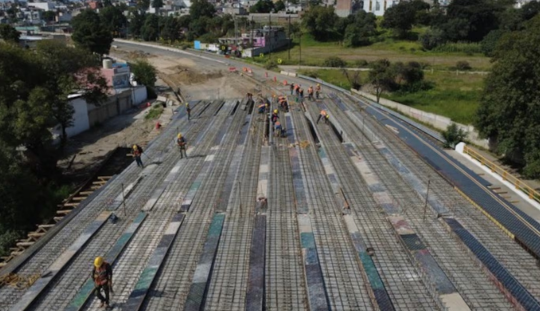

Mexico’s Secretariat of Infrastructure, Communications and Transportation (SICT) reported that construction of the Santa Ana–Chiautempan Highway Interchange has reached 70% completion. The project is intended to improve regional mobility and reduce travel times by up to 20 minutes for thousands of commuters.
According to the federal agency, the project is being built along Federal Highway MEX-121 Puebla–Belén and will connect to Federal Highway MEX-117 toward San Martín Texmelucan, improving traffic flow between Puebla, Tlaxcala, and Apizaco.
The project will directly benefit 73,215 residents of the municipalities of Chiautempan, La Magdalena Tlaltelulco, Tlaxcala, and La Magdalena by providing a roadway with greater capacity and improved safety for motorists.
The interchange will include a 1.2-kilometer elevated overpass, consisting of 654 meters of the main structure and the remaining length dedicated to access ramps. It will feature:
- Four traffic lanes, each 3.5 meters wide
- An outside shoulder
- Safety parapets
- A central barrier to enhance road safety
SICT stated that current construction activities include:
- Installing bridge girders
- Pouring concrete for the bridge deck
- Installing reinforcing steel in the diaphragms
- Building mechanically stabilized earth retaining walls
These tasks will allow construction to continue progressing as scheduled.
During the construction phase, the project is expected to generate 2,160 jobs, contributing to the regional economy while the work is underway.
The agency emphasized that the highway interchange is part of broader efforts to strengthen road connectivity in Tlaxcala, facilitate the movement of people and goods, and improve safety for the thousands of drivers who use this transportation corridor every day.
Through this project, the Government of Mexico aims to expand road infrastructure in the state, reduce travel times, and promote the region’s economic and social development through a more efficient and safer highway network.
Source: cronica