
President Claudia Sheinbaum Evaluates Northern Mexico for Expanded Fracking Pilot Projects
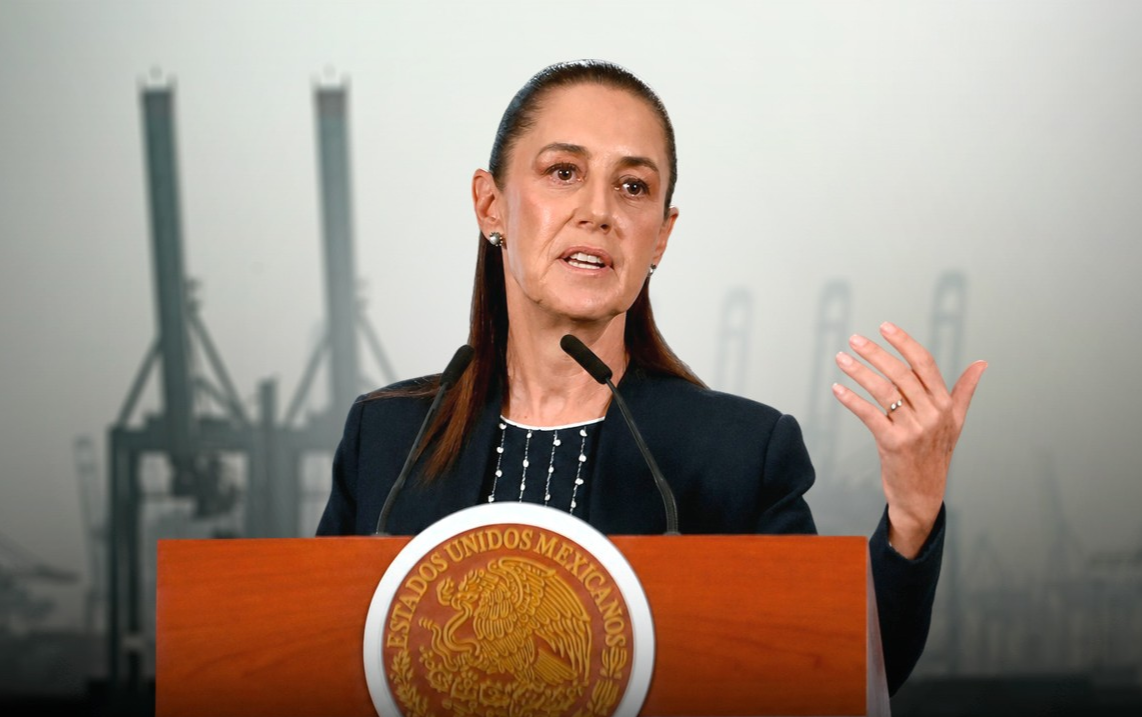
President Claudia Sheinbaum is evaluating areas in northern Mexico where the first pilot projects to expand the use of hydraulic fracturing (fracking) could begin, with the goal of increasing the country’s natural gas production.
The move follows recommendations recently submitted by a panel of experts commissioned by the president to assess the feasibility of developing Mexico’s unconventional hydrocarbon resources.
Areas Under Evaluation
According to sources, the areas currently under consideration are located in the states of Coahuila and Tamaulipas.
One source said the government hopes to begin pilot development as early as September in reservoirs that require hydraulic fracturing—a technique that injects water, sand, and chemicals under high pressure to fracture rock formations and extract oil and natural gas.
Although Mexico already produces limited amounts of hydrocarbons through fracking, the federal government and the state-owned company Petróleos Mexicanos (Pemex) are seeking to expand its use to reduce the country’s dependence on natural gas imports from the United States, which currently supplies approximately 75% of Mexico’s gas demand.
Pemex currently produces an average of:
- 4.869 billion cubic feet of natural gas per day
- 1.658 million barrels per day of oil and condensates
Coahuila and Tamaulipas: Advantages and Challenges
Although the Tampico-Misantla Basin, primarily located in Veracruz, is believed to hold Mexico’s largest unconventional oil and gas potential, government sources said officials are focusing on an area in Coahuila, near the U.S. border, within the Burro-Picachos Platform, for an initial pilot project.
The area borders the Eagle Ford Shale formation in Texas, one of the largest shale oil and gas producing regions in the United States and the primary source of Mexico’s imported natural gas.
In June, Eagle Ford produced approximately 4.3 billion cubic feet of natural gas per day, a volume comparable to Pemex’s total gas production across all of its fields nationwide.
According to the sources, Coahuila offers several advantages:
- Proximity to the United States and existing energy infrastructure.
- Significant unconventional energy potential.
- Very low population density, reducing the likelihood of community opposition compared with more densely populated areas such as Veracruz, where Pemex has previously faced public resistance.
However, the region’s principal challenge is water availability.
Sources indicated that the government is considering drilling deep saline-water wells to avoid using surface freshwater resources intended for human consumption.
Tamaulipas
The government is also evaluating the Burgos Basin in Tamaulipas, an area with well-known natural gas reserves where Pemex has operated for years and where public opposition to oil and gas projects has historically been lower.
The main concern there is organized crime.
While Pemex and other energy companies have continued operating conventional oil and gas projects despite security challenges, unconventional development would require:
- Hundreds of wells.
- Continuous 24-hour operations.
Any interruption caused by criminal activity could significantly increase operational costs and delay production.
Expert Recommendations
According to three sources, Sheinbaum recently received the conclusions of a multidisciplinary advisory panel composed of specialists in:
- Geology
- Water resources
- Engineering
- Environmental science
The panel was tasked with helping the administration “make the best possible decision” regarding whether Mexico should expand the use of fracking.
Although an announcement had originally been expected in June, the process has been delayed due to disagreements among experts.
Some specialists added to the panel at the president’s request maintain that environmentally sustainable development of unconventional hydrocarbon resources is not feasible and continue to oppose fracking.
Sheinbaum’s Changing Position
Sheinbaum had previously been a strong critic of hydraulic fracturing, a practice widely opposed by environmental organizations.
More recently, however, she has stated that technological advances have produced newer fracking methods with:
- Reduced environmental impacts.
- Improved water management.
She has argued that Mexico should reconsider unconventional natural gas development “from the perspective of energy sovereignty.”
One industry source stated:
“They are going to do it because there is no alternative. They have to increase production.”
Another source described Mexico’s dependence on U.S. natural gas imports as “alarming.”
Environmental Concerns
Critics argue that many unconventional hydrocarbon regions already face significant water stress.
They also warn that expanded fracking could lead to:
- Groundwater contamination.
- Methane emissions.
- Induced seismic activity.
- Delays in Mexico’s transition toward renewable energy sources.
The Mexican presidency did not respond to Reuters’ request for comment regarding the sources’ statements. Pemex also declined to comment.
Mexico Already Uses Fracking
Although Mexico has not developed unconventional hydrocarbons on a large scale, hydraulic fracturing is not new to the country.
According to Pemex, the company has drilled 25 exploratory wells in areas with unconventional resource potential within the:
- Sabinas–Burro Picachos Basin
- Burgos Basin
- Tampico–Misantla Basin
These regions extend across parts of Coahuila, Tamaulipas, and Veracruz.
Pemex has also used hydraulic fracturing in the Chicontepec Project to extract hydrocarbons.
In its 2035 Strategic Plan, released last year, Pemex identified unconventional reservoirs—described as having complex geology—as part of its future production strategy.
The plan projected:
- A modest contribution from unconventional resources between 2026 and 2028.
- Significant production volumes beginning in 2029.
By 2030, Pemex estimated cumulative production from unconventional resources could reach:
- 197 million barrels of crude oil
- 303 billion cubic feet of natural gas
These estimates are based on a prospective resource potential of approximately 64 billion barrels of oil equivalent.
Source: elceo