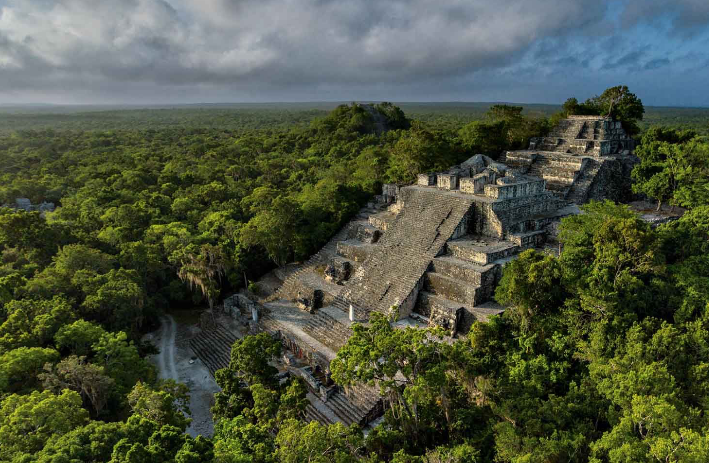

Campeche is the fourth state in Mexico with the largest surface area of Natural Protected Areas (ANP). After Baja California, Baja California Sur, and Coahuila, which have the largest extensions of territory under federal protection, together totaling nearly eight million hectares, Campeche has 1.98 million protected hectares, according to the recently presented National Program for Natural Protected Areas (PNANP) 2026-2030.
The national network of Natural Protected Areas is the main instrument for the in situ conservation of biodiversity in Mexico. As of June 2026, the 232 federally declared ANPs protect 23,096,563.19 hectares of land, equivalent to 11.76 percent of the national territory, as well as 74,904,155.39 hectares of marine areas, representing 23.78 percent of Mexico’s maritime territory.
The objective of the PNANP 2026-2030 is to protect these 232 territories and 623 Voluntarily Designated Conservation Areas (ADVC), covering 99 million hectares across the country.
Currently, Mexico has 36 sites listed as World Heritage Sites by the United Nations Educational, Scientific and Cultural Organization (UNESCO). Among them, two have the category of mixed heritage sites, as they possess Outstanding Universal Value based on both natural and cultural characteristics:
- The Calakmul Biosphere Reserve, which includes the Ancient Maya City and Protected Tropical Forests of Calakmul in Campeche.
- The Tehuacán-Cuicatlán Biosphere Reserve (Puebla and Oaxaca), registered as the Tehuacán-Cuicatlán Valley: Native Habitat of Mesoamerica.
Both sites are located within federal Natural Protected Areas and represent emblematic examples of the historical interaction between biological and cultural diversity, as well as the strategic importance of ANPs for the comprehensive conservation of humanity’s natural and cultural heritage.
This information is included in the federal document presented by the head of the Ministry of Environment and Natural Resources (Semarnat), Alicia Bárcena Ibarra, on August 4.
The official highlighted the importance of the PNANP for the benefit of the people who live in, protect, and serve as guardians of Natural Protected Areas. The program includes four objectives, 18 strategies, 66 lines of action, and eight indicators focused on supporting communities, Indigenous and Afro-Mexican peoples, social property owners, organizations, and the 1,900 people who work daily to protect the country’s natural heritage.
Indigenous Communities and Their Role in Conservation
The presence of Indigenous communities in Natural Protected Areas is significant. Indigenous populations represent 30.36 percent of the total population living in these territories.
A total of 88 ANPs have the presence of members from 42 Indigenous peoples, including Nahuas, Maya, Otomi, Tseltal, Wixárika, Mixtec, Mazahua, Tarahumara, Popoluca, and Cucapá communities, among others.
The historical relationship these communities maintain with their territories represents a strategic asset for conservation, since their knowledge, practices, and organizational systems contribute to the sustainable management of natural resources and the strengthening of environmental governance, according to the new program.
Importance of Natural Protected Areas
Natural Protected Areas play a fundamental role in the conservation of ecosystems and vegetation types that represent Mexico’s natural diversity.
High mountain ecosystems, including grasslands and forests adapted to extreme conditions, are completely represented within the national network of protected areas.
Source: lajornadamaya