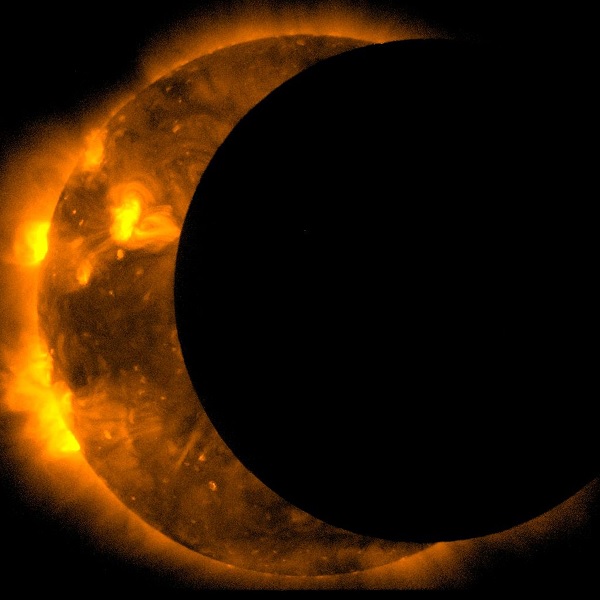

Space enthusiasts and skywatchers across Mexico will not be able to observe the upcoming total solar eclipse of August 12 in person, as the Moon’s trajectory will cast its shadow exclusively over parts of the Northern Hemisphere far from Mexican territory. However, NASA has announced a global live broadcast to ensure audiences worldwide—including those in Mexico—can experience the astronomical event in real time.
According to an article published by El Sol de México, the path of totality for the August 12 eclipse will pass over select regions near the Arctic and Northern Europe, leaving the skies above Mexico unchanged. Because a total solar eclipse occurs when the Moon aligns precisely between the Sun and Earth, its narrow shadow cone only obscures specific geographical swathes of the globe during any single event.
To bridge the geographic gap, NASA will broadcast live telescope views, high-definition imagery, and real-time scientific commentary across its official web portal, YouTube channel, and social media accounts. The broadcast will feature astrophysicists explaining the mechanics of the eclipse as the Moon gradually covers the solar disk, revealing the Sun’s glowing outer atmosphere, known as the corona.
Beyond providing public entertainment, NASA researchers use solar eclipses as critical scientific opportunities. As the sky temporarily darkens during totality, scientists study solar wind dynamics and observe how rapid drops in solar radiation affect Earth’s upper atmosphere. Kelly Korreck, NASA’s eclipse program manager in Washington, noted that studying solar influence during these brief celestial alignments helps researchers better understand space weather that impacts satellite operations and astronaut safety.
A total solar eclipse occurs when the Moon completely blocks the Sun’s bright face. Although the Sun is roughly 400 times larger than the Moon, it is also approximately 400 times farther away, allowing the two celestial bodies to appear nearly identical in size from Earth’s perspective.
For skywatchers in Mexico hoping to witness an eclipse with their own eyes, the next opportunity will arrive on January 26, 2028. However, that event will only be visible as a partial solar eclipse, making virtual broadcasts like NASA’s upcoming stream the best way to enjoy total solar alignment until direct visibility returns.
Source: El Sol de México