

The remittances sent by Mexicans living abroad have acquired a decisive role in the economy of thousands of households in the country. Every year, these resources make a difference in the lives of those who depend on them to cover basic needs, promote local consumption, and improve their quality of life. Beyond their immediate impact, they create a support network that directly influences education, entrepreneurship, and the well-being of families.
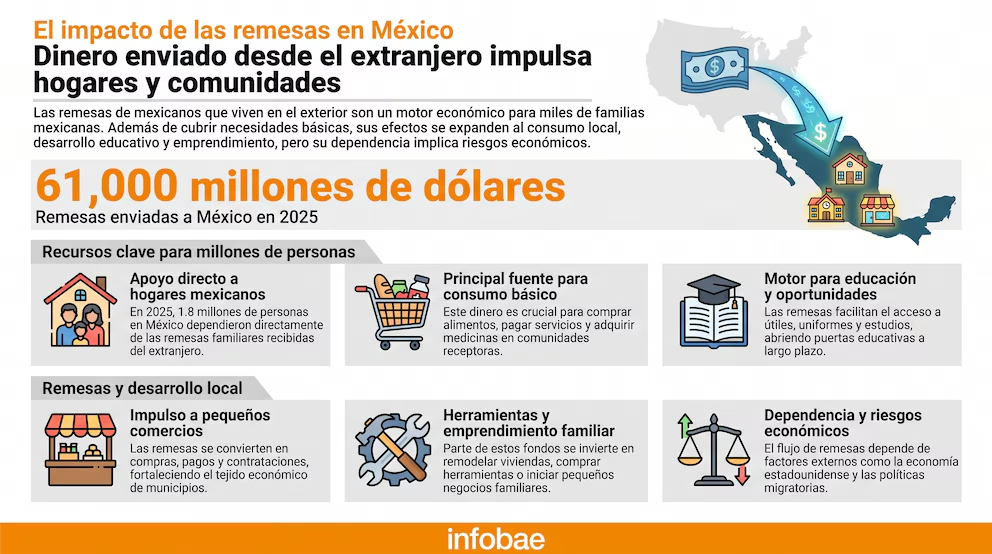
According to data from Financiera para el Bienestar (FINABIEN), in 2025 Mexico received more than 61 billion dollars in remittances, and approximately 1.8 million people depend directly on these funds. This record amount highlights the importance of these resources within the family structure, as well as their ability to stimulate spending in multiple communities across the country.
Dr. Carla Pederzini, a specialist from the Department of Economics at Universidad Iberoamericana, emphasized that this income not only helps cover immediate expenses, but also allows many Mexican men and women to invest in their children’s education. Access to school supplies, uniforms, and even university studies is facilitated, which can translate into better professional opportunities in the long term.
Remittances and Their Challenges in Mexican Society
The constant flow of remittances quickly becomes spending within the communities that receive them. Resources sent from abroad are transformed into purchases at stores, payments at markets, purchases of medications, and the hiring of services. This cycle of consumption contributes to the survival of small businesses and represents one of the main sources of monetary circulation in municipalities that depend on this income.
Some families decide to use part of the funds to remodel their homes, purchase tools for work, or start small businesses, generating additional income and thereby strengthening their assets. However, the specialist warned that this dependence carries risks, since the money sent is subject to external factors such as the U.S. economy, migrant employment, or changes in immigration policies. In the event of any alteration, Mexican households may see this support reduced.
Likewise, the expert emphasized that remittances should be viewed as a supplement, not as the foundation for national development. True economic growth requires decent jobs, greater investment, and opportunities that prevent forced migration. Even so, the efforts of migrants continue to be a fundamental driving force that improves the lives of millions of people and stimulates regional economies in Mexico.
Source: infobae