
Over the past four years, indigenous communities have been victims of more than 20 armed attacks by organized crime. Approximately 20 members of community patrols —traditional security forces— have been murdered for defending their territories. In addition, there have historically been more than 70 cases of forced disappearances and extrajudicial executions targeting traditional authorities and social activists.
The motive behind these crimes has been the defense of their communities, forests and collective rights. Michoacán is a laboratory for five “justice plans,” yet contrary to the official discourse, impunity remains in place. “Our communities survive amid simulation, insecurity and injustice,” stated Pavel Guzmán, leader of the Indigenous Supreme Council of Michoacán.
The indigenous communities, the indigenous leader explained, are currently facing a simulated consultation process, since it is not genuinely prior consultation. He argued that it is impossible to properly analyze 453 articles affecting 16,728 communities within a period of only 37 days. Furthermore, the consultation is not legally binding, meaning that it will ultimately consist only of observations and recommendations regarding the law.
He also stated that the consultation is not properly informed. For example, in Michoacán, personnel from the National Institute of Indigenous Peoples (INPI) present the entire content of the law to some communities in a period of only two hours. He added that the process is not culturally appropriate either, because the people who should be consulted are the general assemblies of each indigenous community, which represent the highest authority, rather than simply holding regional forums.
“Not to mention that it is discriminatory, because it leaves out hundreds of indigenous communities that are not included in the INPI’s Indigenous Peoples Catalog, all of this without even mentioning or going into the content of the law,” he stated.
For the Mexican state, Guzmán emphasized, the sale of avocados is more important than the lives of indigenous people. He pointed out that just days ago, when avocado exports were temporarily suspended due to a security alert, the federal government immediately sent hundreds of members of the Mexican Army and National Guard to Michoacán to address the problem.
However, he noted that for almost a year, 120 communities have requested a meeting with the head of Mexico’s Secretariat of Security and Citizen Protection in order to present the serious security crisis affecting the state, but they have simply been ignored.
“Today, one of the main problems affecting our communities is the dual reality of insecurity and injustice,” emphasized the CSIM leader.
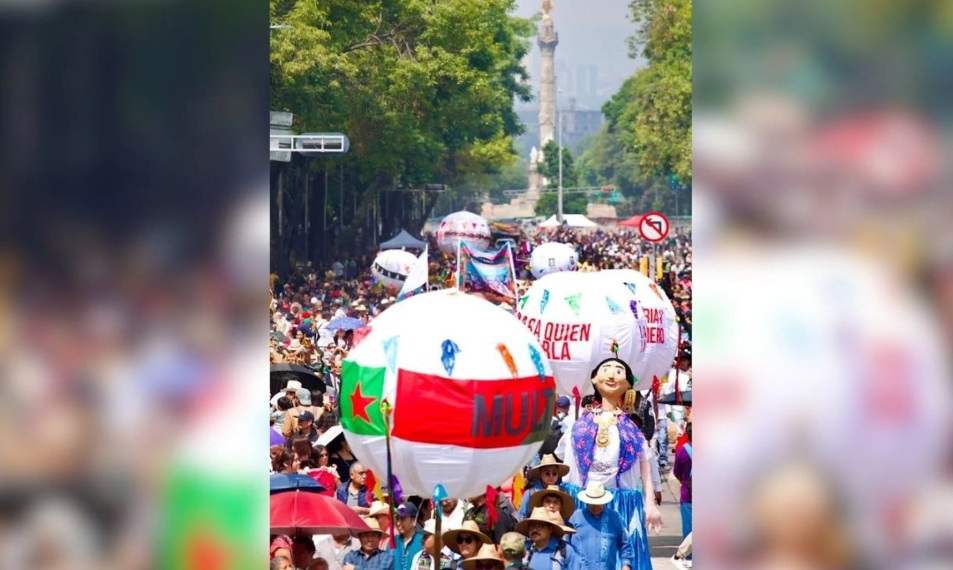
He added that for indigenous communities, International Indigenous Peoples Day is not a day of celebration, but rather a day to continue resisting and carrying on the struggles of their ancestors.
Source: jornada