
The 7:17 a.m. on September 19, 1985 marked a turning point in Mexico’s history. At that time, the earth roared and shook violently due to an 8.1-magnitude earthquake.
Mexico City was left in ruins, and chaos took over the capital amid a slow and poorly coordinated response from authorities who were unprepared to deal with what would go down in history as the country’s worst natural disaster. The official death toll is more than 3,000, although some organizations estimate that more than 20,000 people may have died.
Civil society took matters into its own hands. Among them, a group of young people from the Tlatelolco neighborhood organized themselves spontaneously to search for and rescue people, digging with their bare hands.
For days, they searched for survivors beneath the rubble, crawling into confined and unstable spaces that put their own lives at risk. This is where their name originated: Los Topos de México. Forty years later, they have become a highly qualified volunteer team and a symbol of hope.
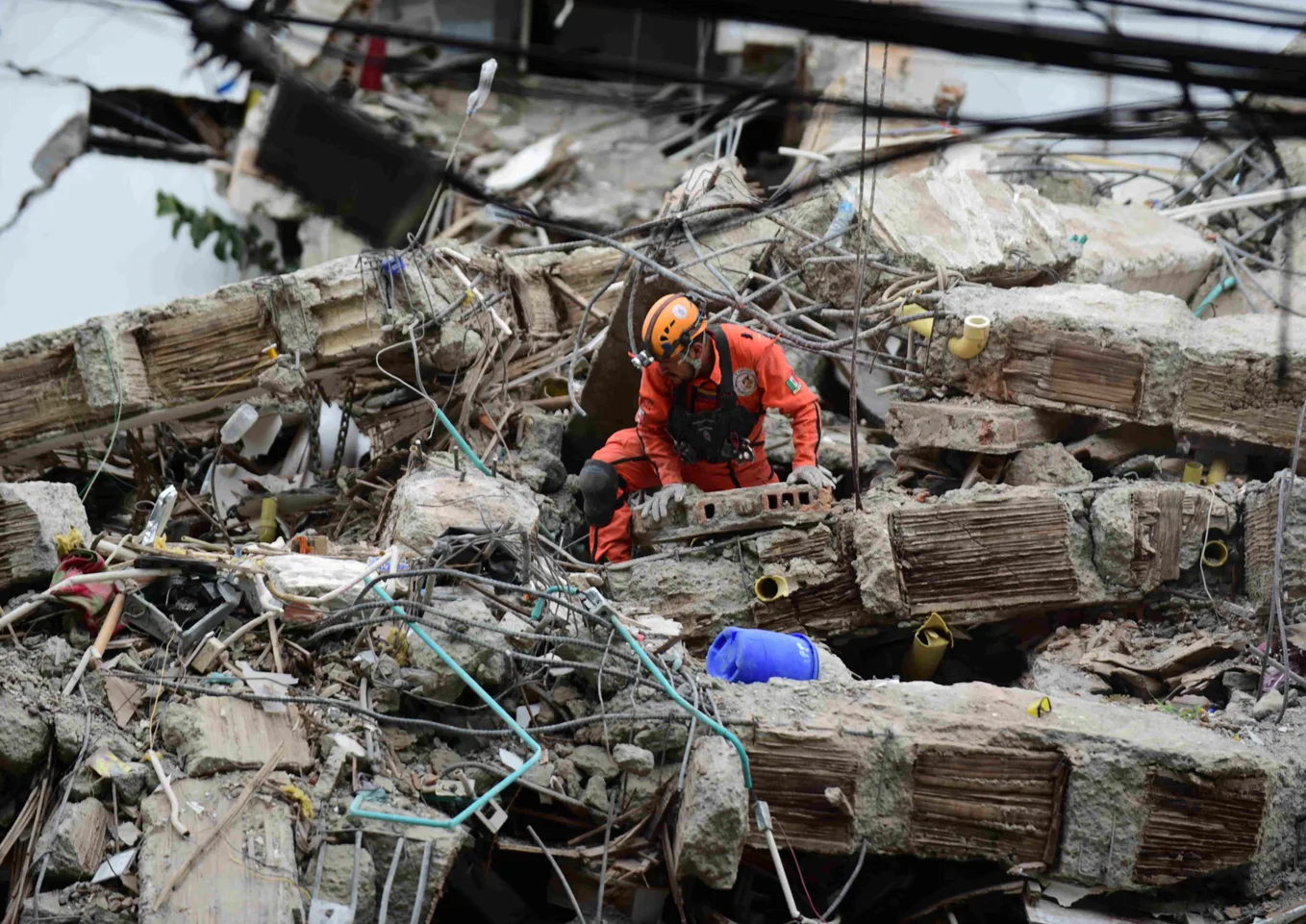
A member of Los Topos participates in a search-and-rescue operation in Cali, Colombia, following the 7.4-magnitude earthquake.
Their work has taken them around the world. They went to Haiti following the 2010 earthquake and to Japan to assist with rescue efforts after the tsunami. They were also in Türkiye in 2023 searching for survivors in Hatay. More recently, they traveled to Venezuela following the earthquakes of June 2026.
In response to the national emergency Colombia is experiencing after the devastating 7.4-magnitude earthquake of August 10, they also offered their assistance. However, the situation ended in controversy, revealing, on one hand, the bureaucratic framework and complex decisions involved in accepting international assistance and, on the other, that although Los Topos are known worldwide as a single organization, there are actually two brigades operating in very different ways.
Life First: This Is How Los Topos Work
Isaac Luna was eight years old when the 1985 earthquake occurred. Like most Mexicans, he remembers everything related to that day with fear and pain.
“I saw my father go out to rescue people. I had that example and that concern: I didn’t know what to do and I was afraid. Well, I’m still afraid, but it’s different now,” says the dentist, who has been part of Los Topos for 31 years, in an interview with TRT Español.
He joined the group when he was only 15 years old. Motivated by the 1985 tragedy, by that time he had already received training as an emergency medical technician and had a strong interest in training working dogs for emergency situations.
Los Topos remain a civilian volunteer organization and are funded through donations. They work with rescue dogs, picks, shovels, thermal cameras, and other technologies.
When they arrive at a location where they believe survivors may be trapped, the first thing they deploy is the dogs. In Los Topos terminology, the teams consisting of a rescuer and a canine are known as “perreros.” If one of the animals stops at a location and gives a signal, they then try to confirm whether there is something there. It could be a person struggling to survive or a body.
When the perreros find something, they raise their fist. This signal, which has been used in rescue operations for decades, calls for silence at the site so that rescuers can listen for sounds or voices beneath the rubble. It became internationally known during rescue efforts following the earthquakes in Mexico in 2017.
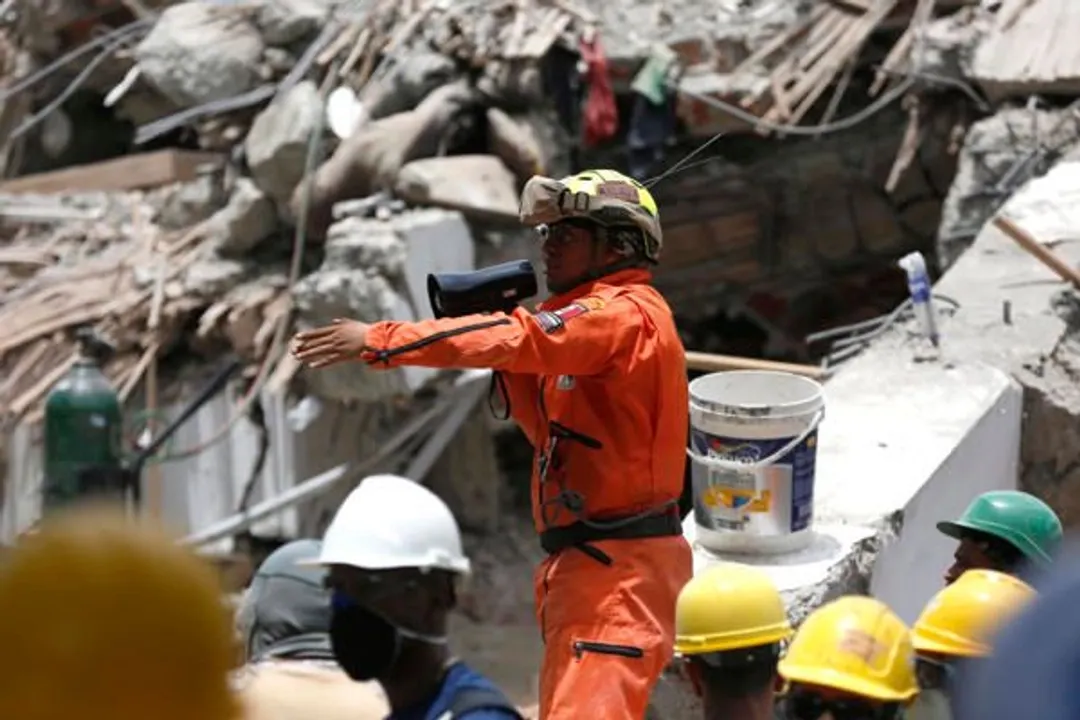
Luna explains that the first signal “is only an approximation; it indicates an area, but you don’t know the distance, the angle, how many floors down… you can’t identify a specific point.”
This is where technology comes in. Probe or telescopic cameras help determine the precise area for the rescue and can also become a means of communication with the survivor.
Then it is the engineers’ turn. The goal is to penetrate the pile of rubble as little as possible for the safety of both the rescuer and the trapped person. If the Topo has to enter, engineers reinforce the structure to ensure that it is secure. The rescue is carried out in the shortest possible time.
Los Topos’ Experience in Türkiye
Luna was in Hatay, Türkiye, following the 2023 earthquakes that also affected Syria.
“It was as if a bomb had been dropped. I remember there were areas where practically 90% of the buildings had collapsed. It shocked me, and I imagined that the chances of finding survivors were becoming increasingly low, while thinking about the work that would have to be done,” he recalls about the moment he arrived.
He says he worked with the Turkish military to teach them how to use specialized instruments they had just received. Los Topos spent 12 days in the city and, in addition to receiving gratitude from the people, they were given a distinction by the Embassy of Türkiye in Mexico.
The Controversy in Colombia: How Do International Rescuers Reach Those Who Need Help?
When Los Topos Tlatelolco hear about a disaster in which rescuers may be needed, they send a letter to the country’s embassy offering assistance, whether in rescue operations, humanitarian aid, or financial support. Countries respond by indicating whether they want the assistance and what type of assistance they require.
Luna explains that they then plan their deployment according to what is needed. They travel with their own equipment, supplies, and tents.
“We don’t arrive to become a problem, but rather to be part of the solution.”
Due to internal differences, there are now two Topos brigades: Tlatelolco and Azteca.
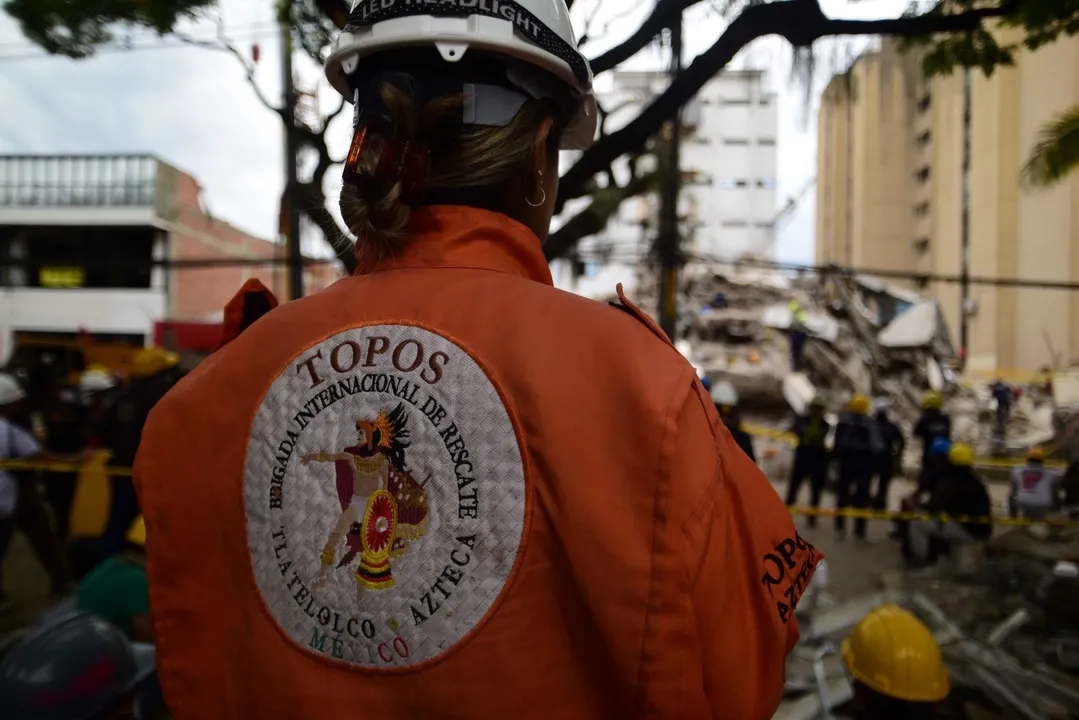
In Cali, capital of Colombia’s Valle del Cauca department, the Los Topos Azteca group, led by Héctor “El Chino” Méndez —or the “Topo Mayor”— is already providing assistance. They traveled from La Guaira, Venezuela, one of the areas most affected by the earthquake in that neighboring country in June.
As for the other brigade, the official response from the Colombian government to the offer from Los Topos Tlatelolco was that rescuers were not needed.
It would be easy to think that in an emergency of the magnitude Colombia is experiencing today, the best option would be to receive as much assistance as possible as quickly as possible. But there are procedures.
“Following a tragedy, countries may offer official assistance. But different nongovernmental organizations, associations, or civilians, both national and international, may also offer assistance. In that case, they must have some type of national or local authorization,” explains Camilo Prieto, associate professor in the Department of International Relations at Universidad Javeriana, to TRT Español.
Los Topos Azteca arrived in Cali without authorization from the national government, although they later received the support of the city’s mayor, Alejandro Eder.
The tragedy surprised President Abelardo de la Espriella, who had been in office for only three days. There was not yet a director in office at the National Unit for Disaster Risk Management (UNGRD), the agency responsible for assessing the country’s needs and negotiating with the international community offering assistance.
“Apparently, there were disagreements between the Foreign Ministry and the Unit over what Colombia needed and what type of assistance should be accepted from the international community and from whom,” Yan Basset, a political science professor at Universidad del Rosario, told TRT Español.
Colombia accepted rescue teams only from the United States, Israel, Ecuador, and El Salvador, rejecting offers from Mexico, Venezuela, and others. This decision led many people to question whether the issue was ideological.
The Foreign Ministry explained that it was not for political reasons, but rather that it prioritized the capabilities and certifications of the teams and the needs of the emergency.
“From a political standpoint, I find it unfortunate that a government would reject assistance,” Professor Prieto said. “It is raising suspicions nationally and internationally that it only wants to work with governments that are politically aligned with it (De la Espriella). In international politics, that is very complicated, because you have to work with everyone and not only with those you like.”
Basset offers a different perspective:
“It is not that Colombia is rejecting assistance. It did receive humanitarian aid. The controversy was about whether or not to accept additional rescue teams because the director of the UNGRD said that Colombia had enough certified units and sufficient personnel.”
The Price of Being a Topo
When duty calls, Luna says that his first thought is about his own family.
“Before leaving for an operation, I first have to take care of family and work matters. The person who always disagrees with me going is my wife. But she accepts it.”
His safety is not his only concern, since because of his position he is also responsible for the other rescuers and for the resources they have.
“I don’t do this so that people will recognize me, and if I want to be here, it is because I accept the consequences. It is risky; I can leave one day and never come back.”
Source: trtespanol