
Argentina authorizes deportation of Rear Admiral Fernando Farías Laguna to Mexico, accused of leading a fiscal fuel-smuggling network; his defense seeks to stop the transfer
The former naval commander was arrested in Buenos Aires after entering Argentina using a false identity. Mexico is seeking him for organized crime related to hydrocarbon offenses, while his lawyers argue that he faces risks if returned to the country and continue pursuing legal measures to prevent his expulsion.
MEXICO CITY.- The transfer to Mexico of Rear Admiral Fernando Farías Laguna, identified by Mexico’s Attorney General’s Office (FGR) as allegedly involved in a fuel-smuggling network, has been delayed because of legal proceedings initiated by the former naval commander in Argentina, President Claudia Sheinbaum said Thursday, August 20.
Argentina had ordered his deportation, but the transfer has not yet taken place. Farías Laguna has remained in custody since his April 23 arrest in Buenos Aires, and there is currently no confirmed date for his arrival in Mexico. The FGR will have to explain which legal action is keeping the process on hold and what the next steps will be.
The Argentine Federal Police (PFA) confirmed in April that Farías Laguna had been located and arrested in the Palermo neighborhood of Buenos Aires while subject to a Red Notice from Interpol. Argentine authorities also reported that he had entered the country on April 1, 2026, using a false identity in the name of a Guatemalan citizen.
Mexico is seeking him under an arrest warrant related to organized crime for the purpose of committing hydrocarbon-related offenses.
Why was Fernando Farías Laguna’s arrival in Mexico delayed?
President Claudia Sheinbaum Pardo explained during her Thursday morning press conference that the transfer was not canceled, but temporarily halted because of a legal action filed by Farías Laguna in Argentina.
The president declined to specify the nature of the proceeding because, she said, the FGR should explain its legal implications.
The statement changes the scenario that had been expected in previous days, when the transfer was thought likely to take place immediately.
What is known so far is:
- Argentina determined that Farías Laguna should be deported to Mexico.
- The transfer has not yet taken place.
- A legal proceeding initiated by the admiral delayed his departure from Argentina.
- Sheinbaum said that the process to bring him to Mexico remains ongoing.
- The FGR must explain what the legal action involves and when the transfer could resume.
- No new official date has been announced for his arrival.
Therefore, it cannot yet be stated that Farías Laguna is on his way to Mexico or that he has been placed at the disposal of a Mexican judge.
Why is Fernando Farías Laguna detained in Argentina?
Farías Laguna was arrested on April 23, 2026, after remaining a fugitive from Mexican justice.
The Argentine Federal Police reported that the arrest occurred in a public area at the intersection of Guatemala and Juan B. Justo in Palermo. According to authorities, he was staying in a short-term rental apartment after entering Argentina using a false identity.
At the time of his arrest, he had an Interpol Red Notice and an arrest warrant requested by Mexican authorities.
The charge he faces in Mexico is organized crime for the purpose of committing hydrocarbon-related offenses. Authorities identify him as one of the alleged members of a structure involved in fuel smuggling.
Farías Laguna denies the allegations and retains his right to the presumption of innocence until a final judgment is issued.
What connection does Fernando Farías Laguna have to the fiscal fuel-smuggling case?

The admiral’s name appears in the federal investigation into an alleged network that allegedly used customs operations and irregular documentation to bring fuel into Mexico while avoiding the payment of taxes.
This mechanism is known as “fiscal huachicol.” Unlike traditional fuel theft through illegal taps in pipelines, this scheme involves importing hydrocarbons while declaring them as other types of merchandise or using irregular documentation to reduce or evade the corresponding tax obligations.
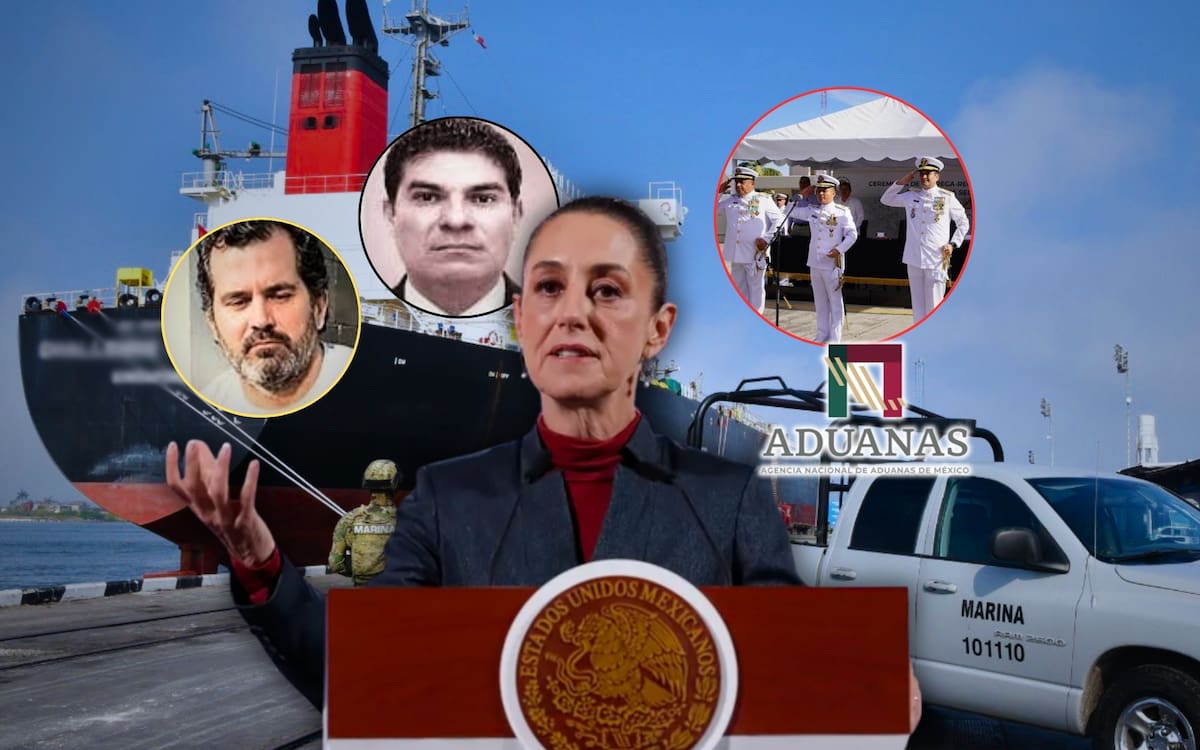
One of the events that drove the investigation occurred in March 2025 in Tampico, Tamaulipas, when federal authorities seized 10 million liters of diesel, along with 192 containers, 23 tractor-trailers with trailers, weapons and other items.
Months later, the investigation led to operations in several states and the arrest of 14 people, including businesspeople, active-duty and retired naval personnel, and former Customs officials. The Secretariat of Security and Citizen Protection reported that investigators uncovered a structure that used forged documentation and involved transportation companies, customs agencies and public officials.
Among those arrested was Manuel Roberto Farías Laguna, a vice admiral and Fernando’s brother.
Both are political nephews of former Navy Secretary José Rafael Ojeda Durán.
What does Fernando Farías Laguna’s defense claim?
The defense denies that Fernando Farías Laguna was part of the organization investigated by the FGR. Instead, his lawyers maintain that he informed his superiors when he became aware of allegations related to fuel smuggling.
The law firm representing him says it has WhatsApp conversations between Farías Laguna and Rafael Ojeda, who was then Secretary of the Navy, which it intends to use to demonstrate that the admiral warned about irregularities that had come to his attention.
According to his lawyers, the communications originated from a meeting held on May 31, 2024, in Villa Coapa, Mexico City, between Farías Laguna and Rear Admiral Fernando Rubén Guerrero Alcántar, who had reported irregularities involving fuel operations at the ports of Altamira and Tampico.
The defense maintains that Guerrero told Fernando that both his name and his brother’s name were being linked to the operations and that, after that conversation, Farías Laguna informed Ojeda.
The lawyers argue that this demonstrates that their client acted as a whistleblower rather than as a member of the criminal organization.
However, this remains the defense’s version of events. The messages, documents and other evidence presented by both the FGR and the admiral’s lawyers will have to be evaluated during the judicial process.
What does Omar García Harfuch have to do with the transfer?
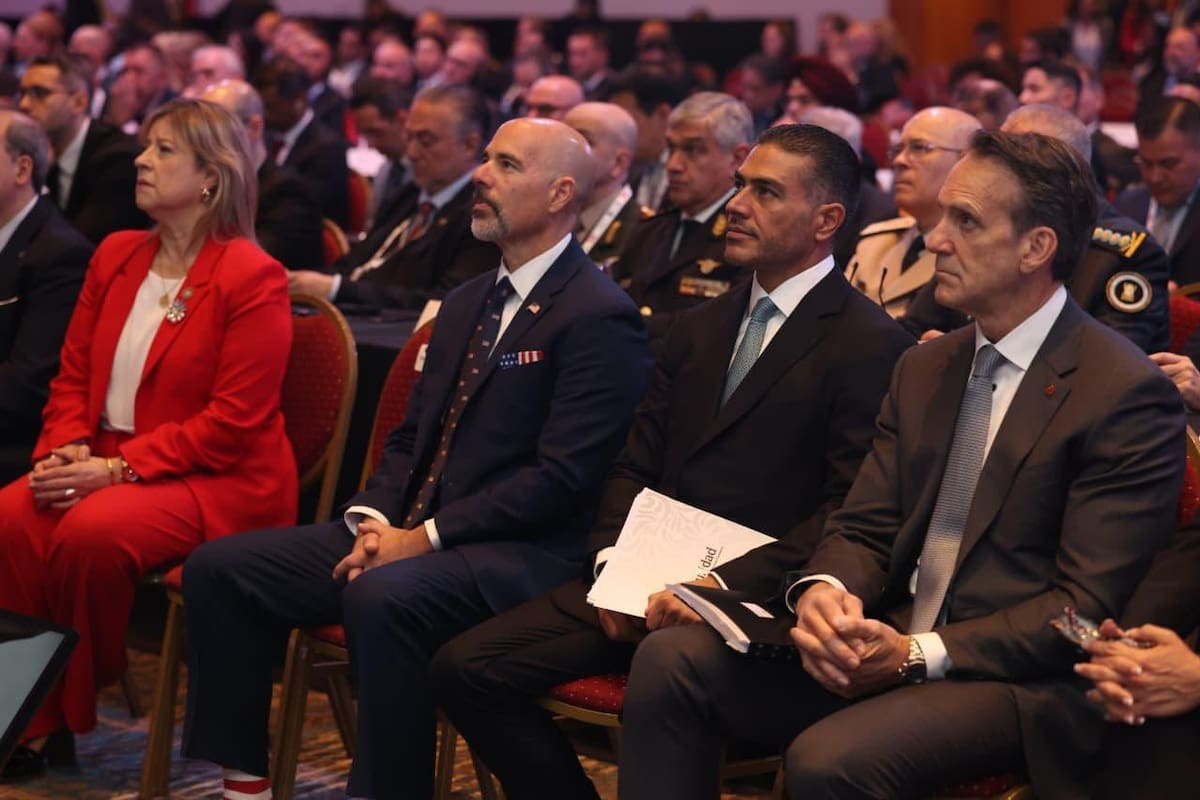
The discussions surrounding Farías Laguna’s deportation coincided with the presence in Argentina of the Secretary of Security and Citizen Protection, Omar García Harfuch, who attended the International Conference on Drug Control, organized by the United States Drug Enforcement Administration (DEA).
Sheinbaum denied Thursday that the two events were related.
The president said García Harfuch’s participation in Argentina was part of international security cooperation and was not related to efforts to secure the admiral’s transfer.
Thus, so far, there is no official information establishing a connection between the security secretary’s trip and Argentina’s decision regarding Farías Laguna.
Source: elimparcia