
The U.S. Department of the Treasury, through the Office of Foreign Assets Control (OFAC), sanctioned eight individuals and seven companies linked to Los Choneros, Los Lobos, associates of the Sinaloa Cartel, and the Jalisco New Generation Cartel (CJNG).
In addition, OFAC identified 10 vessels involved in the clandestine shipment of thousands of kilograms of cocaine every month from South America to Mexico, with the United States as the final destination.
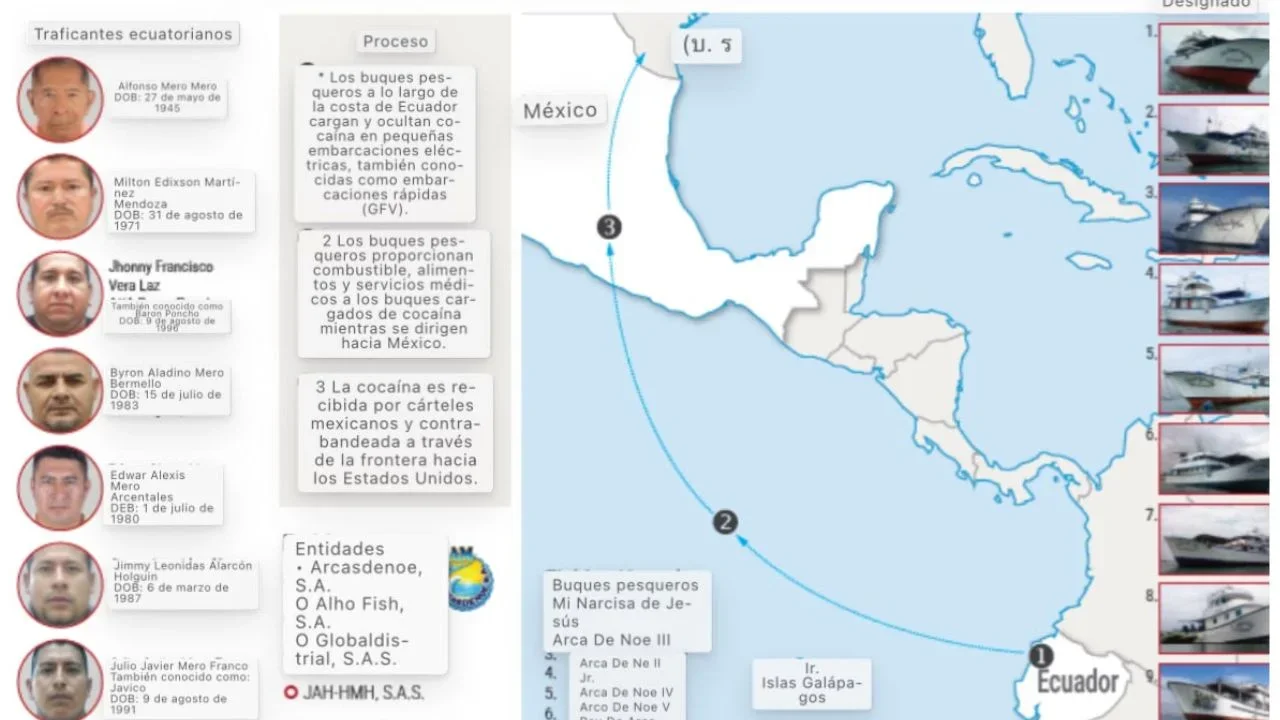
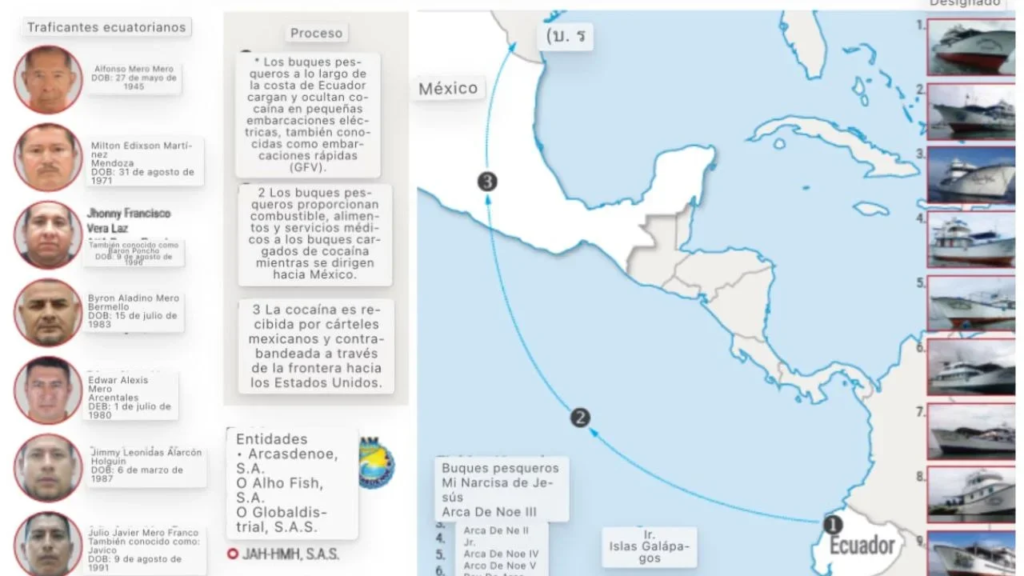
The organizations operate under the appearance of legitimate fishing businesses. A fleet of vessels based near Manta, Ecuador, secretly transfers cocaine to small motorized boats known as go-fast vessels, which travel north through the Eastern Pacific Ocean (EPAC) toward the United States. The cocaine is then smuggled through Mexico by the Sinaloa Cartel and the Jalisco New Generation Cartel (CJNG).
“Working alongside our law enforcement partners, we will continue disrupting the cartels’ drug trafficking operations and protecting our borders,” said Treasury Secretary Scott Bessent.
It is important to note that Los Choneros is one of Ecuador’s most violent criminal organizations. Through its association with the Sinaloa Cartel and other Mexican cartels, it has gained control over major cocaine trafficking routes from South America through Mexico and into the United States.
Los Lobos evolved from Los Choneros into an Ecuador-based group that is believed to have established drug trafficking routes from South America to Mexico through its connections with violent cartels such as the Jalisco New Generation Cartel (CJNG).
On November 16, 2025, the leader of Los Lobos, Wilmer Chavarria, alias “Pipo,” was arrested in Spain.
On September 4, 2025, the U.S. Department of State designated Los Choneros and Los Lobos as Foreign Terrorist Organizations (FTOs) and Specially Designated Global Terrorists (SDGTs), respectively. The Treasury Department had previously sanctioned Los Choneros on February 7, 2024, and Los Lobos on June 6, 2024, under Executive Order 14059, which targets the international proliferation of illicit drugs and their means of production.
Fishing Fleet Used to Support Cocaine Trafficking
Using a network of fishing vessels operated by the family-owned company Arcasdenoe, S.A., Alfonso Mero Mero and his sons, Roberth Alfonso Mero Arcentales and Edwar Alexis Mero Arcentales, have been accused of smuggling kilograms of cocaine from South America to Mexico and providing resupply services to go-fast vessels used to transport cocaine across the EPAC.
Along the trafficking route, these fishing vessels, using government-subsidized fuel, provide fuel, food, and medical services to cocaine-loaded vessels at coordinated locations throughout the EPAC to facilitate their successful journey to Mexico.
In addition, Edwar Mero Arcentales is involved in narcotics trafficking activities coordinated with Los Choneros.
Other fishing-vessel operators include:
- Julio Javier Mero Franco, who supports Los Choneros and has coordinated the transportation of approximately 30–40 tons of cocaine per month from Ecuador to Central America and Mexico.
- Milton Edixon Martínez Mendoza, who supports Los Lobos and Los Choneros and has coordinated the transportation of thousands of kilograms of cocaine aboard go-fast vessels traveling toward Mexico.
- Jhonny Francisco Vera Laz, who operates on behalf of Julio Mero Franco and has trafficked thousands of kilograms of cocaine per month from Ecuador’s coast to Mexico.
- Byron Aldino Mero Bermello, who has been involved in cocaine trafficking and, together with Jimmy Leonidas Alarcon Holguin, has been accused of coordinating refueling for cocaine-loaded vessels traveling toward Mexico.
- Alarcón Holguín, who owns or controls six Ecuador-based entities: Alho Fish, S.A., Globaldistrial, S.A.S., JAH-HMH, S.A.S., Negocios Jimar, S.A.S., Proyectos Neyzoa S.A.S., and Soisamar, S.A.
With the exception of Globaldistrial, S.A.S., all of these entities are involved in marine fishing. Globaldistrial, S.A.S. is involved in the trading of construction materials.
Vessels Identified by OFAC
The vessels identified include Todos Vuelven (Todos), Arca De Noe III (Arca III), Arca De Noe III Jr (Arca III Jr), Arca De Noe IV (Arca IV), Arca De Noe V (Arca V), Conquista, Siempre Mi Arca (Siempre), Rey De Arca (Rey), Costa Marlin (Costa), and Solo Es Mejor (Solo).
These Ecuador-based fishing vessels provide logistical support to go-fast vessels transporting cocaine through the EPAC by supplying fuel, food, and medical services, as well as helping detect and monitor law-enforcement vessels.
In addition to its logistical role, Todos also transports multi-ton quantities of cocaine.
Source: 24-horas