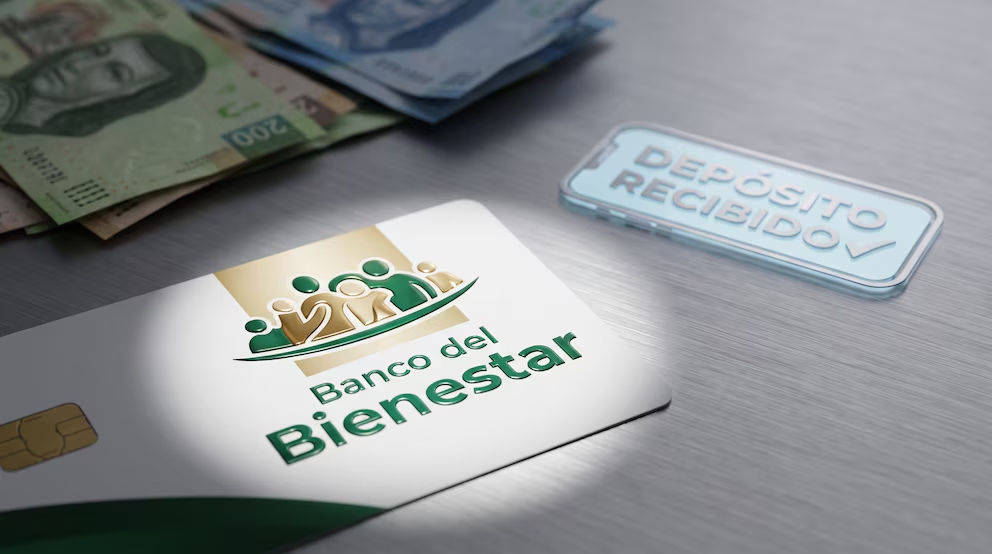

The black market for counterfeit banknotes has expanded in Mexico, and distrust among users is growing. Social media has become the main channel for alerts and complaints, with reports exceeding 18 million mentions in recent days.
A study conducted by DINAMIC, the digital intelligence software with the greatest qualitative depth in the country for measuring sentiment on social media, indicates that users have repeatedly pointed to the Banco del Bienestar for allegedly dispensing counterfeit notes through ATMs and bank counters, although it is not the only institution. BBVA also appears among complaints involving counterfeit banknotes. This situation is fueling a crisis of confidence in the financial system and highlighting vulnerabilities in banks’ internal controls.
Distribution of counterfeit banknotes through ATMs and bank counters
Users’ concern over the distribution of counterfeit banknotes is not limited to isolated incidents. The DINAMIC analysis indicates that 35% of all conversations detected on social media focuses on direct complaints involving ATMs and bank branch counters, particularly those of Banco del Bienestar. Digital testimonies are multiplying: people withdraw cash and, when they try to use it at businesses, discover that the 100- or 500-peso notes are not genuine.
The complaints are diverse and spread rapidly. For example, in Puebla City, a woman reported receiving counterfeit banknotes after withdrawing cash at a Banco del Bienestar branch. The case triggered a wave of complaints, particularly in the Mixteca region of Puebla, where merchants in municipalities such as Tehuitzingo warned that at least six businesses had received counterfeit 200-peso notes during the holiday period.
According to the DINAMIC analysis, these incidents are part of a trend that causes direct economic losses and harms the local economy, especially in areas where cash circulation is essential to daily activities.
Digital platforms fuel the black market
The rise of digital platforms has transformed the sale of counterfeit banknotes into a phenomenon that is difficult to track and combat. The DINAMIC study indicates that 18% of social media conversations focuses on reporting the existence of an active black market, where counterfeiters offer packages of fake banknotes through private channels and groups.
Facebook and Telegram stand out as the spaces most frequently used for these illicit operations, although attempts to sell counterfeit notes have also been detected on other messaging applications and social networks.
The ease of accessing these channels has made the circulation of counterfeit banknotes more common and harder to detect, as buyers can acquire large quantities with just a couple of messages and without requiring prior connections to the traditional criminal underworld.
Complaints without responses and a sense of helplessness
The viral spread of these cases not only demonstrates the scale of the problem, but also puts pressure on banking institutions to respond and review their internal processes.
In many of these testimonies, those affected say that when they go to a branch seeking a solution, bank personnel often disclaim responsibility, turning the complaint into a lengthy and extremely complicated process. The general perception among those reporting the incidents is that the protocols for validating the authenticity of money in vaults and ATMs fail at the most basic filters.
The DINAMIC study highlights that 19% of messages express frustration with complicated and lengthy clarification processes for reporting counterfeit banknotes received from ATMs. The feeling of financial helplessness intensifies when banks respond defensively or bureaucratically, leaving citizens to absorb the cost of the fraud.
Citizen organization in the absence of solutions
The problem becomes more serious when users point out that the dispensing of counterfeit banknotes through ATMs is not a new phenomenon, but rather a recurring situation that appears to intensify during periods of high demand for cash, such as paydays, holiday seasons, or the distribution of social program payments.
Merchants and workers have warned that on high-volume days, the possibility of receiving counterfeit banknotes increases, generating widespread fear and distrust.
Nevertheless, the lack of institutional solutions has encouraged citizen organization. On social media, users share guides and advice for detecting counterfeit banknotes before accepting them. The DINAMIC analysis indicates that 28% of the conversation is devoted to sharing methods for checking watermarks, feeling raised printing by touch, examining serial numbers, analyzing transparent windows, and verifying changes in the color of banknotes. This exchange of information has become essential for preventing fraud and protecting the personal finances of individuals and businesses.
The DINAMIC report emphasizes that the dispensing of counterfeit banknotes through ATMs and bank counters affects not only users’ finances, but also their perception of security within the banking system. Failures in authentication mechanisms inside vaults and the lack of effective protocols for assisting those affected fuel the perception that withdrawing cash is no longer a safe operation, even through formal channels. This phenomenon, which was previously associated only with informal transactions or illicit activities, has now moved into the heart of Mexico’s financial system.
Source: infobae