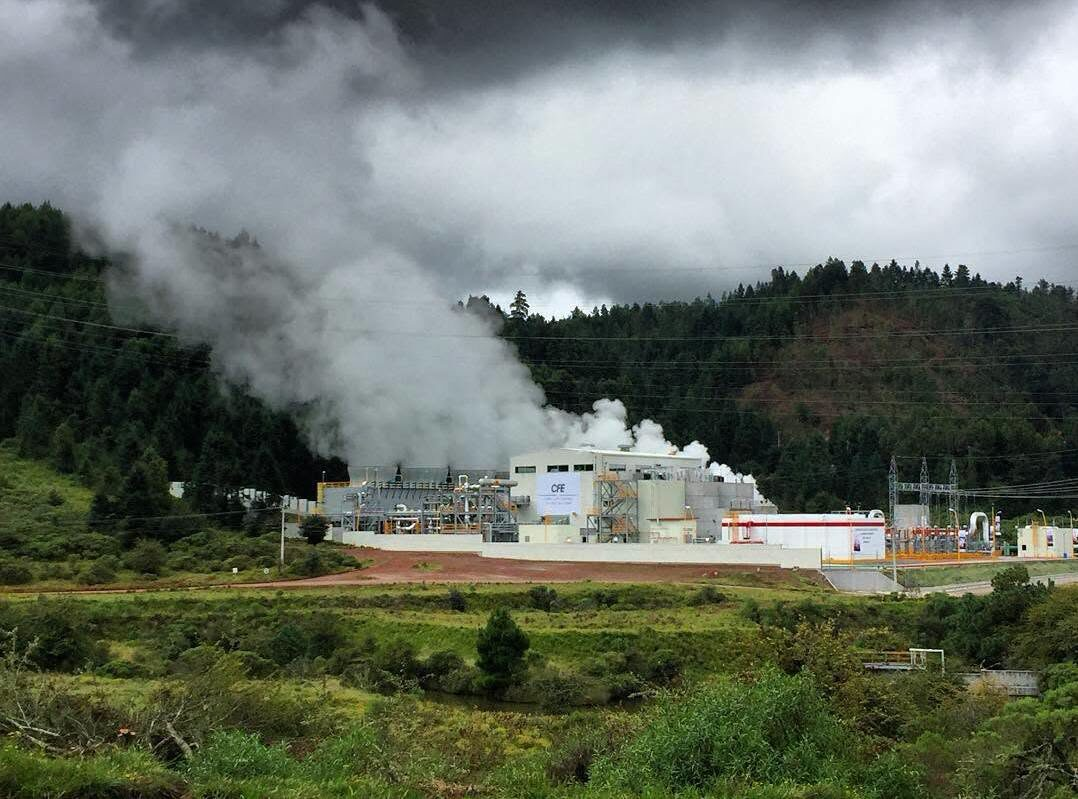

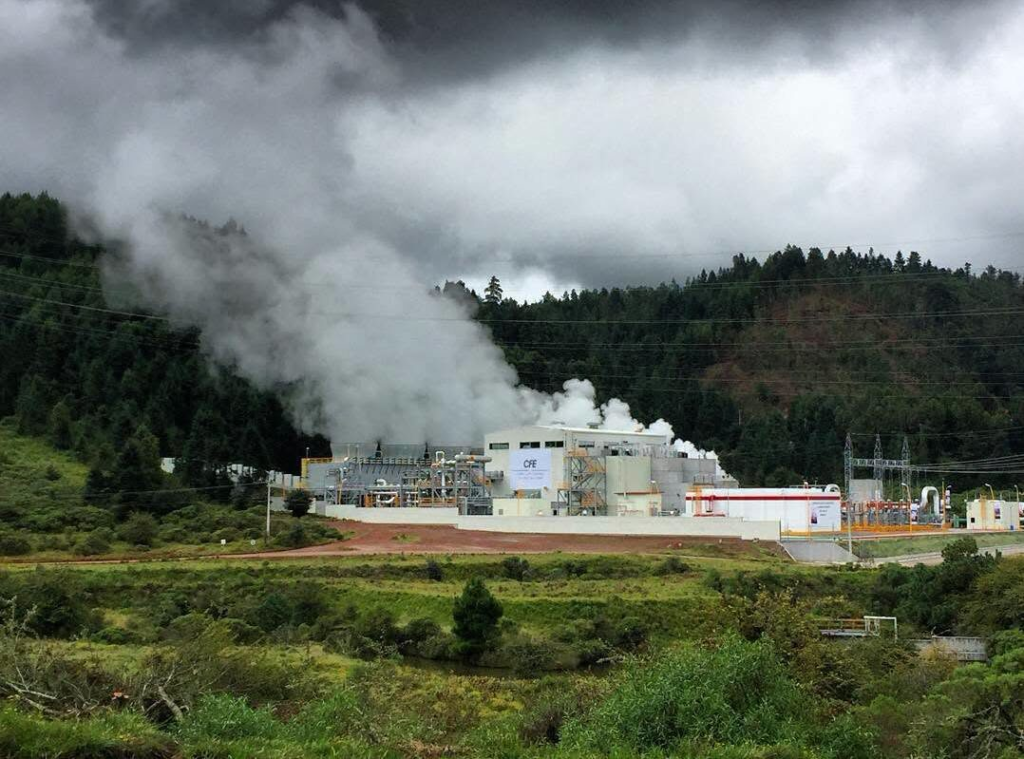
Indigenous communities in eastern Michoacán announced mobilizations, including the occupation of highways and Federal Electricity Commission (CFE) facilities, following the company’s refusal to allow an inspection at the Los Azufres Geothermal Power Plant and its failure to comply with agreements to investigate complaints regarding water contamination and waste management. The Indigenous Supreme Council of Michoacán (CSIM) held the CFE, the Federal Attorney for Environmental Protection (Profepa), and the Ministry of Environment and Natural Resources (Semarnat) responsible for failing to address the communities’ complaints.
An inspection of the geothermal power plant facilities had been scheduled for August 19, previously agreed upon during meetings of the Interinstitutional Committee for “Environmental Quality and Public Health Los Azufres,” with the participation of federal and state authorities. However, CFE officials did not attend or authorize entry to the plant, while the heads of the institutions that had been called to participate were also absent. The CSIM stated that only personnel without sufficient information or the authority to resolve the situation attended.
The communities also denounced that Profepa and Semarnat failed to obtain the necessary permits to conduct the inspection and pointed out that Gabriela Ortiz Merino, deputy attorney for Industrial Inspection and Oversight at Profepa, had committed since April 8 to lead an inspection of the geothermal plant, but it has not yet taken place. The CSIM also questioned the environmental impact reports submitted by the CFE between 2020 and 2025, arguing that they do not include studies of water from springs, air, soil, land, or crops in communities near the plant. Therefore, it claimed that there is insufficient evidence to assess the impacts of geothermal activity on the communities.
In response to the failure to comply with agreements and the lack of an institutional response, the communities warned that they would resort to mobilization through the occupation of highways and CFE facilities. The CSIM demanded that environmental authorities and the company directly address the complaints and carry out inspections and studies in the affected communities. The communities maintained that their demands are related to protecting health, the environment, and life.
Full statement:
Indigenous communities will mobilize in Michoacán.
TO THE MINISTRY OF ENVIRONMENT AND NATURAL RESOURCES
TO THE FEDERAL ATTORNEY FOR ENVIRONMENTAL PROTECTION
TO THE FEDERAL ELECTRICITY COMMISSION
TO THE PEOPLE OF MEXICO AND MICHOACÁN
TO INDIGENOUS COMMUNITIES
TO THE MEDIA
Indigenous and Afro-Mexican communities of Michoacán, August 21, 2026.
Last Wednesday, August 19, an inspection at the Los Azufres Geothermal Power Plant facilities had been scheduled. This technical visit had previously been agreed upon during meetings of the so-called Interinstitutional Committee for “Environmental Quality and Public Health Los Azufres,” in which different federal and state agencies were to witness on site the complaints presented by authorities from communities in eastern Michoacán regarding the poor management of waste and water contamination caused by the geothermal power plant.
However, CFE officials did not appear at the site, nor did they grant permission to enter their facilities. Likewise, the heads of the institutions that had been called to participate were absent. Only personnel who were unfamiliar with the agreements and who lacked sufficient information, much less the capacity to resolve the situation, attended.
Given this situation, first of all, we publicly denounce the CFE’s refusal to cooperate and its failure to comply with the agreements recorded in the minutes, as well as the complete lack of sensitivity and indifference of its Director General, Emilia Esther Calleja Alor, who, despite the existence of a serious environmental and health crisis in eastern Michoacán, has systematically refused to directly address the problems affecting dozens of towns and municipalities.
Second, we declare the manifest inability of the Federal Attorney for Environmental Protection (PROFEPA) and the Ministry of Environment and Natural Resources (SEMARNAT), which, despite their powers and responsibilities, were unable to obtain the corresponding permits to enter the CFE-operated geothermal power plant. Through action or omission, this makes them complicit in the crisis suffered by hundreds of families with chronic kidney diseases in the state. They have also failed to comply with the agreements, since Gabriela Ortiz Merino, Deputy Attorney for Industrial Inspection and Oversight at PROFEPA, committed on April 8 to lead an inspection of the geothermal power plant within less than a month to verify environmental risk areas in the presence of the communities. Five months have passed, and she never fulfilled that commitment.
Today more than ever, it is clear to us that PROFEPA and SEMARNAT have failed in their work. In the last 15 “environmental impact” reports submitted by CFE between 2020 and 2025, it is evident that there are no studies of the water from springs in communities near the geothermal power plant, no analysis of the atmosphere or air in the towns bordering the geothermal power facility, and no tests of the soil, land, or crops in the communities surrounding the geothermal installations. In short, neither CFE nor the Mexican State have actually conducted studies or analyses of the environmental impact directly within the communities. The existing studies have focused exclusively on the interior of the geothermal power plant facilities. What type of environmental impact can be verified in the communities if there are no studies conducted by CFE, PROFEPA, and SEMARNAT in those communities?
For all of the above, because of the refusal to cooperate, the inability, the complicity, and the failure to comply with the agreements, we are left with no other option than to mobilize through the occupation of highways and CFE facilities. Our struggle is for health, the environment, and life!
Source: resumenlatinoamericano