
Decomisar armas from criminal groups in Mexico reveals a trend toward homemade weapons production. What kind of firepower do cartels have compared with state security forces?
Every weapons seizure from Mexican cartels deals a blow to their power structures. It also provides an idea of the condition and scale of their criminal arsenals.
In a recent operation in the municipality of El Rosario, Sinaloa, on August 18, 2026, Mexican authorities seized more than 300 improvised explosive devices.
Last June, security forces had already seized 550 homemade explosive devices in the same municipality, including antipersonnel mines and devices designed to be launched from drones.
These and other findings reveal a trend among criminal groups toward manufacturing their own weapons.
The Mexican government holds ceremonies to destroy weapons seized from drug traffickers. The ceremony pictured took place on March 17, 2026, in Tijuana. Image: Carlos A. Moreno/ZUMA/picture alliance
Increase in Homemade Weapons Production
“The discovery of homemade explosives is nothing new,” security expert Paloma Mendoza Cortés points out. “There are records, dating back at least to 2010, of the first seizures of explosive hydrogel, used in mining to destroy large rocks,” she told DW.
“At that time, explosives represented a minimal portion of the arsenals seized from organized crime. They became more relevant following a series of explosive attacks in Michoacán in 2021, carried out by the Jalisco New Generation Cartel (CJNG),” says Mendoza, from the Center for Security, Intelligence and Governance Studies at the Instituto Tecnológico Autónomo de México (CESIG-ITAM).
15 Million Illegal Weapons
Given the clandestine nature of criminal groups, the number of weapons at their disposal is unknown. However, Víctor Sánchez Valdés, a researcher at the Autonomous University of Coahuila (UAdeC), estimates that approximately 15 million illegal weapons are circulating in Mexico.
“Assuming, for example, that 50 percent of these were in the hands of organized crime, that would already amount to 7.5 million weapons,” Sánchez told DW. According to the expert, among the equipment seized from cartels, authorities have found AK-47, AR-15 and Barrett-type rifles and their derivatives, weapons illegally imported primarily from the southern United States.
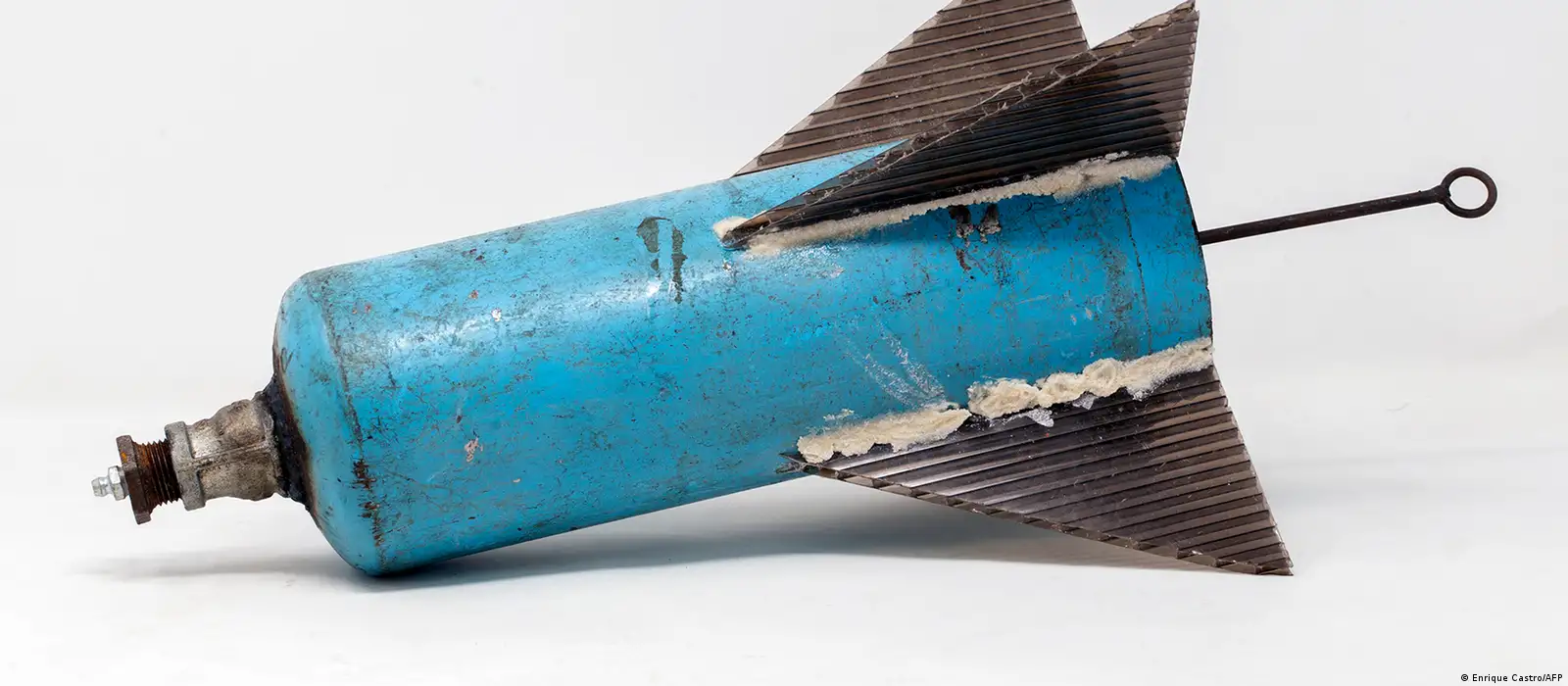
In states such as Guerrero, Jalisco and Michoacán, criminal groups terrorize local populations and rivals with homemade explosives. Image: Enrique Castro/AFP
Mexican cartels, security expert Sánchez says, are also increasingly purchasing military equipment in Europe, Africa and South America, particularly in countries experiencing civil wars.
Mexico, a Weapons Market
In addition, the illegal manufacture of weapons in Mexico has increased in recent years. Sánchez mentions, for example, weapons produced through 3D printing and the so-called “monster trucks” or “narco-tanks,” armored and reinforced vehicles manufactured in clandestine workshops.
In states such as Guerrero, Jalisco and Michoacán, criminal groups make extensive use of antipersonnel mines and explosive drones, with this type of material having been found in 17 of the country’s 32 states.
Cartels Specializing in Drones
Both Víctor Sánchez and Paloma Mendoza mention the presence of mercenaries of Colombian and Salvadoran origin, some with experience on battlefields in Ukraine, who have helped Mexican cartels develop specialized knowledge in explosives.
Criminal groups also recruit young professionals, either through deception or by force, explains Dr. Paloma Mendoza.
According to the security expert, between 2020 and 2025, Mexico’s Secretariat of National Defense seized more than 15,000 improvised explosive devices, nearly 10,000 of which were seized in 2025. “The increase is exponential,” she says.
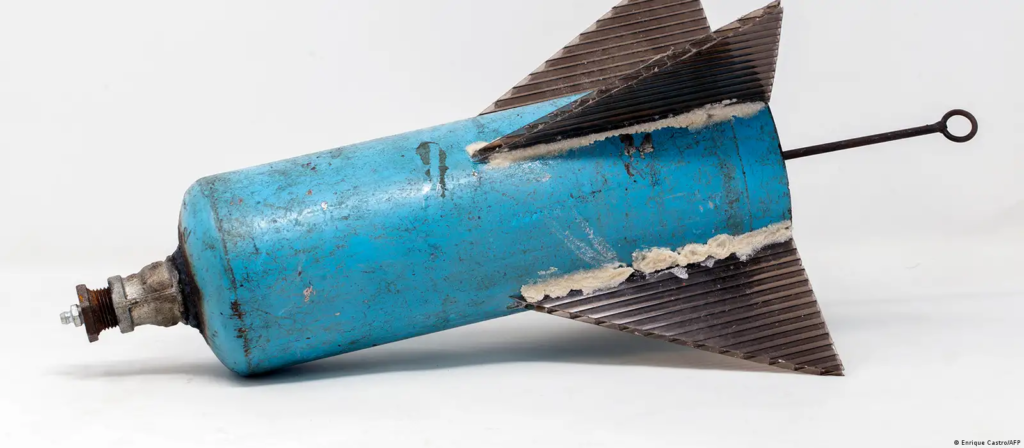
Another example of a homemade explosive device seized from organized crime in Michoacán. Image: Enrique Castro/AFP
Mexican cartels also hire highly trained technology professionals, including hackers. For espionage purposes, criminal groups have gone as far as installing complete video surveillance networks in cities, says Sánchez Valdés.
The Mexican State’s Response
The UAdeC researcher emphasizes that neither Mexico nor the United States, the main country of origin for narco-weapons, has been able to stop their illegal trafficking.
Despite this, he maintains that the Mexican state remains more powerful than organized crime: the number of weapons possessed by the Army, Navy and National Guard exceeds that of the cartels.
The Mexican government does not publish an inventory of its arsenals for reasons of national security and military strategy.
Drones carrying homemade explosives represent a major challenge for Mexican authorities. Image: Eduardo Verdugo/AP Photo/picture alliance
However, Dr. Sánchez qualifies this by noting that in some regions, criminals have greater firepower than authorities. Although the Army has mechanisms to counter the new military technologies developed by cartels, “unfortunately, it is almost always one step behind,” he says. By this, he refers, for example, to specialized units responsible for deactivating antipersonnel mines.
As part of the 2026 FIFA World Cup, the Mexican government acquired special weapons designed to bring down drones and prevent attacks at stadiums. However, this technology has not yet reached the areas most affected by homemade explosive drones.
In Paloma Mendoza’s view, the state has “very limited” capabilities to counter criminal arsenals, particularly because “technological advances quickly outpace legislation and bureaucracy.”
The expert insists on the need for the Mexican government to create a national defensive and offensive system against unmanned vehicles and for detecting explosives.
In recent days, Mendoza notes, the Mexican and U.S. militaries publicly announced the signing of an agreement under which Mexico will have access to the acquisition of Unmanned Aerial Systems, as well as Counter-Unmanned Aerial Systems technology, “which could represent an important step not only for Mexico, but also for bilateral security cooperation.”
Source: amp.dw