
The 2026 World Cup ended leaving a much more complex picture of the Mexican experience than might be assumed at first glance. Although before the tournament there were concerns related to security, inflation, infrastructure, organization and the use of public resources, once the competition concluded, the general perception among Mexicans was predominantly positive.
The study “Post World Cup: 2026 Soccer World Cup in Mexico,” prepared by Ipsos in Mexico, reveals that 71% of respondents are satisfied that the country was one of the tournament’s host nations, while 77% consider having hosted the World Cup a source of pride.
However, the overall assessment was not completely favorable. The research also shows a marked difference between how Mexicans evaluated the World Cup as an experience and how they perceive some of the institutions involved in organizing it.
One of the most striking contrasts is precisely the one involving FIFA: seven out of 10 respondents have a negative perception of the organization, while only 29% consider it trustworthy and 37% perceive it as transparent.
The World Cup generated pride among Mexicans
One of the study’s main findings is that the World Cup’s most favorable impact in Mexico was not necessarily related to money, but rather to emotions and collective identity.
For 77% of respondents, the tournament represented a source of pride. In addition, 80% believe the event helped connect Mexicans, while 76% believe it allowed the country to show the world the best of Mexico.
Another relevant indicator concerns tourism: 84% of those surveyed believe the World Cup opened Mexico’s doors to the world and helped boost tourism.
Thus, the post-tournament evaluation appears to move away from some of the concerns that dominated the conversation before the event. The final experience was viewed more positively than many Mexicans expected before the matches began.
Mexico’s participation also generated predominantly positive emotions.
When asked about the feelings generated by the performance of the national team, 29% mentioned pride and patriotism, 21% mentioned satisfaction, 19% joy and happiness, and 12% hope and optimism.
In contrast, only 10% of respondents mentioned emotions such as frustration or disappointment.
The evaluation of the team’s sporting performance was also favorable. 46% rated the Mexican national team’s performance as very good, while another 36% considered it excellent.
This shows that, despite expectations and the frustration that may have resulted from not advancing further in the tournament, the public’s overall assessment of the Mexican team remained primarily positive.
FIFA, the great contrast after the World Cup
While the World Cup received a favorable evaluation, perceptions of FIFA were considerably more critical.
According to Ipsos, seven out of 10 Mexicans surveyed have a negative opinion of FIFA.
Only 29% consider the organization trustworthy, while 37% perceive it as transparent.
The contrast is particularly relevant because it shows that the assessment of a major sporting event does not necessarily extend to the institutions responsible for organizing it.
Fernando Álvarez Kuri, Senior Business Director for Ipsos in Mexico, explained that the results show a clear difference between perceptions of the event and those of the people and organizations behind its organization.
In other words, the Mexican public was able to enjoy and positively evaluate the World Cup while maintaining a critical view of FIFA and some of the controversial issues associated with the tournament.
Security during the World Cup: there were problems, but they did not dominate the evaluation
Before the competition, one of the main concerns was security. However, during the celebrations, attendees did identify various problematic situations.

64% observed excessive crowds, while 52% perceived excessive alcohol consumption.
In addition, 48% said they witnessed fights or disturbances, 34% noticed dangerous drivers, and 25% pointed to security problems during the celebrations.
Despite these concerns, the overall assessment of the measures implemented was relatively favorable.
66% of respondents considered the security measures adequate, while the authorities’ management received an average rating of 7.4 out of 10.
The data therefore show a dual situation: visible problems occurred during the celebrations, but they were not enough to drastically alter the general perception of the event’s organization.
Did the World Cup benefit Mexico economically?
The economy is another area where opinions were divided.
On the one hand, 69% of Mexicans believe the World Cup had a positive economic impact.
Among the main factors associated with that impact were increased tourism, mentioned by 77%, stronger local commerce, cited by 59%, and the international promotion of Mexico, at 57%.
But this positive perception coexists with significant concerns.
More than half of respondents, 54%, perceive an increase in prices and inflation related to the World Cup context.
The same percentage believes that the main economic benefits went to large companies and also points to possible misuse of resources.
Meanwhile, 52% mention unfinished construction projects and a possible increase in public debt.
Therefore, the study presents one of the main contradictions in the post-tournament assessment: Mexicans recognize that the World Cup generated economic activity, tourism and international promotion, but not everyone believes those benefits were distributed evenly among the population.
How did Mexicans experience the 2026 World Cup?
Despite the tournament’s enormous presence in public spaces, stadiums, Fan Fests and celebrations, the vast majority of Mexicans experienced the World Cup from home.
88% of respondents said they followed the tournament from home, while only 12% attended a stadium.
The event’s reach, however, was practically nationwide: 98% watched at least one match and 69% followed all or most of the games.
These figures show that the World Cup experience did not necessarily depend on attending a host city or purchasing a ticket. For millions of fans, the tournament became primarily a domestic experience shared through television, digital platforms and social media.

Broadcast television, ViX and social media: how the World Cup was followed
Broadcast television remained the main medium for following the matches.
According to Ipsos, 64% of respondents used broadcast television to consume World Cup-related content.
Next came ViX, with 36%, while social networks such as YouTube, Facebook and TikTok also played an important role in the conversation and coverage of the tournament.
This confirms that although digital platforms are increasingly important in sports consumption, broadcast television continues to have enormous reach among mass audiences during events of this magnitude.
Fan Fest and the Angel of Independence: between excitement and overcrowding
In-person activities were also an important part of the World Cup experience.
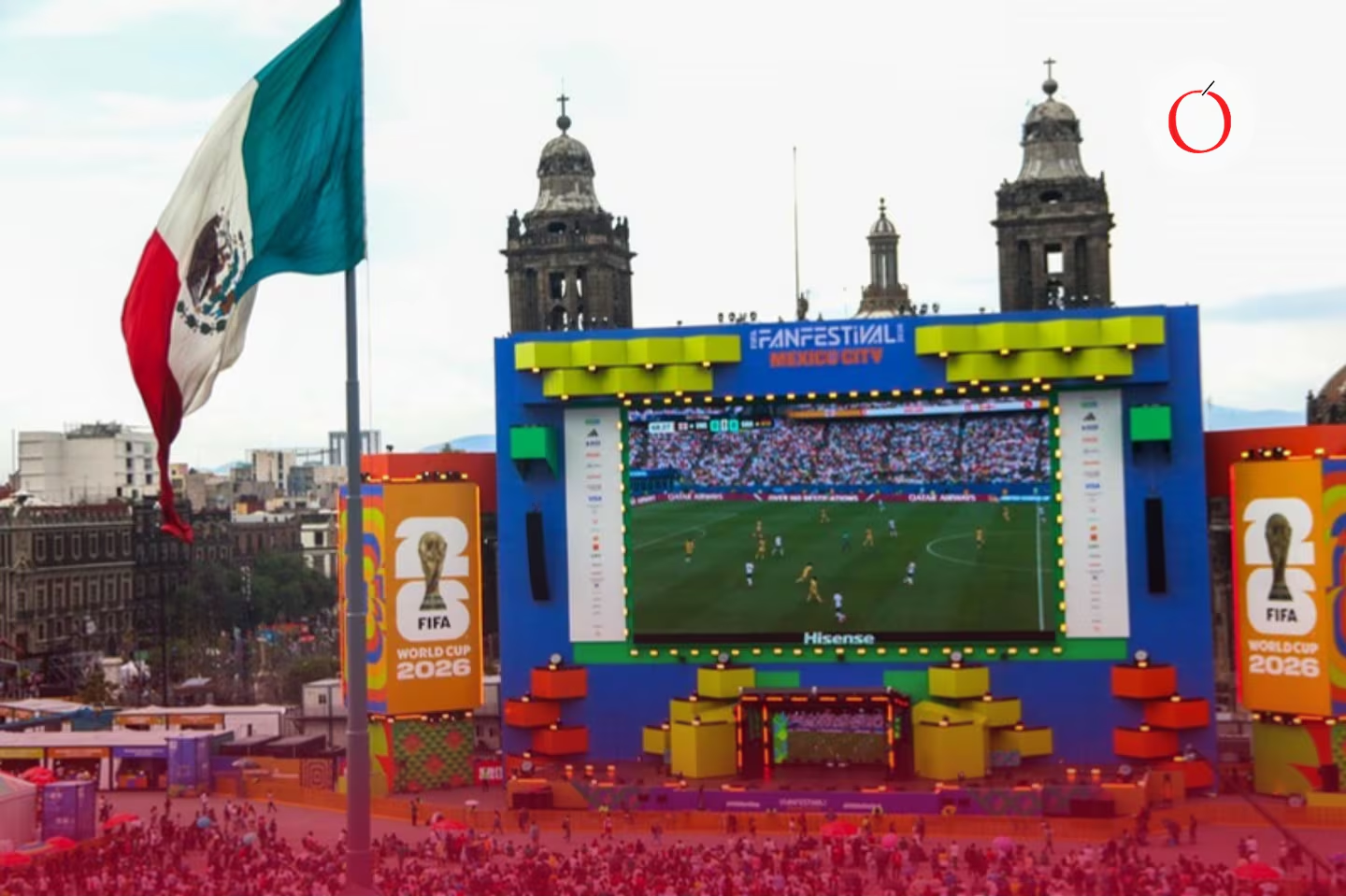
Among the most popular activities were visits to the Fan Fest, at 26%, exchanging collectible stickers, at 24%, and attending tournament-related events or giveaways, at 18%.
Fans also participated in sponsor brand activations, at 14%, and watch parties to view matches, at 8%.
However, the large celebration spaces also faced criticism.
Among those who attended the Fan Fest and the Angel of Independence, 38% described the experience as positive.
But 27% believed there were too many people, 25% pointed to a lack of security, and 21% felt that organization and control were lacking.
Only 7% responded that they did not attend these celebrations.
Who were the standout players?

Fans’ perceptions also highlighted several names.
The footballer who attracted the most attention from respondents was Julián Quiñones, with 16%, followed by Erling Haaland, with 14%, and Gilberto Mora, with 6%.
The study also asked what most surprised fans during the tournament.
The leading answer was Cape Verde’s performance, with 22%, followed by Spain winning the championship, at 11%, and Mexico’s performance, at 10%.
These results reflect that the World Cup conversation was not limited to the major national teams or the most media-famous players. There was also room for unexpected performances and sporting stories that surprised fans.
The World Cup album was not for everyone either
The traditional official sticker album had less participation than might be expected.
60% of respondents did not collect the album, while 27% did so partially.
Only 13% managed to complete it.
The figure offers an interesting perspective on consumption of World Cup-related products and shows that although stickers remained part of the tournament tradition, completing the album was an experience reserved for a minority.
The digital conversation ended with a positive balance
After the tournament, the conversation on digital platforms maintained a predominantly favorable trend.
According to Ipsos, 68% of the digital conversation following the World Cup had a positive balance, focusing mainly on the World Cup experience, the atmosphere surrounding the tournament, the hosts and sporting moments.
The remaining 32% corresponded to negative conversations.

Among the main topics of discussion were Mexico’s elimination, accusations of favoritism toward Argentina, questions surrounding refereeing, FIFA and Gianni Infantino, as well as disciplinary controversies.
The final between Spain and Argentina was also among the topics that generated significant discussion.
The World Cup ultimately became a more positive experience than expected
The Ipsos study makes it possible to examine the 2026 World Cup from a perspective that goes beyond sporting results.
The post-tournament picture shows a population that, overall, is satisfied that Mexico hosted the event and considers that the tournament generated pride, unity and international promotion.
At the same time, questions remain regarding prices, the distribution of economic benefits, construction projects, public spending and the performance of institutions.
FIFA represents the clearest example of this contradiction: while the event received a favorable evaluation, the organization responsible received a considerably more negative perception.
The World Cup also made clear that the Mexican World Cup experience did not take place solely inside stadiums. For the majority, the tournament was experienced from home, in front of a television or through digital platforms, but with enough intensity to involve practically the entire country.
Beyond the controversies, the Ipsos assessment shows that the World Cup succeeded in becoming an emotionally significant event for Mexicans, although its economic benefits and costs remain subjects of debate.
How was the Ipsos study conducted?
The results are part of a survey conducted by Ipsos in Mexico among 500 adults, through its online Global Advisor platform.
Ipsos is an international market research and public opinion company operating in 90 markets and employing nearly 20,000 people. The company was founded in France in 1975 and conducts research through surveys, observation, social media monitoring and qualitative techniques.
The study “Post World Cup: 2026 Soccer World Cup in Mexico” seeks to identify Mexicans’ perceptions after the tournament and put into perspective aspects such as the citizen experience, emotions, security, the economy, content consumption and perceptions of the institutions involved.

Source: cronicas