
The outbreak has recorded 5,794 confirmed cases, including 2,786 deaths, and is spreading at an unprecedented rate, faster than efforts to track and contain it.
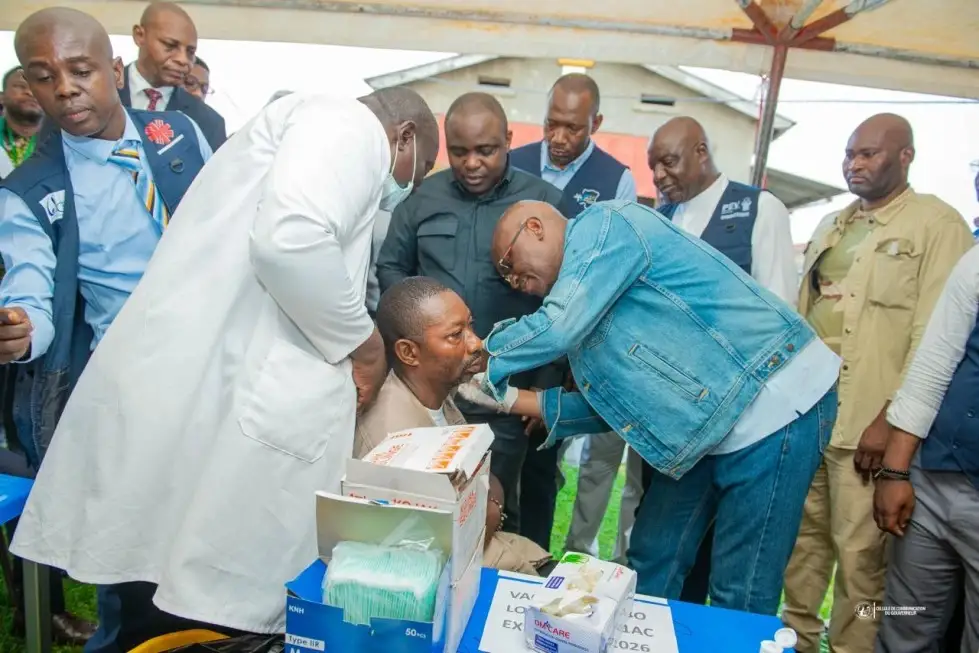
The Health Minister of Congo, Roger Kamba, administers an Ebola vaccine to a healthcare worker in Kisangani, Congo, on Thursday, August 27, 2026.
The Health Minister of Congo, Roger Kamba, administers an Ebola vaccine to a healthcare worker in Kisangani, Congo, on Thursday, August 27, 2026.
BUNIA, Congo (AP).- The fastest-growing Ebola outbreak in history has spread to two new health zones in eastern Congo, bringing the total number of affected areas to 60, according to the latest government figures released Friday.
The two newly affected areas are Biena and Manguredjipa, in North Kivu province, in the Democratic Republic of Congo, where the case fatality rate is significantly higher than the overall rate of 48%, partly due to delays in response measures, according to data from Congo’s Ministry of Health.
According to the statement, the outbreak has recorded 5,794 confirmed cases, including 2,786 deaths, and is spreading at an unprecedented rate, faster than efforts to track and contain it.
The outbreak is spreading under extremely difficult conditions, driven by insecurity, displacement, a healthcare workers’ strike, and intense population movements. The World Health Organization has stated that the outbreak remains out of control and is on track to surpass the 2014–2016 West African Ebola outbreak, the deadliest on record, which killed more than 11,000 people, mainly in Guinea, Liberia, and Sierra Leone.
The humanitarian organization Médecins Sans Frontières announced Friday the opening of a new treatment center in Beni, North Kivu, to accelerate the response in what it described as one of the hardest-hit areas.
While the vast majority of cases are concentrated in the northeastern province of Ituri, North Kivu has an Ebola mortality rate of nearly 69%, one of the highest in the country, according to the latest government figures.
The new center “allows for rapid treatment of patients, strengthens contact tracing, and supports health authorities in their efforts to contain the spread of the virus,” Médecins Sans Frontières said in a statement.
On Thursday, the Democratic Republic of Congo began vaccinating healthcare workers and other frontline workers with the Ervebo vaccine, which proved effective in previous Ebola outbreaks caused by a different and more common type known as Zaire.
Clinical trials are underway to find an authorized vaccine against the rare Bundibugyo virus, which is causing the current outbreak and for which there are no approved vaccines or treatments.
Although the current outbreak was declared in mid-May, authorities believe it had been spreading since February. It has expanded from three health zones to nearly 60, and most cases and deaths have occurred outside the monitored contact network and within communities.
Efforts to control the outbreak — ranging from limiting public gatherings to social distancing and airport closures — have disrupted life across the six affected provinces, particularly in Ituri, which has been devastated by rebel violence.
The government has implemented measures, including establishing health teams in some locations, but advocacy groups say more needs to be done to build trust within the community.
Although neighboring Uganda declared itself free of Ebola last month, the risk of further cross-border transmission remains, the WHO said Wednesday.
WHO expert Marie Roseline Belizaire said that the Central African Republic is now considered the country at greatest risk of infection, followed closely by South Sudan, as the outbreak in eastern Congo has spread toward border areas.
Source: proceso