
The government of Playa del Carmen defends a tourism promotion strategy focused on tour operators and specific consumers, while facing questions about the lack of visibility of its campaigns and the need to demonstrate concrete results in visitor arrivals and economic activity.
Playa del Carmen prepares its participation in the Top Resa tourism fair in France.
At a time when hotels, businesses, and service providers are experiencing a difficult tourist season, the government of Playa del Carmen is betting on an international promotion strategy that is difficult for the public to see, as much of the effort is now focused on direct agreements with tour operators that already have captive customers.
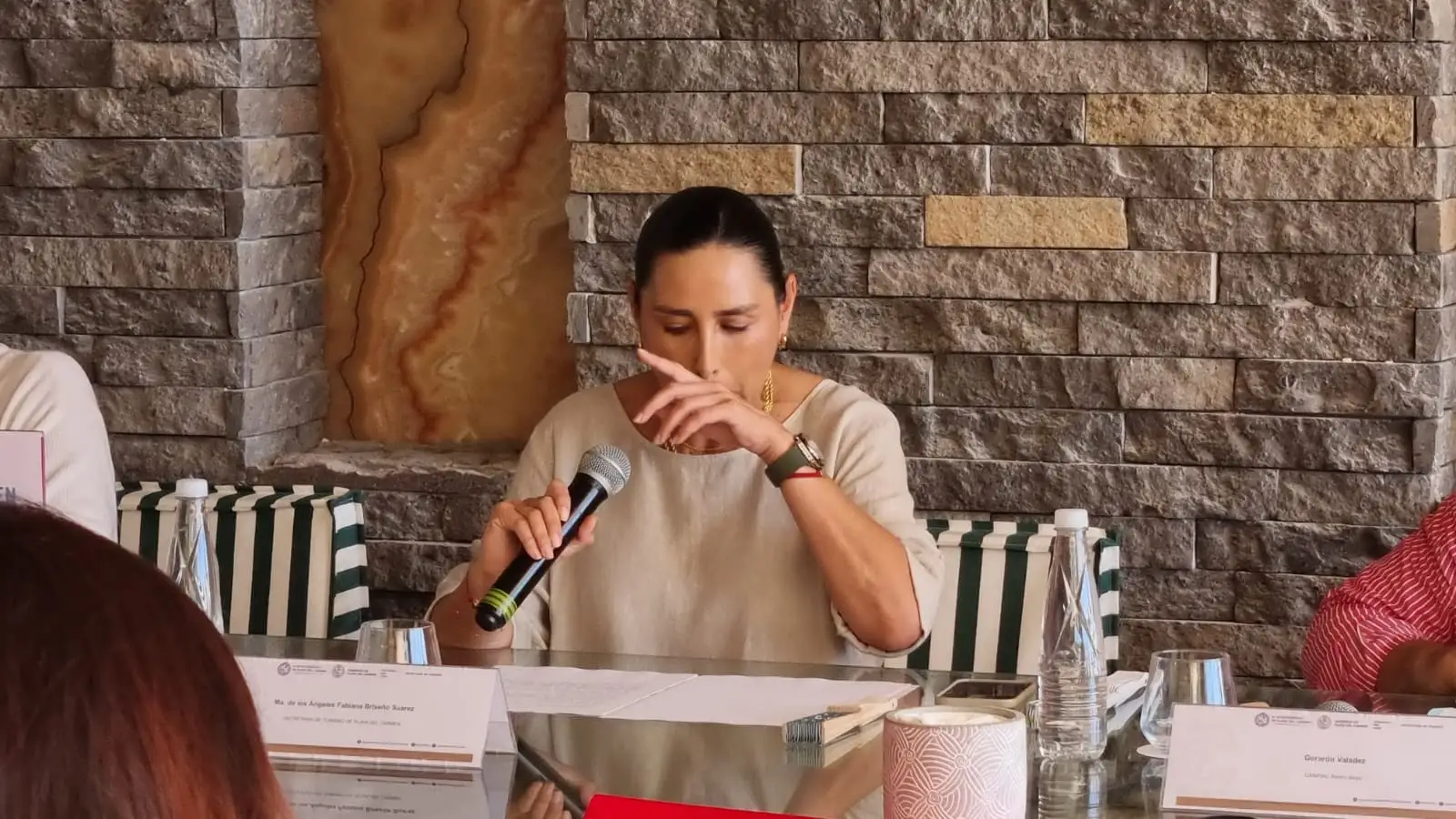
The explanation emerged during a meeting with the media led by the municipal Tourism Secretary, Fabiana Briseño Suárez, where the results and scope of international promotion were questioned, particularly regarding Playa del Carmen’s upcoming participation in Top Resa, France.
The question was direct: Where are Playa del Carmen’s international campaigns, and what budget is being allocated to penetrate European markets?
The response on this matter came from Irving Mayett Muciño, director of Tourism Operations and Training, who maintained that the way destinations are promoted has changed and acknowledged that resources will never be enough.
“The way promotion is carried out across different segments has evolved considerably. Without a doubt, resources will never be enough, but we have to know how to make better use of them,” he explained.
However, Mayett did not specify a concrete figure for the budget currently being spent on these campaigns.
The official instead explained that the department has decided to concentrate part of its efforts on agreements with companies that already have consumers with the ability and intention to travel.
He gave Viajes El Corte Inglés as an example, a company that, according to the official, has 91 establishments in Mexico alone and a customer base belonging to the middle, upper-middle, and high socioeconomic levels.
The logic, he argued, is that it is more efficient to place Playa del Carmen directly in front of these consumers than to launch open advertising campaigns aimed at millions of users without certainty that any of them will eventually purchase a trip.
Mayett also explained that this model is intended to be replicated with European companies through shared investments: the destination contributes 50 percent, while the tour operator contributes the remaining 50 percent.
And it was precisely there that he acknowledged why this type of promotion can be practically invisible to those looking for open campaigns promoting Playa del Carmen.

“You may not see the open promotion because we are working through these specific channels,” he said.
The explanation inevitably raises another question: if the promotion is not visible, where are its results?
The question carries greater weight because in 2025, the City Council announced a fund of 100 million pesos for tourism promotion, an amount that greatly increased the resources previously allocated to this area and was presented as a historic investment.
Furthermore, that strategy expressly included digital campaigns, outdoor advertising, and actions in international markets.
More than a year later, the municipal government maintains that the model has evolved toward more segmented promotion aimed at potential buyers.
The real test, therefore, will not be how many meetings are held or how many international fairs Playa del Carmen attends, but how many additional tourists these agreements generate.
The next major effort will be Top Resa, in France.
Briseño Suárez explained that although the fair is held in that country, operators from different markets will attend, and the intention will be to use the event to recover European segments whose presence in Playa del Carmen has declined.
The official mentioned markets such as Italy, France, and Germany and acknowledged that the strategy is specifically targeting those visitors who “have stopped coming.”
The problem is that Playa del Carmen has already accumulated participation in international and national showcases. At the 2026 Tianguis Turístico de México alone, meetings were announced with European operators such as Ávoris, Viajes El Corte Inglés, and Last Minute, as well as international platforms.
Therefore, the standard for measuring promotion is beginning to change.
It is no longer enough to announce meetings, agreements, or new participation in fairs: these agreements will have to translate into tourists, occupied hotel rooms, and money circulating through local businesses.
Even during the same meeting, another example emerged of the difficulties involved in getting basic information to visitors.
When questioned about the difficulties of traveling from downtown Playa del Carmen to the Maya Train station without relying on a taxi, Briseño reported that there is an ADO bus departing from the terminal on Avenida 15 and charging 55 pesos. She then asked the media themselves to help publicize the service.
The contradiction is difficult to ignore: there is transportation to the Maya Train, but many tourists do not know it exists; there is international promotion, but the director of Operations himself acknowledges that it may not be visible.
After a difficult tourist season, Playa del Carmen needs more than invisible promotion.

Source: quintanaroo.heraldodemexico