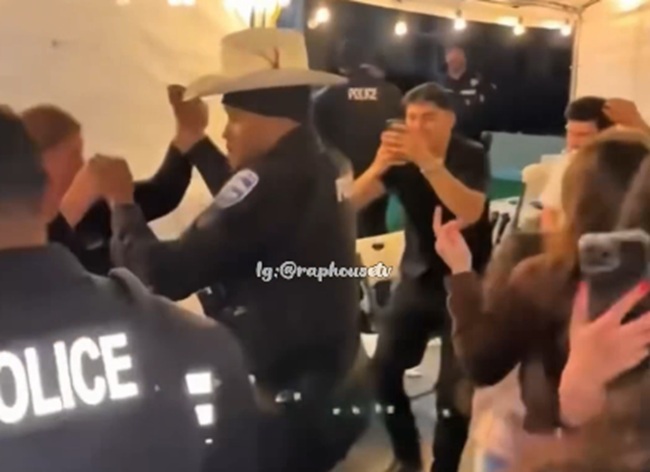

This type of situation has happened multiple times and frequently goes viral on social media. The specific premise of neighbors calling the police on a Mexican family’s lively celebration at an early hour (like 6 PM), only for the officers to show up, handle the situation gracefully, and end up eating tacos or dancing, reflects a couple of high-profile incidents:
1. The Chicago “Taco & Dancing” Incident (2021)
In May 2021, a TikTok video posted by a user named Monica (@lifeasmonica) went viral with tens of millions of views. Police officers in Chicago were dispatched to a home following a noise complaint. Instead of shutting the event down or issuing fines, the responding officer was welcomed warmly by the Mexican family. He was filmed helping himself to a plate of tacos at the buffet and subsequently dropping low on the dance floor alongside the party guests, creating a massive feel-good internet moment.
Neighbors called the cops on Mexican Neighbors and this is what happened 😭💯🔥🇲🇽 pic.twitter.com/yYdBWJaPhp
— Raphouse TV (RHTV) (@raphousetv7) September 3, 2026
2. The Carrollton, Texas Graduation Party (2019)
Another widely shared incident occurred in Carrollton, Texas, when neighbors called in a noise complaint before dark regarding a Latina student’s graduation party. The Carrollton Police Department released bodycam footage showing three officers arriving as a live band played.
- One officer remarked on the bodycam, “I don’t want to get in on this party, they’re having a good time.”
- The family invited them in under the condition that they had to dance.
- The officers complied, danced briefly with the graduate, and the father later publicly thanked the department on social media for treating the community with respect and letting the party continue.
Other Similar Incidents
Because Mexican family celebrations (fiestas) are culturally known for being lively, having incredible food, and featuring loud, rhythmic music, this exact dynamic has repeated in places like San Antonio, Texas (where an SAPD officer danced salsa with the crowd) and Tukwila, Washington (where officers danced a final song requested by the family “Abuela”).
In almost all of these instances, the parties were happening during reasonable daylight or early evening hours (well before local noise curfews), allowing the officers to practice lighthearted community policing rather than strict enforcement