
The United States government withdrew approximately 4,000 visas from truck drivers in Baja California between April 1, 2025, and April 1, 2026, according to estimates from the National Chamber of Freight Transportation (Canacar).
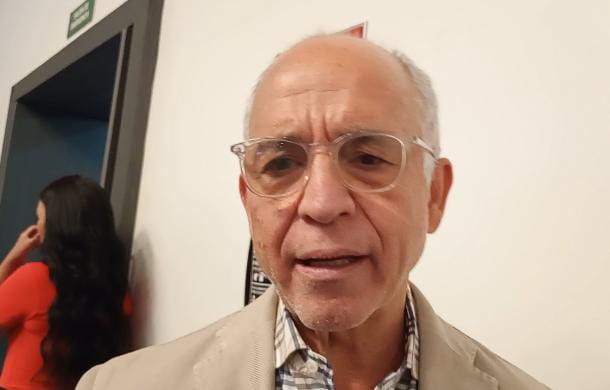
The 4,000 withdrawn visas represent 21% of the 19,000 truck drivers in the state who are eligible to make cross-border trips, Canacar adviser Israel Delgado pointed out.
Truck drivers from Mexicali have been the most affected, as 60% of the withdrawn visas correspond to operators in the state capital, while the remaining 40% belong to drivers from Tijuana and Tecate.
The businessman predicted that the economic impact on the region and Mexico will be significant if the blockade by drivers continues at the Mexicali and San Ysidro ports of entry in Tijuana, which began yesterday and extended to the San Luis Río Colorado port of entry in Sonora today, with the possibility that it could occur at other border crossings.
“The blow would be extremely severe for Mexico, because the products would remain inside Mexican territory,” and a smaller number of operators with visas would also affect logistics, due to the upward trend in Mexican exports observed since July and continuing toward the end of the year, combined with a shortage of truck drivers in the United States.
The operators blocking the Mexicali port of entry are demanding certainty and clarity regarding the withdrawal of their visas, as there may be cases in which they did not engage in cabotage but U.S. authorities determined that a violation had occurred.
With the blockade at the Mexicali port of entry, businesses were forced to transport their goods to Tijuana in order to export them, since the Tecate customs crossing has limitations based on weight and dimensions.
Across the entire Mexico-United States border, 25,000 visas have been withdrawn. However, the U.S. government “has announced that it is going after another 200,000 visas. We do not know how many of those will be for operators or drivers from anywhere in the world,” he said.
The visas were withdrawn by U.S. authorities primarily because of cabotage, which consists of the prohibition against carrying out domestic transportation movements within the territory from point A to point B, meaning that the loads must be international. Road safety is another reason.
Israel Delgado considered that the Secretariat of Infrastructure, Communications and Transportation (SICT) and the Secretariat of Foreign Affairs (SRE) should intervene. Canacar representatives along the border “have reached out both to the consulate and to the Department of Foreign Affairs so that they can address the problem, discuss it at a working table, and see what conclusion they reached.”
During a media briefing on September 4, 2026, Allyson Hamilton-McIntire, Public Affairs Consul at the U.S. Consulate in Tijuana, said that “the law must be followed; it is our responsibility, and it is the responsibility of truck drivers and every person who wants to travel to the United States.”
She expressed confidence in the work of U.S. Customs and Border Protection (CBP) regarding who may or may not enter U.S. territory.
As Secretary of State Marco Rubio and Ambassador Ronald Johnson have stated, “a visa is a privilege, not a right,” she said.
“Normally, yes, we speak with them, as usual, but regarding this matter, no, not for now,” she said when asked whether they had been in contact with Canacar.
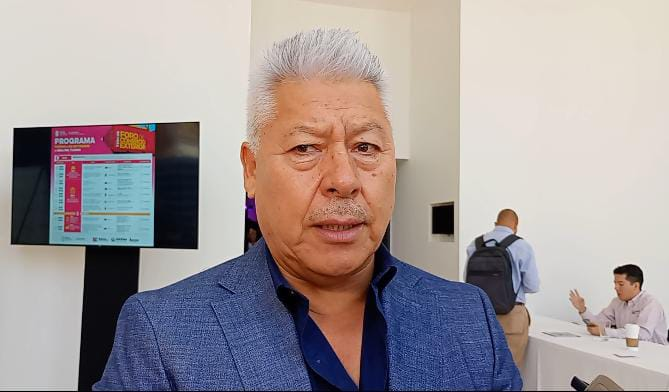
Meanwhile, Secretary of Economy and Innovation Kurt Honold Morales said that CBP had already told the truck drivers that they would receive them. A copy of the withdrawn visas had also been requested so they could be reviewed to determine whether there were cases in which drivers had complied with the law and could potentially have their visas returned.
“They are still the same [truck drivers] who were in Mexicali, and they were the same ones who went to close” the crossing in San Luis Río Colorado. “It is not that their numbers are growing; on the contrary, many of the drivers who want to cross or bring merchandise and who have been stranded for more than a day on the other side of the border are desperate.”
The issue of their visas being revoked has been ongoing for some time. “We have already discussed it personally with the Secretary of Foreign Affairs there in Mexico and with the federal Secretariat of Economy, and it is on the negotiating table for the USMCA.”
The Secretariats of Government and Economy, as well as the president of the Mexicali Business Coordinating Council, Index, and Canacar, have also held conversations with the protesters. “We have told them that what they are doing is not advisable because they are affecting their own clients, who are the export industries, because those companies urgently need to ship their products,” he added.
Source: zetatijuana