

Senator Ricardo Monreal published an analysis in which he acknowledges that the economic policy of the government of Andrés Manuel López Obrador (2018–2024) prioritized social justice, but left the challenge of sustained economic growth unresolved. The text is part of a broader reflection on the future of the left in Latin America and the role that, according to Monreal, Mexico should play in that debate.
What Monreal Says About the 2018–2024 Period
According to the senator, between 2018 and 2024, Mexican economic policy placed “at the center the recovery of the minimum wage, the expansion of labor rights, and greater social protection.” Monreal attributes to that period a reduction in multidimensional poverty, which fell from 41.9% to 29.6% of the population, a result that, he states, was largely associated with the wage recovery promoted during those years.
However, the legislator is explicit in pointing out the limit of that model: “That progress constituted a foundation in terms of social justice, but left the challenge of sustained growth unresolved.”

Monreal’s View of the Latin American Left
Monreal’s analysis is not limited to Mexico. The senator argues that, in general, left-wing governments have historically placed greater emphasis on distributing resources than on expanding the productive capacities that make it possible to generate wealth sustainably. To illustrate this point, he cites the cases of Bolivia and Argentina.
Regarding Bolivia, Monreal points out that the country benefited from significant gas revenues for years without investing sufficiently in new reserves, which resulted in its natural gas production falling by approximately half by 2024 compared with the peak reached a decade earlier.
In the case of Argentina, the senator attributes the country’s economic difficulties to an unstable institutional environment — price controls, currency restrictions, and trade barriers — which, according to his analysis, affected both Peronist and center-right governments, meaning that it “can hardly be attributed to any particular political current.”
Sheinbaum, the “Paradigm” Proposed by Monreal
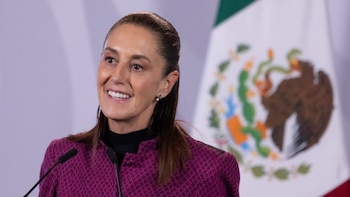
Faced with this diagnosis, Monreal argues that the administration of President Claudia Sheinbaum “appears to have identified this need” and has placed the strengthening of the productive base at the center of its strategy, “without abandoning the social pillars” inherited from the previous administration.
The senator highlights several elements as evidence of this shift:
- The Mexico Plan, which, as he describes it, seeks greater national content, supplier development, and financing for small and medium-sized businesses.
- The Economic Development Poles for Well-Being, of which, he states, 15 had already been defined by August 2026.
- An infrastructure program that would involve public and mixed investments of 5.6 trillion pesos by 2030 across eight strategic sectors.
- Foreign direct investment figures that, according to the text, reached 34.968 billion dollars in the first half of 2026, a historic high for a comparable period.
- Economic growth of 1.4% quarterly and 2.1% annually in the second quarter of 2026.
Monreal frames these elements within what he calls “productive development with well-being,” a concept that, he argues, seeks to integrate wealth creation with the reduction of inequalities rather than treating them as separate objectives.
The USMCA as the Pending Test
The senator also identifies the review of the United States-Mexico-Canada Agreement as a point of tension for this strategy. According to his interpretation, negotiations over rules of origin and regional supply chains represent an opportunity for Mexico to generate more domestic suppliers, in a context that the Economic Commission for Latin America and the Caribbean (ECLAC), cited in the text, describes as being marked by rivalry among major powers and the weakening of multilateralism.
Monreal concludes that the Mexican experience “is still under construction,” but considers that, if consolidated, it would demonstrate that it is possible to combine social justice with greater economic sovereignty and production.
Source: infobae