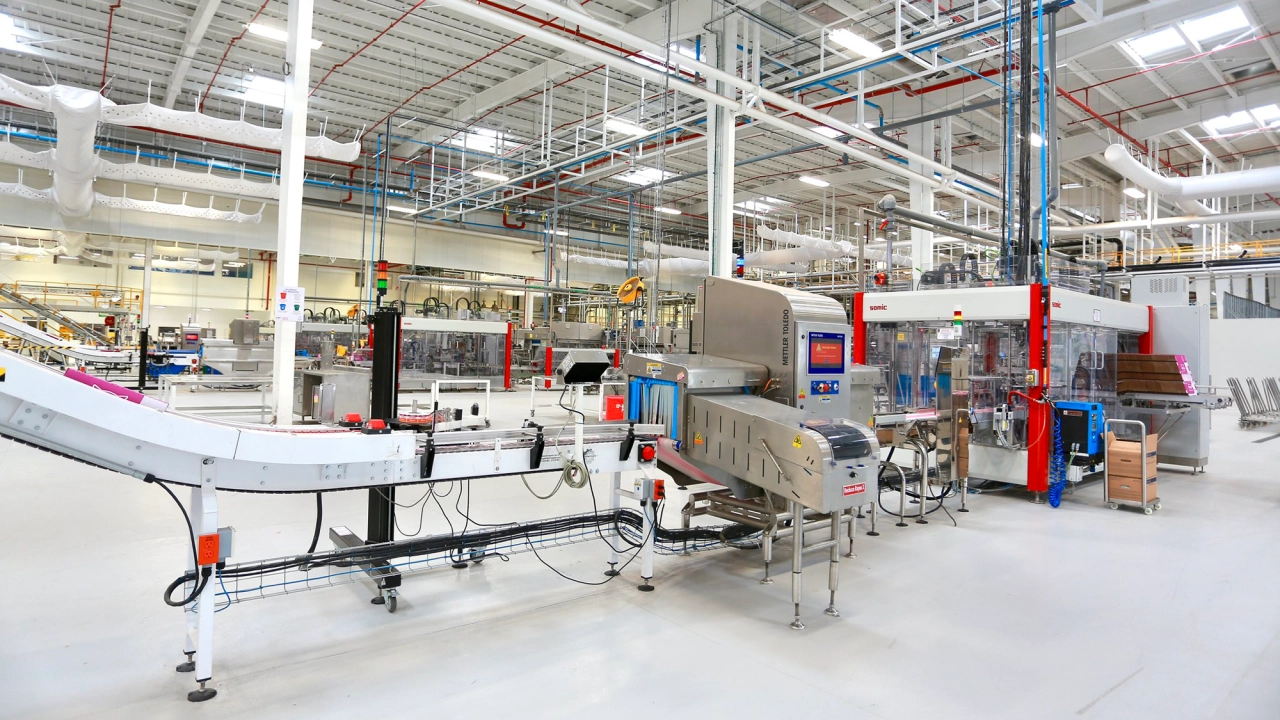

With a production capacity of 15 million boxes of cereal per year, equivalent to approximately 120 million kilograms, the Mars plant in Querétaro is the company’s largest cereal facility in Latin America.
“This plant is number one in cereals in Latin America,” explained Isidro Ortiz, Senior Manager of the Querétaro Cereal Plant at Mars.
The factory supplies the Mexican market and exports products to more than 10 countries, mainly in Central America, North America, and Canada.
Production includes approximately 30 recipes, which are transformed into more than 200 presentations, sizes, and formats.
As part of the tour of the global company’s facilities, representatives previewed the launch of its “Mars cerca de ti” (“Mars Close to You”) campaign, which will begin on September 18 and aims to strengthen its connection with consumers and be present during different consumption moments throughout the day.
For Mars, Mexico represents one of its five main markets globally, with a workforce of more than 7,200 associates out of approximately 170,000 employees worldwide.
Construction of the facility began in 1971 and operations started in 1973. It currently has more than 700 associates.
“The plant has been operating for exactly 53 years,” explained Isidro Ortiz, who added that during his nearly 30 years with the company, he has witnessed the evolution of the facilities.
The plant works with approximately 30 recipes that, in different sizes and presentations, represent more than 200 products.
Mars’ Snacking division in Mexico includes categories such as cereals, confectionery, chewing gum, and salty snacks, with brands such as Choco Krispis, Corn Flakes, M&M’s, Orbit, Pringles, and Skittles.
In Mexico, this division has 4,500 associates and six production plants located in Querétaro, Toluca, and Nuevo León, from which it supplies the domestic market.
The Querétaro plant, where Mars produces cereals such as Zucaritas, Froot Loops, and Corn Flakes, is one of the nine factories the company has in Mexico. A few meters away is the Pringles plant, which was inaugurated last year.
The other facilities are located in Toluca, State of Mexico, and Nuevo León.
“Our long-term vision for the country is based on three pillars: reimagining the snacks segment, building a more resilient future, and empowering our people and the communities where we operate,” the company’s spokespersons emphasized during the event.
Regarding the cereal production process, Isidro Ortiz explained that it begins with the receipt of whole grains. The raw material then goes through cooking, drying, and flaking stages before reaching the ovens and moving on to the finishing and packaging stages.
One of the company’s distinctive features is that the process starts with whole grain rather than flour.
The grain, or corn, comes from Mexico and the United States.
Mars products have accompanied several generations of consumers in Mexico and the company has adapted its offerings to changes in consumption habits and to different moments of the day, from breakfast to dinner.
Some of its products have also been formulated to meet the preferences of the domestic market. In Pringles, for example, the company has launched flavors such as jalapeño and adobadas, while during the presentation it announced a new “ardientes” flavor.
In total, Mars has 17 brands bearing the Hecho en México (Made in Mexico) designation, 15 of which belong to the Snacking division.
The plant works with approximately 30 recipes that, in different sizes and presentations, represent more than 200 products.
The Mars plant in Querétaro operates under a zero-waste-to-landfill model and has offset more than 25,000 tons of CO₂ equivalent through clean-energy certificates and carbon offsets.
The facility also participates in circular-economy projects promoted by the state and has held Querétaro’s low-emissions certification for two years.
In the municipality of El Marqués, Querétaro, Mars’ Petcare division operates a plant where it manufactures wet pet food for its Pedigree and Whiskas brands. This is the company’s largest facility of its kind worldwide.
The factory was inaugurated in 2018 and has since undergone two expansions, tripling its capacity.
In addition, Mars has 60 Chocoboutiques stores in the country, where it sells Turín products.
Source: eleconomista